
A 50-year-old man with type 2 diabetes is scheduled for his first virtual telehealth diabetes education visit next week and asks how to prepare so the session is productive. Which preparation step should the diabetes care and education specialist recommend?
Select an answer to reveal the explanation.
Short Explanation
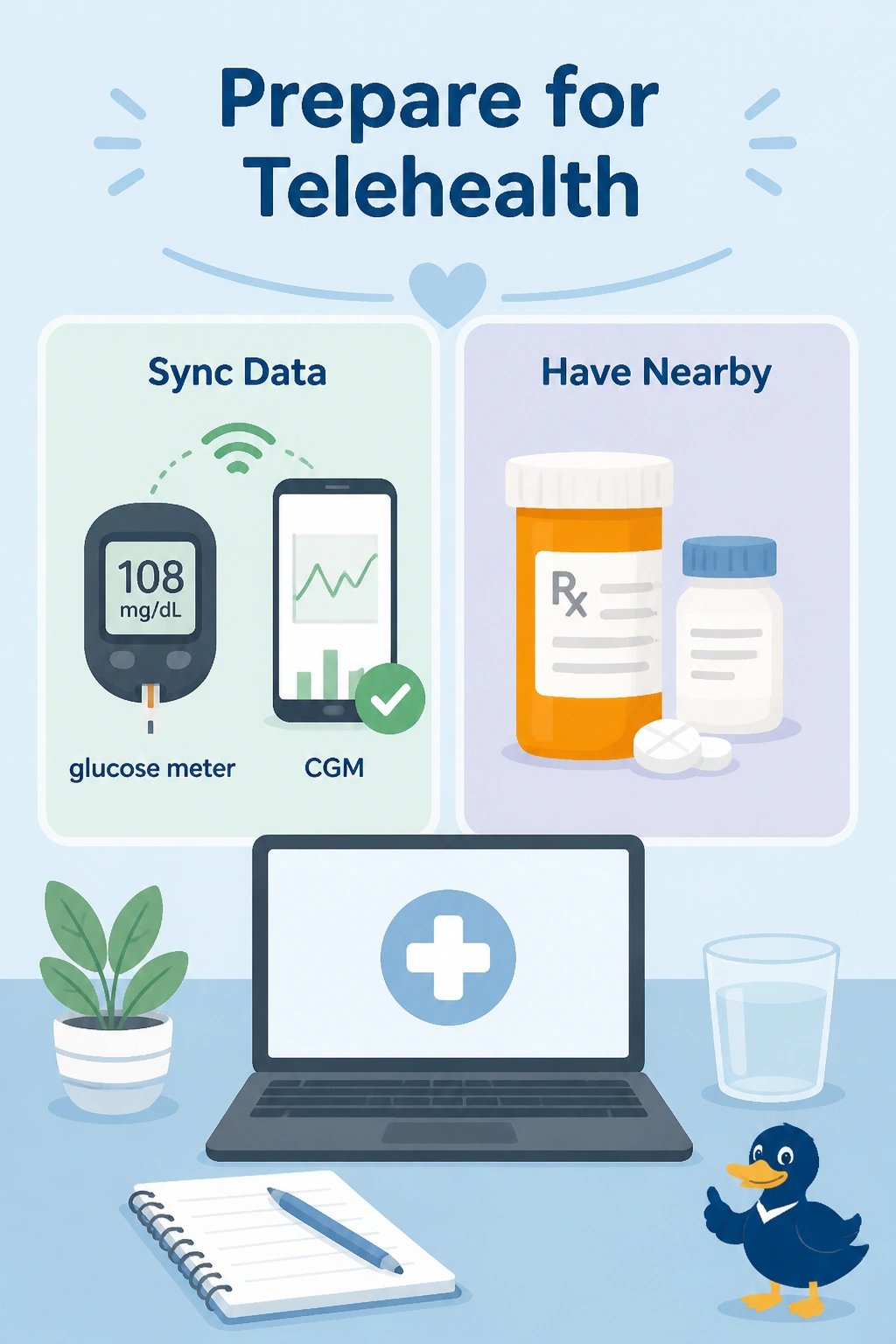
You can make the video visit more productive by syncing several days of glucose data ahead of time and keeping your actual medication bottles nearby. A single last-minute reading, relying on memory for medication names, or listing prescription names without doses or nonprescription products and supplements leaves out information your educator needs for safe review.
Full Explanation
Syncing glucose meter or CGM data ahead of time and having current medication bottles nearby supports accurate medication reconciliation and glucose-pattern review without using visit time to gather details. Actual prescription labels help verify doses, strengths, and refill dates, while uploaded glucose logs reveal multi-day trends that inform shared decision-making. Uploading only the reading taken immediately before the call gives a single point in time and can hide nocturnal hypoglycemia, postmeal excursions, and day-to-day variability relevant to education and dose adjustment. Relying on memory for medication names to keep the camera workspace uncluttered can lead to omitted supplements, incorrect strengths, or confusion between similar-sounding drugs. A summary of prescription names without doses, nonprescription products, or supplements leaves medication reconciliation incomplete and can prevent detection of dosing errors, duplications, and interactions. As an exam caveat, if you lack home internet or syncing cables, the team should offer another way to share data, such as reading a 7-day written log aloud by phone. As a practical check, confirm that your data uploaded and test audio-video connectivity 24 to 48 hours before the scheduled telehealth session.
Prefer to study offline? Printable PDF study book + test engine ($7.50, unofficial). These questions stay free here.