
A 27-year-old man with type 1 diabetes is reviewing his severe hypoglycemia emergency plan with his roommate, who asks what to do immediately after administering rescue glucagon if the man is still unconscious and breathing normally. Which instruction should the diabetes care and education specialist emphasize?
Select an answer to reveal the explanation.
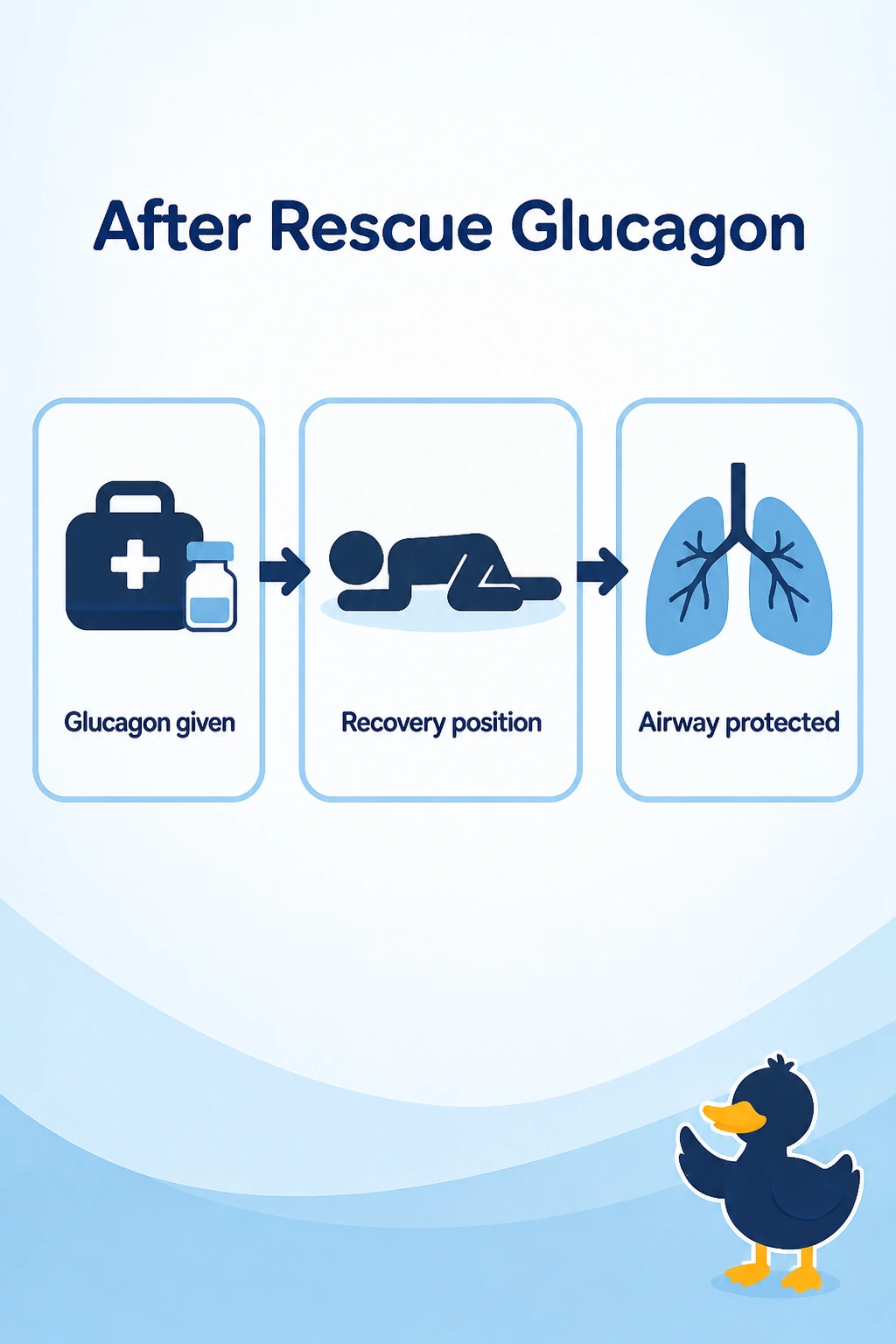
Short Explanation
If he is still unconscious but breathing normally after glucagon, turn him onto his side in the recovery position; this protects his airway if nausea or vomiting occurs. Wait until he is awake and can swallow safely before giving orange juice by mouth.
Full Explanation
If he remains unconscious but is breathing normally after rescue glucagon, turn him onto his side in the recovery position. This is the appropriate immediate step because glucagon can cause nausea or vomiting; side-lying positioning helps fluids drain and reduces the risk of aspiration or the tongue obstructing the airway, although it cannot guarantee these problems will not occur. Giving sips of orange juice right away is unsafe because impaired consciousness can mean he cannot swallow or protect his airway, creating a choking and aspiration hazard; oral intake must wait until he is awake and swallowing safely. Keeping him flat on his back with a pillow under his head does not provide the same protection, since vomit or secretions can pool over the airway and increase obstruction risk. Giving another glucagon dose immediately is not appropriate: follow the product’s repeat-dose interval, and give another available dose as directed if there is no response after that interval. An exam caveat and practical check: call emergency medical services immediately after administering glucagon rather than waiting for a response; while help is coming, confirm that he is still breathing normally and follow the product-specific directions for any repeat dose.
Prefer to study offline? Printable PDF study book + test engine ($7.50, unofficial). These questions stay free here.