
A 43-year-old man with type 1 diabetes says he usually treats mild hypoglycemia of 60 mg/dL by eating a chocolate bar or a spoonful of peanut butter, yet he feels shaky for 45 minutes and often rebounds high later. Which explanation should the diabetes care and education specialist share?
Select an answer to reveal the explanation.
Short Explanation
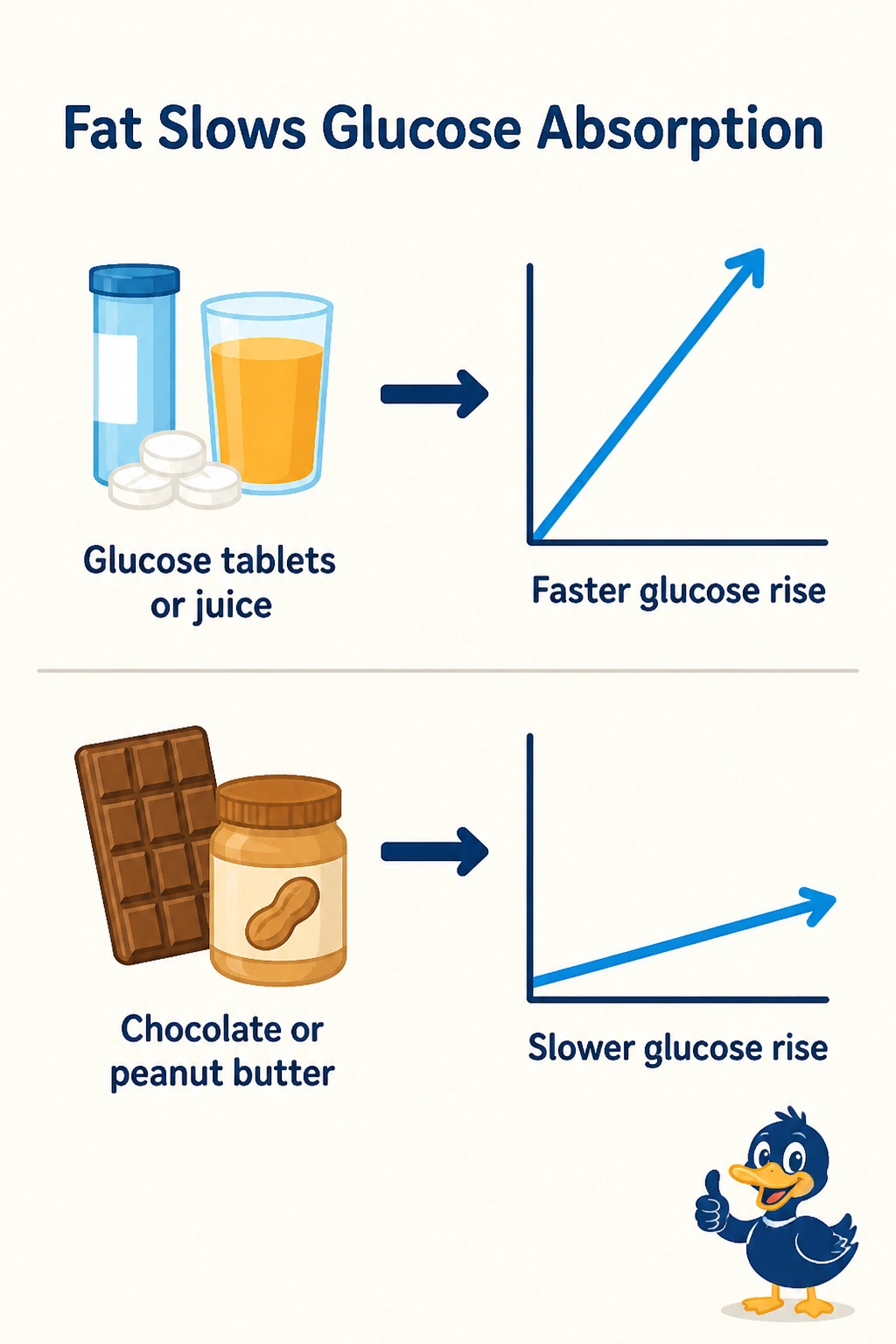
When you treat a low, choose fast-acting carbohydrate without fat, because dietary fat slows gastric emptying and delays rapid glucose absorption. Chocolate and peanut butter may not provide enough rapidly available carbohydrate for reliable rescue, and protein is not the initial treatment; a sweet food with the same carbohydrate amount may also work more slowly than glucose tablets.
Full Explanation
Acute hypoglycemia calls for fast-acting, fat-free simple carbohydrates. Dietary fat slows gastric emptying and delays rapid glucose absorption, so the carbohydrate in chocolate or peanut butter may be absorbed more slowly, prolong symptoms, and prompt overtreatment and rebound hyperglycemia later. Protein grams are not interchangeable with glucose grams for immediate rescue: peanut butter may not supply enough rapidly available carbohydrate for reliable treatment, and protein is not the initial treatment. The claim that protein in peanut butter immediately blocks hepatic glucose release is physiologically backward; protein stimulates glucagon rather than blocking glucose output. Nor does any sweet food correct a low as quickly as the same carbohydrate amount in glucose tablets: fat-containing chocolate can be absorbed more slowly than pure glucose. An exam caveat is that once glucose is above 70 mg/dL, if the next scheduled meal is more than an hour away, a small snack containing protein and complex carbohydrate can help sustain levels. As a practical check, ask the patient to identify two fat-free, 15-gram rescue options he can keep within arm’s reach.
Prefer to study offline? Printable PDF study book + test engine ($7.50, unofficial). These questions stay free here.