
A 38-year-old woman with type 1 diabetes who uses mealtime carbohydrate counting is starting a new job that requires frequent client lunches at independent restaurants without nutrition labels. Which practical strategy should the diabetes care and education specialist teach to support accurate dosing?
Select an answer to reveal the explanation.
Short Explanation
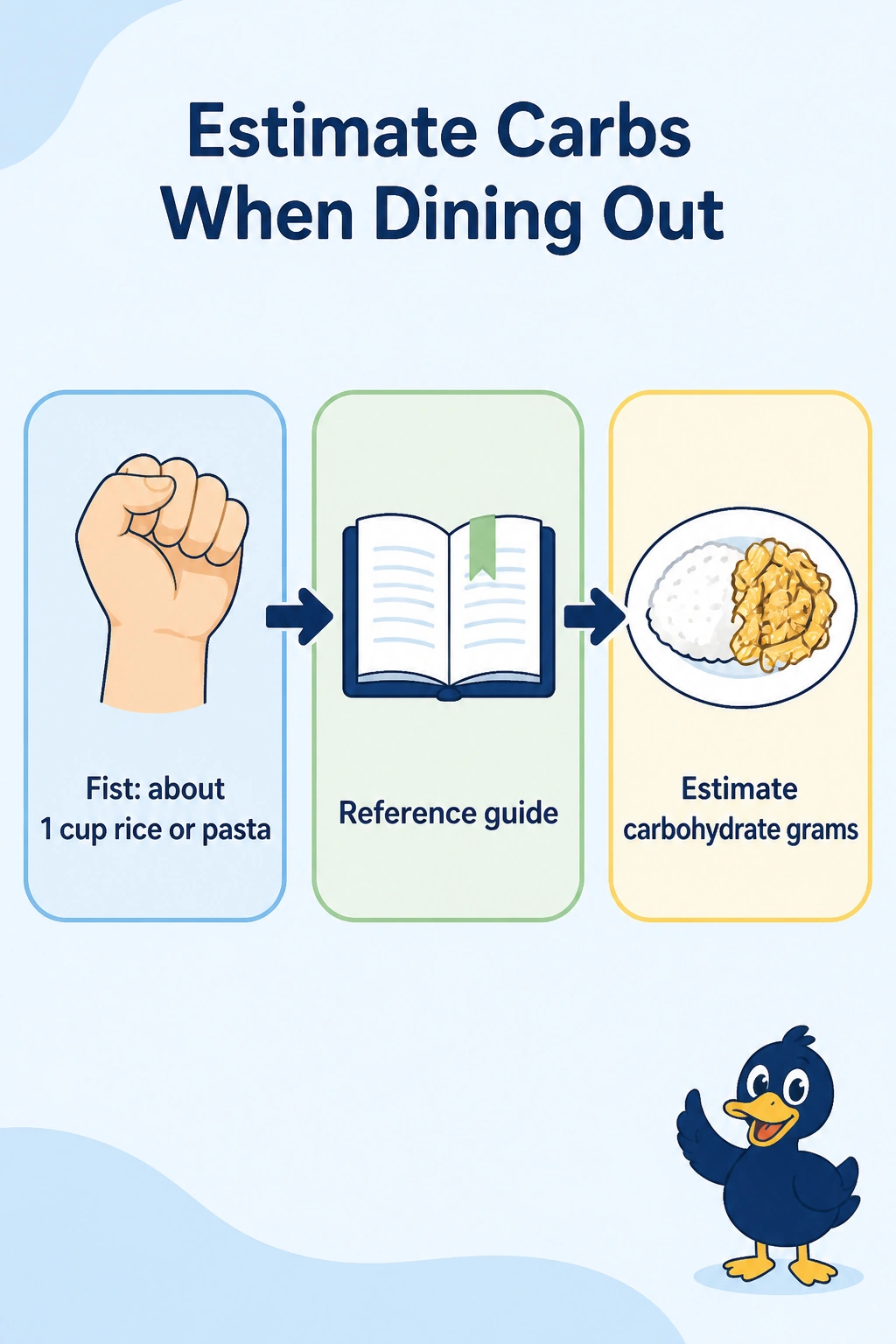
Dining out without a nutrition label is like driving in a new city without GPS—you still have landmarks you can rely on. You can use hand and visual portion cues with a reference guide to estimate carbohydrates and dose flexibly, rather than guessing blindly; rigid avoidance, fixed dosing, or using total calories alone does not fit real-world meals.
Full Explanation
Using everyday hand or object portion cues alongside a reference guide helps you estimate serving sizes and translate them into carbohydrate grams for flexible mealtime dosing. For example, a fist can help you estimate one cup of cooked rice or pasta. Hand cues are rough estimates and should be calibrated against measured portions. Avoiding all restaurant meals with sauces or starches until nutrition facts are posted is unrealistic when your work involves client lunches and undermines person-centered, sustainable diabetes self-management. A fixed standard mealtime bolus regardless of portion size does not match insulin to actual carbohydrate intake, increasing the risk of postprandial hyperglycemia after larger meals or hypoglycemia after smaller ones. Using the restaurant dish’s total calories alone to calculate carbohydrate grams is inaccurate because total calories reflect fat and protein as well as carbohydrate and do not translate directly into mealtime insulin needs. Exam caveat: restaurant dishes often contain hidden fats and sugars that can delay or prolong glucose absorption, so post-meal monitoring can help refine future estimates. Practical check: have the patient estimate carbohydrate grams for two sample restaurant plates during the visit to verify accuracy.
Prefer to study offline? Printable PDF study book + test engine ($7.50, unofficial). These questions stay free here.