
A 33-year-old man with type 1 diabetes using an automated insulin delivery system hears a low-glucose alert at 65 mg/dL and sees that the system has already suspended his basal insulin delivery for 25 minutes. Capillary glucose confirms 65 mg/dL, there is no substantial recent meal bolus or exercise, and he can safely swallow. Which hypoglycemia self-treatment approach should the diabetes care and education specialist recommend?
Select an answer to reveal the explanation.
Short Explanation
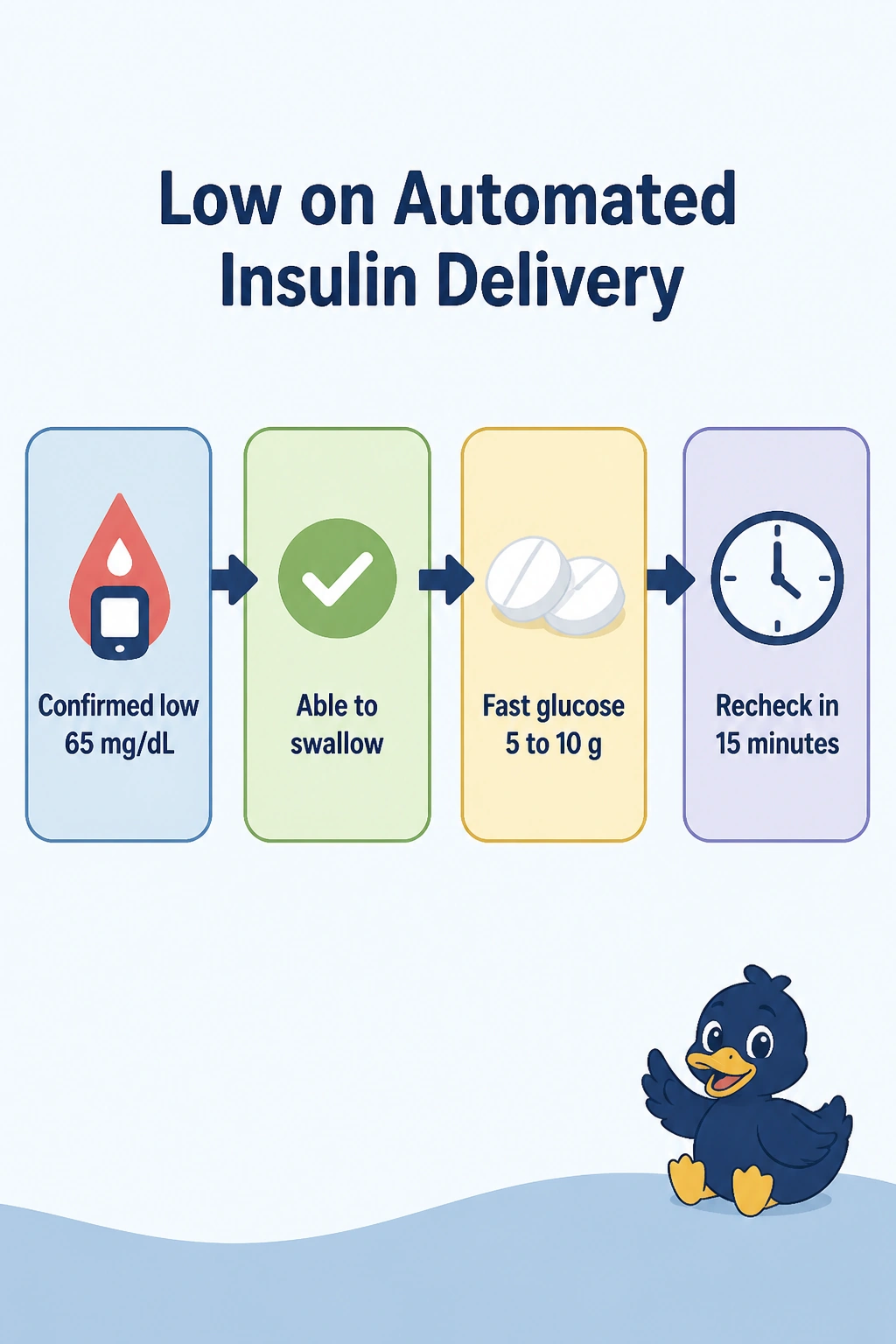
When you have this kind of mild, uncomplicated low while your AID system has paused basal, you often need only a small amount of fast glucose. Following your personalized plan with 5–10 g and rechecking in about 15 minutes helps you recover smoothly without a rebound high.
Full Explanation
For this uncomplicated AID-associated low at confirmed 65 mg/dL, with no substantial recent bolus or exercise and ability to swallow safely, following the individualized AID low-treatment plan, often using 5–10 g of fast glucose with recheck in about 15 minutes, restores glucose. ADA general guidance remains 15-20 g of fast-acting carbohydrate for hypoglycemia, while smaller amounts such as 5-10 g are used with automated insulin delivery per ISPAD 2022 and the individualized plan from the prescriber/device. Automated systems may reduce or suspend basal delivery before hypoglycemia, so a mild isolated low often needs less carbohydrate, limiting rebound highs. Automatically taking 30 g regardless of the individualized plan over-treats this setting and promotes rebound hyperglycemia and rollercoaster patterns. Eating a mixed carbohydrate-protein snack before fast glucose is unsuitable for acute treatment because fat and protein slow absorption and delay recovery, though they may help sustain glucose later. Rechecking without carbohydrate because delivery is suspended is unsafe at 65 mg/dL, as suspension alone does not guarantee recovery and glucose may fall below 54 mg/dL. Recent bolus, exercise, or worsening symptoms can require more treatment. For severe hypoglycemia, get help immediately; use glucagon when oral carbohydrate cannot be given safely, and activate emergency services.
Prefer to study offline? Printable PDF study book + test engine ($7.50, unofficial). These questions stay free here.