
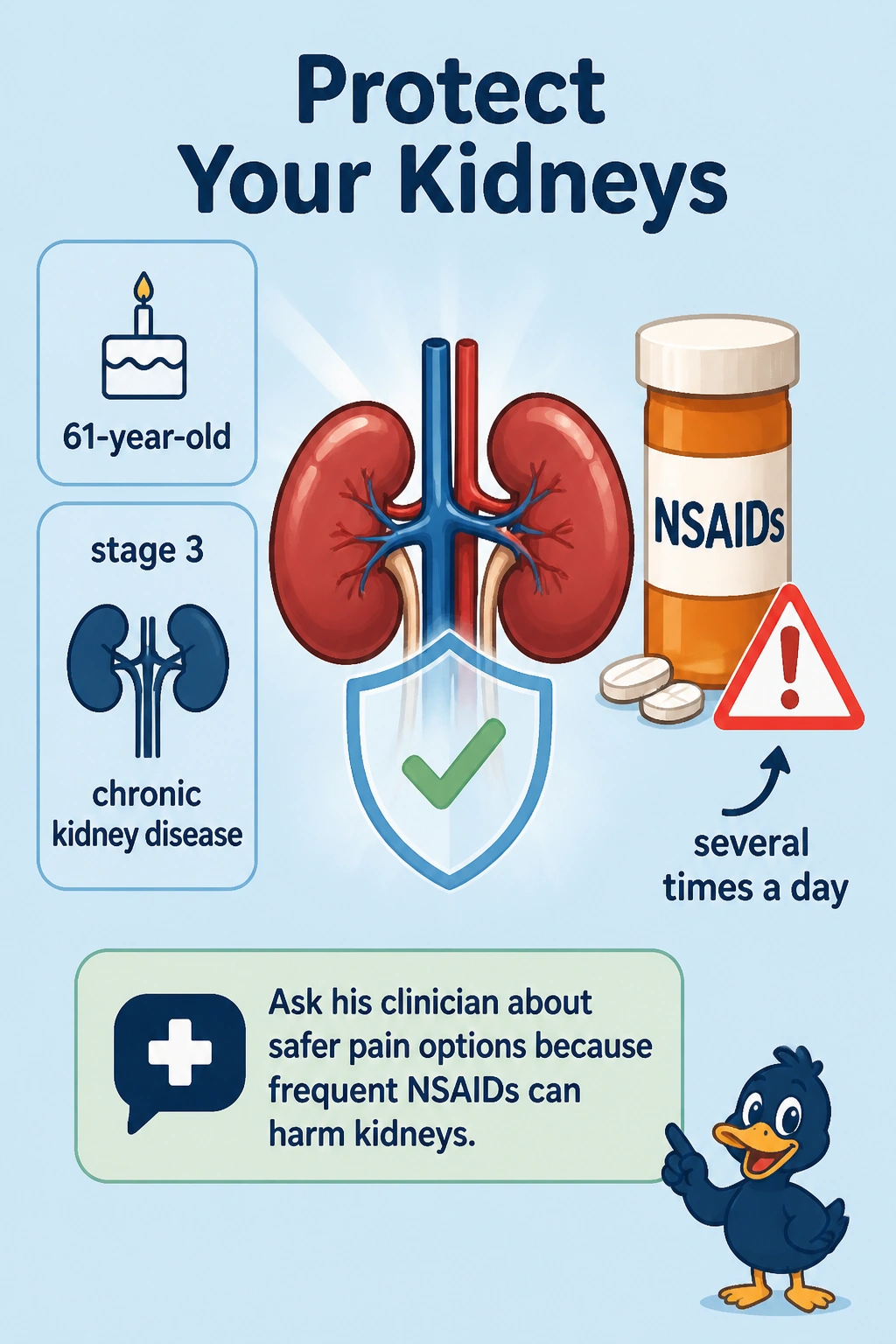
A 61-year-old man with type 2 diabetes and stage 3 chronic kidney disease mentions he takes over-the-counter ibuprofen several times a day for knee soreness. Which education point should the diabetes care and education specialist emphasize?
Select an answer to reveal the explanation.
Short Explanation
Over-the-counter pain pills can feel harmless because no prescription is needed, yet your kidneys feel every dose. Remember you cannot make daily ibuprofen safe with chronic kidney disease with hydration or an enteric coating. Help him ask his clinician about safer pain options.
Full Explanation
Advising him to ask his clinician about safer pain options because frequent NSAIDs can harm kidneys protects remaining renal function: nonsteroidal anti-inflammatory drugs constrict afferent renal arterioles and can precipitate acute kidney injury in stage 3 chronic kidney disease. Taking ibuprofen with a full glass of water does not prevent the prostaglandin-mediated reduction in renal blood flow, so hydration cannot ensure the kidneys clear it without strain. Using enteric-coated ibuprofen daily because the coating prevents kidney injury confuses gastrointestinal protection with renal protection; the coating only affects stomach dissolution and does not prevent systemic prostaglandin inhibition in the kidneys. Switching to daily naproxen because only ibuprofen reduces kidney blood flow is unsafe; all systemic NSAIDs share this class-wide renal risk. As an exam caveat, neither good hydration nor an enteric coating makes frequent NSAID use safe, and pain regimens must be individualized by his prescriber based on his health. As a practical check, review his full over-the-counter medication list and send a care-coordination note to his primary clinician.
Prefer to study offline? Printable PDF study book + test engine ($7.50, unofficial). These questions stay free here.