
A 48-year-old nonpregnant woman with type 2 diabetes and no major comorbidities asks what general fingerstick blood glucose targets are recommended by the American Diabetes Association before meals and 1 to 2 hours after starting a meal. Which target range should the diabetes care and education specialist share?
Select an answer to reveal the explanation.
Short Explanation
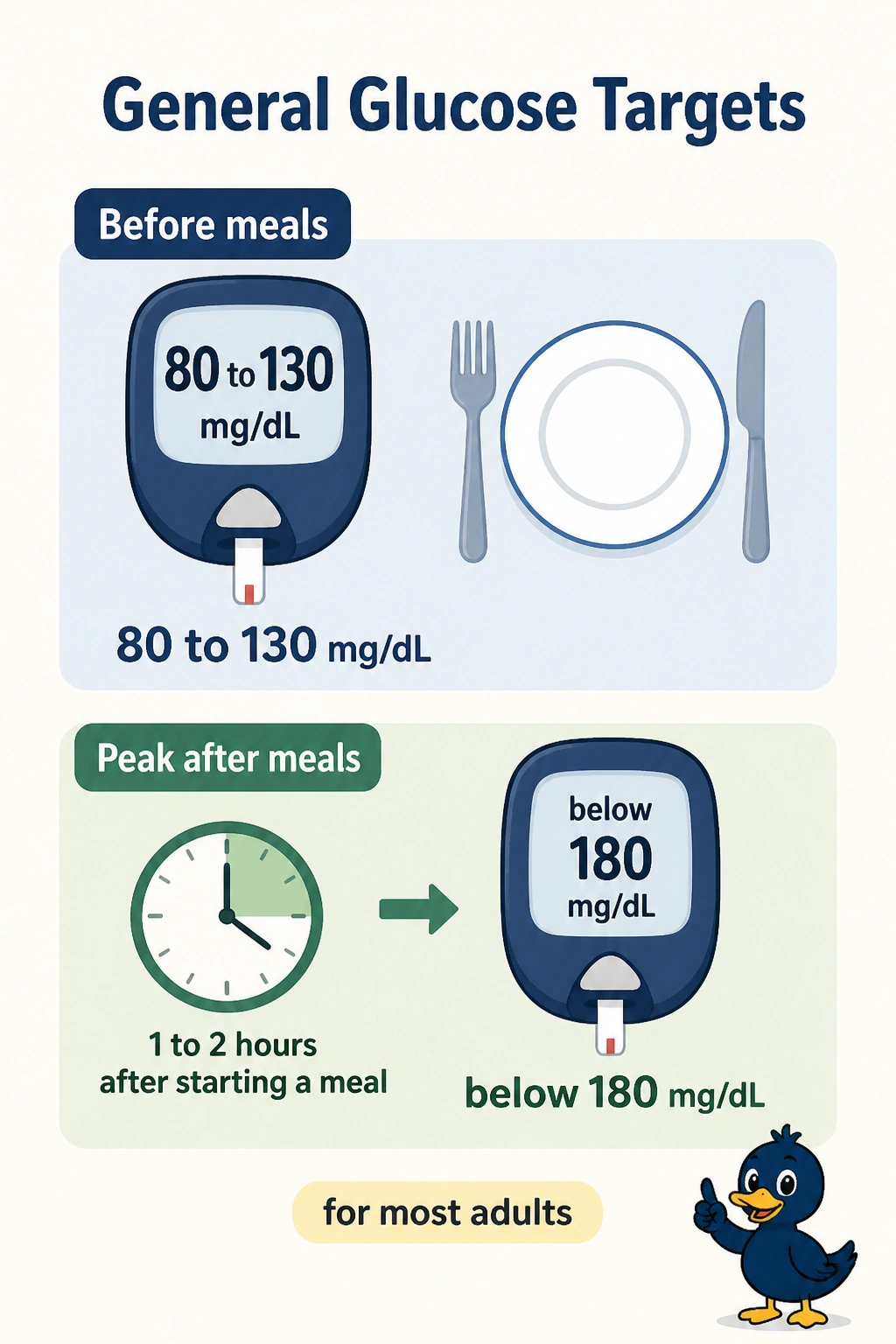
Having clear target numbers on your meter is like knowing the speed limit before driving in a new town. The trap is setting targets too tight—inviting lows—or too loose for a healthy adult. Share the standard 80 to 130 mg/dL pre-meal and below 180 mg/dL post-meal range.
Full Explanation
For most nonpregnant adults with diabetes, American Diabetes Association Standards of Care recommend the target of "Before meals 80 to 130 mg/dL and peak after meals below 180 mg/dL for most adults" (measured 1 to 2 hours after starting a meal), which balances microvascular protection with hypoglycemia safety. Recommending "Before meals 60 to 90 mg/dL and peak after meals below 120 mg/dL for all adults" sets an overly aggressive threshold that increases hypoglycemia risk and resembles pregnancy-specific goals. Suggesting "Before meals 140 to 180 mg/dL and peak after meals below 240 mg/dL for most adults" is incorrect. These higher proposed thresholds are not the general outpatient ADA target for this patient; inpatient and older-adult goals use their own individualized guidance. Proposing "Before meals 100 to 150 mg/dL and peak after meals below 210 mg/dL regardless of age" uses nonstandard thresholds and ignores individualization. As a clinical caveat, glycemic targets must always be individualized based on hypoglycemia risk, comorbidities, and clinician guidance. As an operational check, write her agreed-upon pre-meal and post-meal targets in her self-management log and verify she knows when to check.
Prefer to study offline? Printable PDF study book + test engine ($7.50, unofficial). These questions stay free here.