
A 57-year-old man with type 2 diabetes says he eats generous portions of corn, peas, and baked potatoes at dinner without counting them because he considers all vegetables carbohydrate-free. Which nutrition guidance should the diabetes care and education specialist provide?
Select an answer to reveal the explanation.
Short Explanation
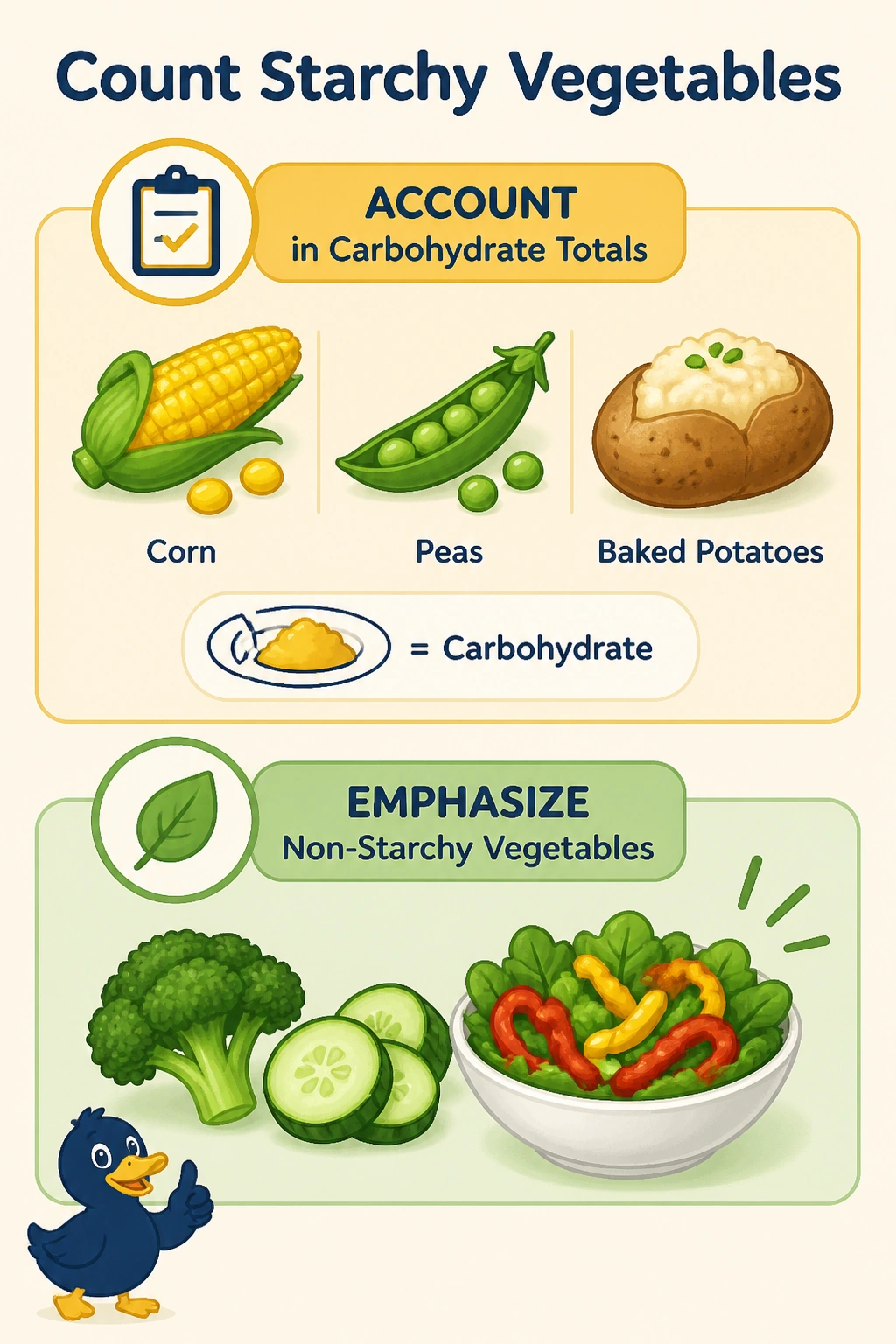
Think of vegetables like two different lanes on the same highway: leafy greens cruise smoothly, while starchy picks carry real carbohydrate fuel. The trap is assuming every vegetable is a free food just because it grows in the garden, so you want to count corn, peas, and potatoes in your meal totals.
Full Explanation
Teaching someone to Account for starchy vegetables in carbohydrate totals and emphasize non-starchy ones directly addresses how different plant foods affect postprandial blood glucose. Starchy vegetables such as corn, peas, and potatoes contain concentrated digestible starch that raises blood glucose similarly to bread or rice, whereas non-starchy vegetables like broccoli, spinach, and peppers provide fiber and micronutrients with minimal glycemic impact. Advising to Count only the added butter or sauces because vegetable starch does not count ignores the digestible carbohydrate in corn, peas, and potatoes and leaves the main driver of post-dinner hyperglycemia unaddressed. Advising a patient to Treat every vegetable equally as a free food regardless of its starch or fiber content leaves unexplained post-dinner hyperglycemia unchecked. Suggesting to Count potatoes but omit corn and peas from the carbohydrate estimate is inconsistent because corn and peas also contain substantial starch and must be counted for accurate carb counting. As a clinical caveat, total carbohydrate intake and overall eating pattern matter more than labeling individual foods as forbidden. For an operational check, review a sample dinner plate together and have the patient sort familiar vegetables into starchy and non-starchy groups while estimating portion sizes.
Prefer to study offline? Printable PDF study book + test engine ($7.50, unofficial). These questions stay free here.