
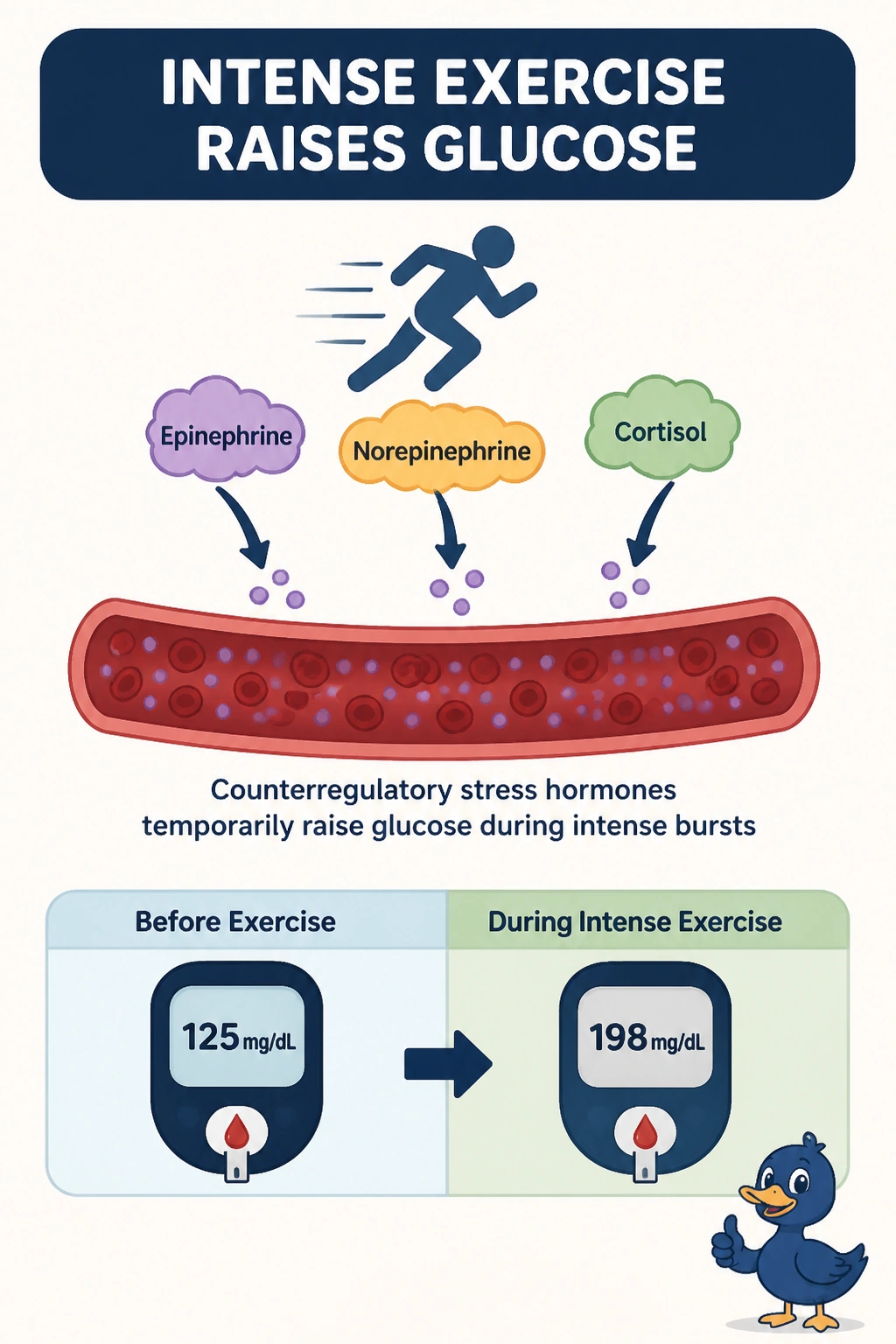
A 26-year-old man with type 1 diabetes notices that his blood glucose rises from 125 mg/dL to 198 mg/dL immediately after completing heavy weightlifting and sprint intervals, even though he ate nothing beforehand. Which explanation should the diabetes care and education specialist share?
Select an answer to reveal the explanation.
Short Explanation
You can see a temporary glucose rise after intense lifting or sprints because your body releases stored sugar in response to stress hormones. Your glucose may fall later as your muscles replenish glycogen, so track the pattern after exercise.
Full Explanation
While moderate aerobic exercise typically lowers blood glucose, brief high-intensity anaerobic activity stimulates sympathetic counterregulatory hormones such as epinephrine and glucagon. Counterregulatory stress hormones temporarily raise glucose during intense bursts because hepatic glucose release can outpace muscle uptake during sprints or heavy lifting. Muscle glycogen depletion does not always cause an immediate fall in blood glucose after sprints; the hormonal surge can transiently raise glucose even as muscles use glycogen. It is not true that all exercise suppresses hepatic glucose output below resting levels: intense bursts increase hepatic glucose production rather than suppress it. A postexercise glucose rise does not necessarily mean the prior meal bolus was insufficient; in this fasting context, there was no meal, and the rise reflects hormonal release rather than bolus dosing. As a clinical caveat, post-anaerobic spikes are often transient and may be followed by delayed hypoglycemia hours later as glycogen stores refill, so aggressive immediate correction boluses can be risky. As a practical check, track glucose trends for several hours after intense workouts before making routine insulin adjustments.
Prefer to study offline? Printable PDF study book + test engine ($7.50, unofficial). These questions stay free here.