
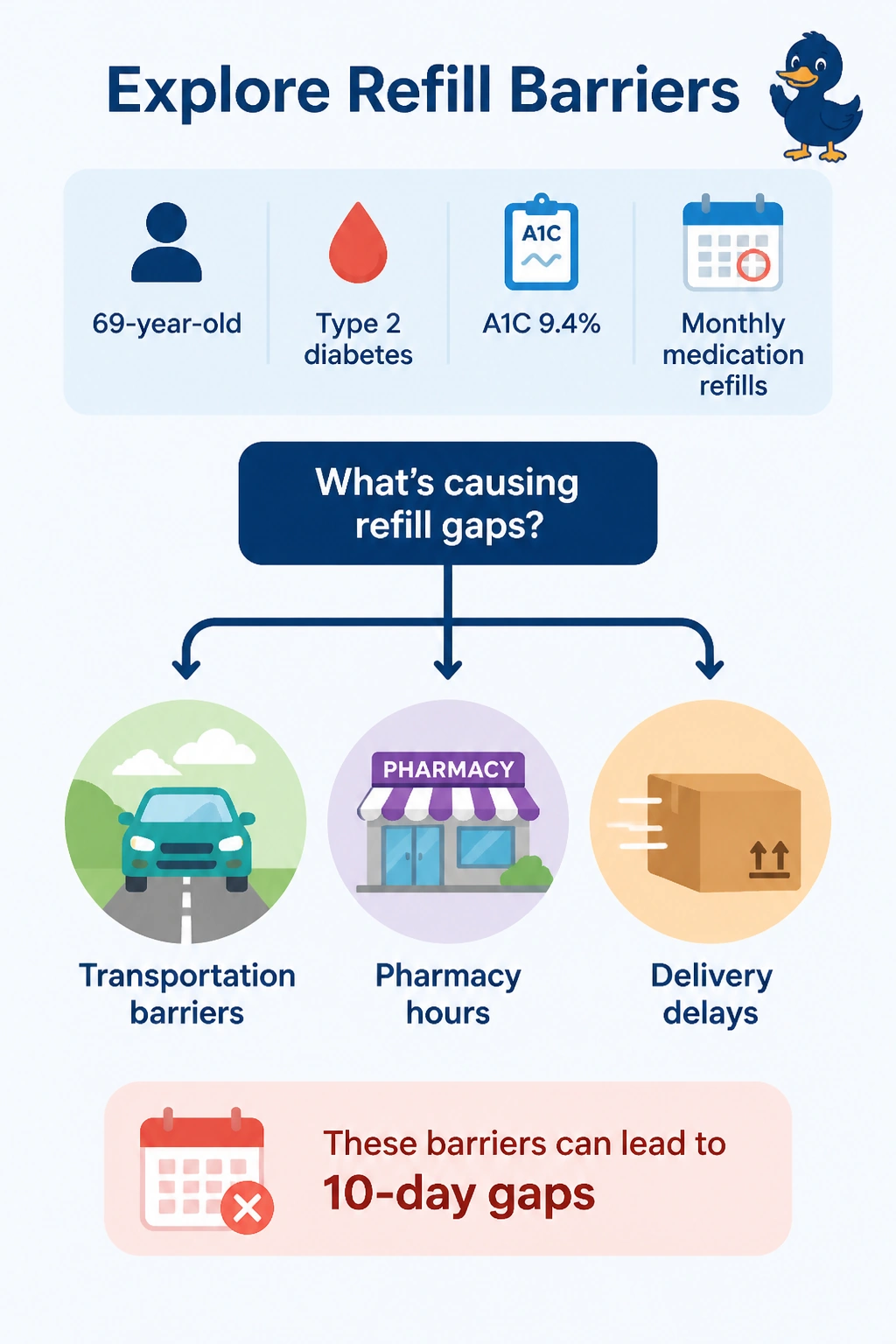
During a clinic intake, a 69-year-old woman with type 2 diabetes has an A1C of 9.4% and pharmacy records showing 10-day gaps between her monthly medication refills. Which assessment question should the diabetes care and education specialist ask first?
Select an answer to reveal the explanation.
Short Explanation
A 10-day refill gap may reflect a practical barrier, such as transportation, pharmacy hours, or delivery delays—not a lack of willpower. You can start by exploring those logistics before discussing medication beliefs or changing the regimen, keeping the conversation nonjudgmental.
Full Explanation
Refill gaps can result from social determinants of health, including transportation access, pharmacy hours, and delivery delays, so exploring whether these barriers are causing the gaps can uncover modifiable causes without blame. Identifying a logistical barrier helps you address how the patient obtains medication and may support more reliable refills. Reviewing long-term complication risks before asking about refill barriers may provide important education, but it does not establish why medication is unavailable. Assessing beliefs about medication necessity before exploring transportation and pharmacy access may miss a practical obstacle and risks focusing on motivation before understanding access. Discussing a simpler dosing schedule before checking how prescriptions are obtained may change the regimen without resolving the refill problem. As an exam caveat, access barriers can overlap with medication cost or food insecurity, so remain alert to related needs rather than assuming transportation is the only cause. For a practical check, ask the patient to describe how they obtain each refill, including transportation, pharmacy hours, and delivery timing, and confirm at follow-up whether the next refill was obtained on time.
Prefer to study offline? Printable PDF study book + test engine ($7.50, unofficial). These questions stay free here.