
During an outpatient assessment, a 58-year-old man with type 2 diabetes brings his blood glucose meter for data review, and the downloaded summary shows all post-dinner highs occurring at 3:00 a.m. and fasting checks logged at 4:00 p.m., even though he works a regular daytime schedule. What should the diabetes care and education specialist assess first?
Select an answer to reveal the explanation.
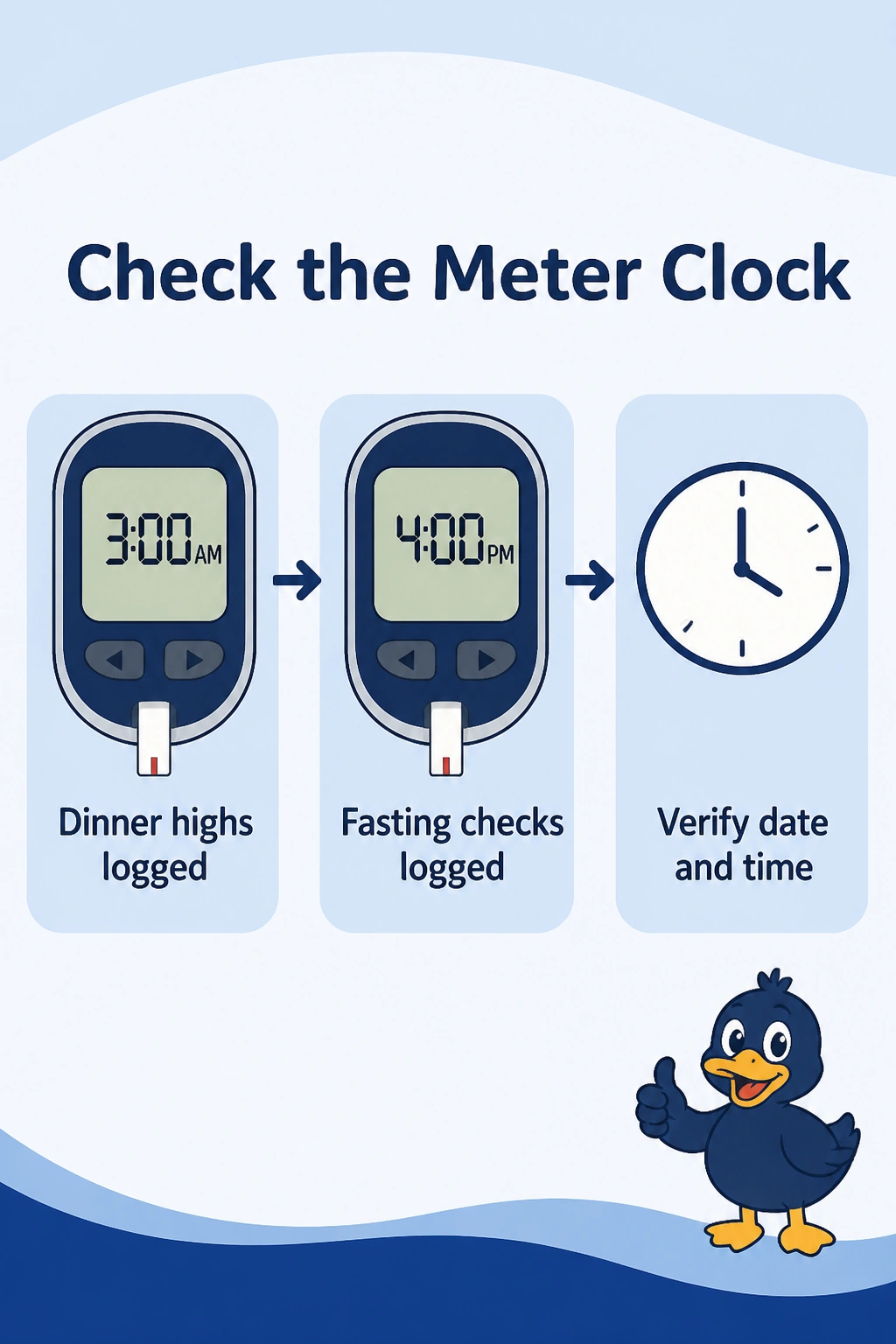
Short Explanation
Before you redesign someone's entire medication plan from a confusing report, make sure the clock on the wall is actually right. A blood glucose meter with an incorrect AM/PM or time-zone setting flips daytime and overnight patterns on downloaded summaries. The trap is blaming physiology or ordering new devices when a quick device check explains the mismatch.
Full Explanation
Choosing to Verify the date and time settings on his blood glucose meter is the essential first assessment step when downloaded timestamps contradict a patient's reported daily schedule. Battery changes, daylight saving shifts, or initial setup errors often leave a meter clock off by 12 hours, turning normal daytime post-meal readings into apparent middle-of-the-night spikes. Confirming the clock prevents misinterpreting glycemic patterns and avoids unsafe therapy changes. Choosing to Recommend switching immediately to a continuous glucose monitor skips basic troubleshooting and adds unnecessary cost or complexity before checking the existing tool. Choosing to Conclude that he is experiencing severe nocturnal dawn phenomenon misattributes inverted timestamps to an overnight hepatic glucose surge, which could lead to inappropriate basal insulin escalation. Choosing to Base time-of-day patterns on the download without comparing it with the patient’s meal and sleep schedule accepts inaccurate timestamps at face value and overlooks that pattern review requires correlation with meals, medication, and sleep. As a caveat, even if the meter clock is accurate, a mismatch can still reflect unreported night eating or shift work, so open-ended questioning remains important. As an operational check, compare the meter's displayed time against the clinic clock during intake and correct the setting before generating pattern reports.
Prefer to study offline? Printable PDF study book + test engine ($7.50, unofficial). These questions stay free here.