
A 53-year-old man with newly diagnosed type 2 diabetes arrives for his first outpatient diabetes education visit looking defensive and says he does not understand why he has diabetes because he rarely eats candy or dessert. Which learning assessment step should the diabetes care and education specialist take first?
Select an answer to reveal the explanation.
Short Explanation
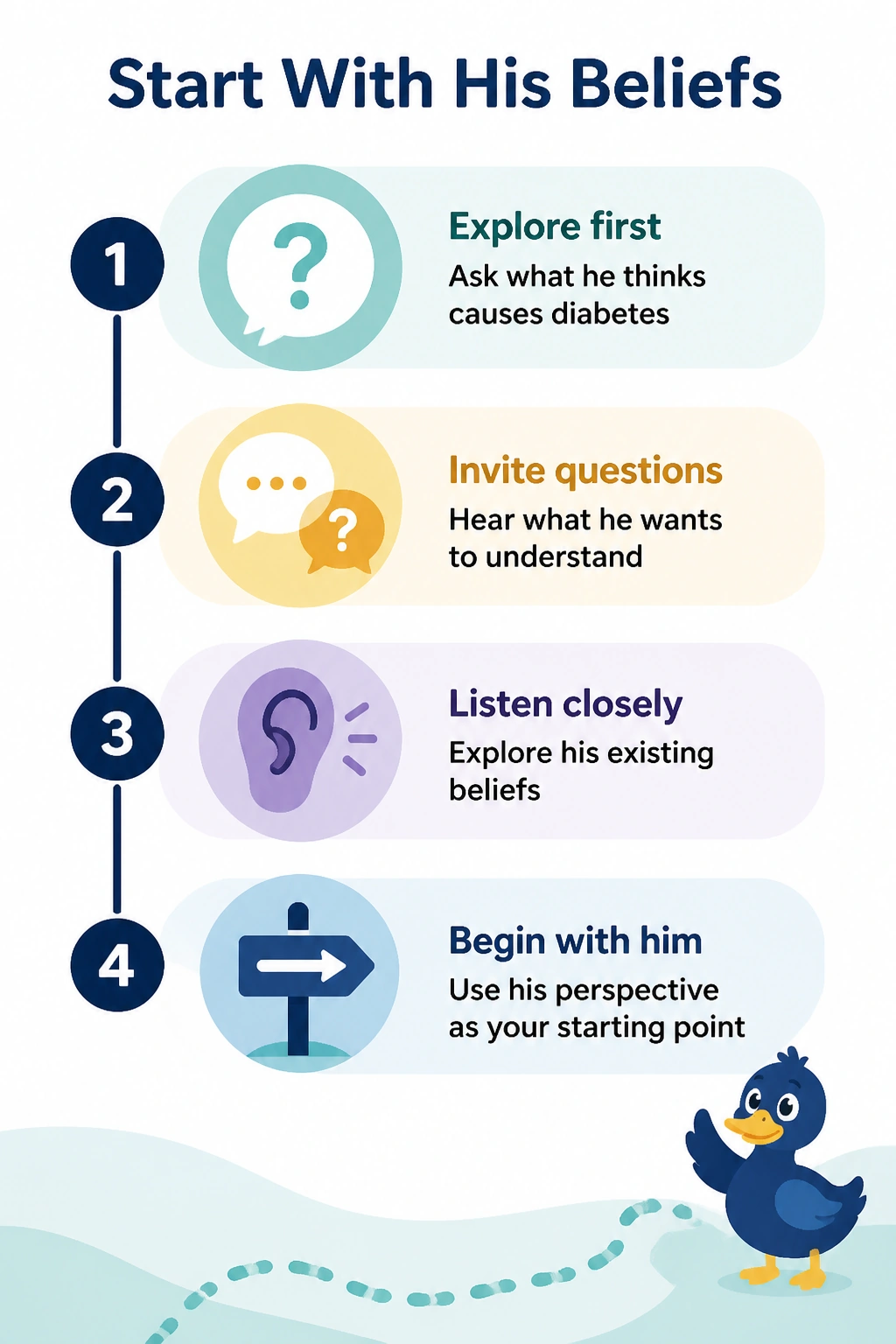
Before you explain insulin resistance or test carb skills, you need to hear what he already believes about diabetes. Starting with his questions lowers defensiveness about sugar and lets you tailor your teaching to what matters most to him.
Full Explanation
The best first step is to Explore his existing beliefs and questions about what causes diabetes. Assessing baseline knowledge, cultural assumptions, and emotional reactions helps the specialist identify common myths—such as thinking diabetes comes solely from eating sweets—while building trust and psychological safety before introducing new concepts. Choosing to Begin with a brief explanation of insulin resistance before eliciting his questions reverses the assessment sequence by teaching before listening, and early pathophysiology language can increase defensiveness when he feels blamed. Deciding to Assess carbohydrate estimation with a sample meal before discussing his beliefs jumps to a numeracy skill before addressing the core misconception about cause, which can feel dismissive and misdirect the plan. Opting to Assess foot-care knowledge first as an early complication-prevention priority shifts to a different content area while leaving the foundational misunderstanding unaddressed, which can undermine motivation for nutrition, activity, and medication decisions later. One caveat is that misconceptions often carry guilt or family stories, so listen without interrupting before offering plain-language explanations. As an operational check, ask what he has heard about diabetes from family or friends and what his biggest concern is today.
Prefer to study offline? Printable PDF study book + test engine ($7.50, unofficial). These questions stay free here.