
A 29-year-old man with type 1 diabetes using an insulin pump and continuous glucose monitor reports persistent itching, redness, and raised bumps under his sensor and infusion-set patches over the past month. Which focused assessment should the diabetes care and education specialist perform first?
Select an answer to reveal the explanation.
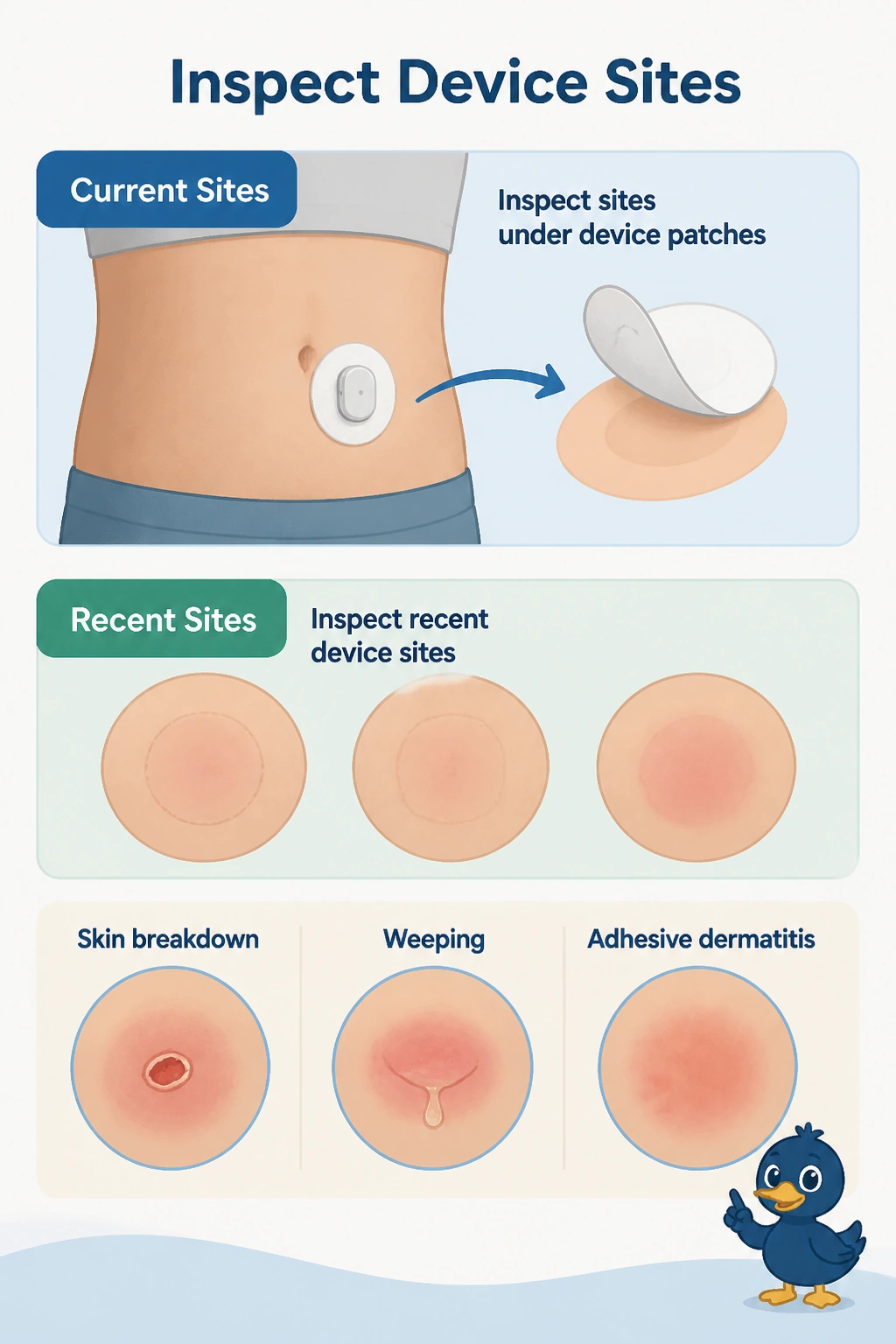
Short Explanation
When you hear about itching beneath a device patch, the skin itself is your best clue—not a lab result. You can identify adhesive dermatitis or early infection by inspecting current and recent device sites before reviewing glucose trends, wear time, or barrier-wipe brands.
Full Explanation
Inspecting current and recent device sites is essential because adhesives, skin-prep wipes, and plastic cannulas can trigger irritant or allergic contact dermatitis. Checking for skin breakdown, weeping, or adhesive dermatitis helps you distinguish mild redness from blistering, secondary infection, or compromised tissue that may impair insulin absorption and sensor accuracy. Reviewing recent sensor glucose trends before inspecting the affected skin focuses on glycemic data while leaving the localized rash unevaluated. Assessing device wear time without first examining the rash addresses duration but misses the essential check for breakdown, weeping, or infection. Reviewing barrier-wipe brands before checking for skin breakdown or infection puts product history ahead of physical assessment and cannot rule out secondary infection. One caveat: warmth, purulent drainage, or spreading induration can signal infection and requires prompt medical evaluation. Examine the actual current and recent device sites and document your findings.
Prefer to study offline? Printable PDF study book + test engine ($7.50, unofficial). These questions stay free here.