
A 50-year-old woman with type 2 diabetes on basal-bolus insulin brings her logbook showing frequent 3:00 a.m. hypoglycemia and afternoon readings above 280 mg/dL; she remarks that she takes her rapid-acting pen at bedtime to help her sleep through the night. What should the diabetes care and education specialist assess first?
Select an answer to reveal the explanation.
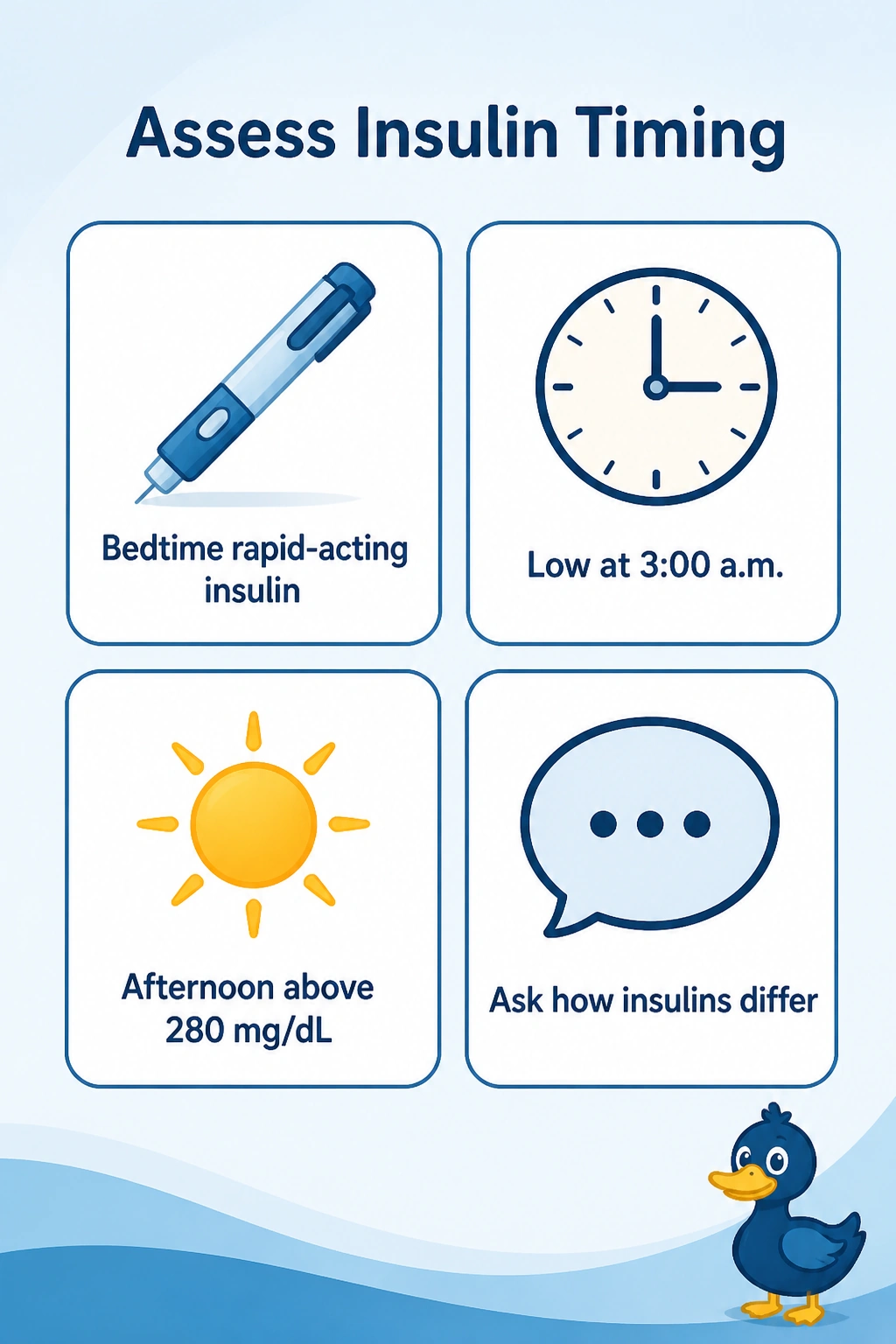
Short Explanation
Taking rapid-acting insulin at bedtime without food is like pressing the gas pedal while the car is parked for the night. Before considering an insulin pump, a meter-strip substitution, or an injection-site preference, check whether you understand which pen provides background coverage and which works quickly around meals. Assessing your understanding of timing helps pinpoint the knowledge gap.
Full Explanation
The specialist should assess her understanding of how basal and rapid-acting insulins differ in timing. Frequent 3:00 a.m. hypoglycemia with afternoon readings above 280 mg/dL suggests she may be confusing the roles of her insulins: taking fast-onset, short-duration bolus insulin at bedtime when no meal is present, while lacking appropriate mealtime or background coverage during the day. Rapid-acting insulin may be prescribed for a bedtime correction, but using it as a sleep aid or unplanned substitute for basal insulin is unsafe; verify the actual labels, doses, and instructions. Clarifying what she believes each pen does can reveal look-alike packaging, missed teaching, or terminology confusion. Asking whether she prefers an insulin pump instead of pens is premature and adds device complexity before foundational insulin concepts are clear. Checking whether the pharmacy substituted a generic blood glucose meter test strip brand does not explain the predictable mismatch between rapid-insulin timing and nocturnal lows. Asking her preferred injection site before asking which insulin she uses at each time reverses priorities: site rotation affects absorption but cannot correct taking the wrong insulin at the wrong time. One caveat is that pen labels and needle caps can look identical, especially in dim bedroom lighting. As a practical check, place both pens on the table and ask her to point to each one and explain when and why she takes it.
Prefer to study offline? Printable PDF study book + test engine ($7.50, unofficial). These questions stay free here.