
A 55-year-old man with type 2 diabetes for ten years has an A1C of 9.1% on maximum oral therapy, yet he declines his clinician's recommendation to start basal insulin because he believes needing insulin means he has failed and his disease is now terminal. Which assessment focus should the diabetes care and education specialist address first?
Select an answer to reveal the explanation.
Short Explanation
Handing someone an insulin pen before hearing out their fear of failure is like handing over car keys to someone terrified of driving. The trap is jumping straight into injection mechanics or labeling your learner as nonadherent. Start by exploring the beliefs and stigma standing in the way.
Full Explanation
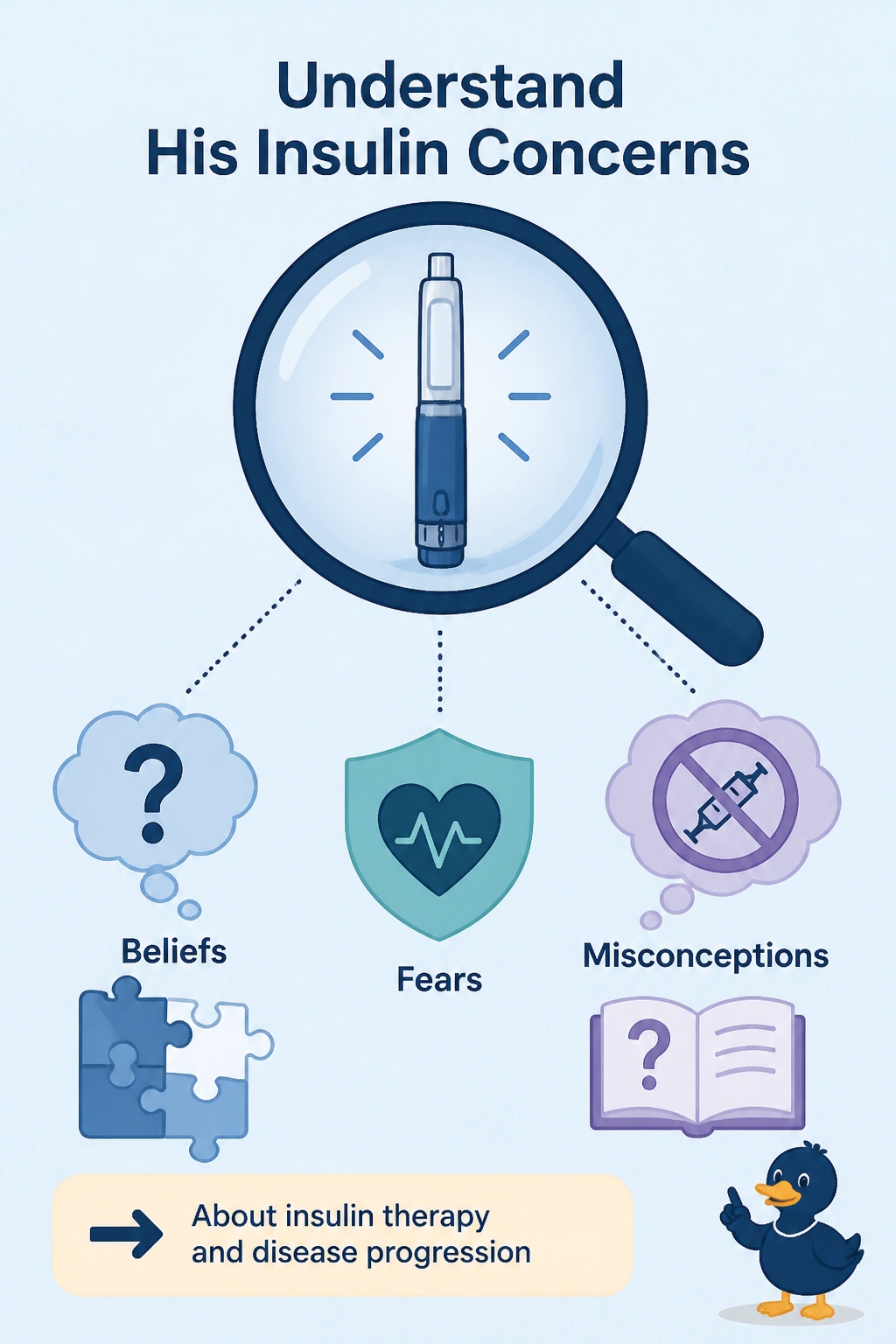
Psychological insulin resistance is frequently driven by self-blame, fear of disease progression, and stigma rather than needle phobia alone. Choosing to Explore his beliefs, fears, and misconceptions about insulin therapy and disease progression uses person-centered assessment to uncover the root barrier and reframe insulin as a treatment that can meet current insulin needs and improve glucose control without implying personal failure. Jumping ahead to Demonstrate how to prime an insulin pen and rotate abdominal injection sites before addressing his concerns bypasses his emotional readiness and rarely leads to uptake. Opting to Provide a printed carbohydrate-counting booklet and schedule a follow-up visit in three months leaves both his elevated A1C and his underlying misconceptions unaddressed. Choosing to Focus first on presenting long-term complication statistics to persuade him to accept insulin relies on fear-based persuasion rather than assessment and may heighten defensiveness without resolving self-blame. As a clinical caveat, cultural and family stories—such as relatives who started insulin late and experienced complications—often fuel the belief that insulin causes harm. As an operational check, use open-ended questions and normalize type 2 diabetes progression before introducing any practical device demonstration.
Prefer to study offline? Printable PDF study book + test engine ($7.50, unofficial). These questions stay free here.