
During a rural community clinic intake, a 58-year-old man with type 2 diabetes has an A1C of 8.6% and mentions he often skips his evening meal during the last week of each month before his benefits arrive. Which assessment priority should the diabetes care and education specialist address first?
Select an answer to reveal the explanation.
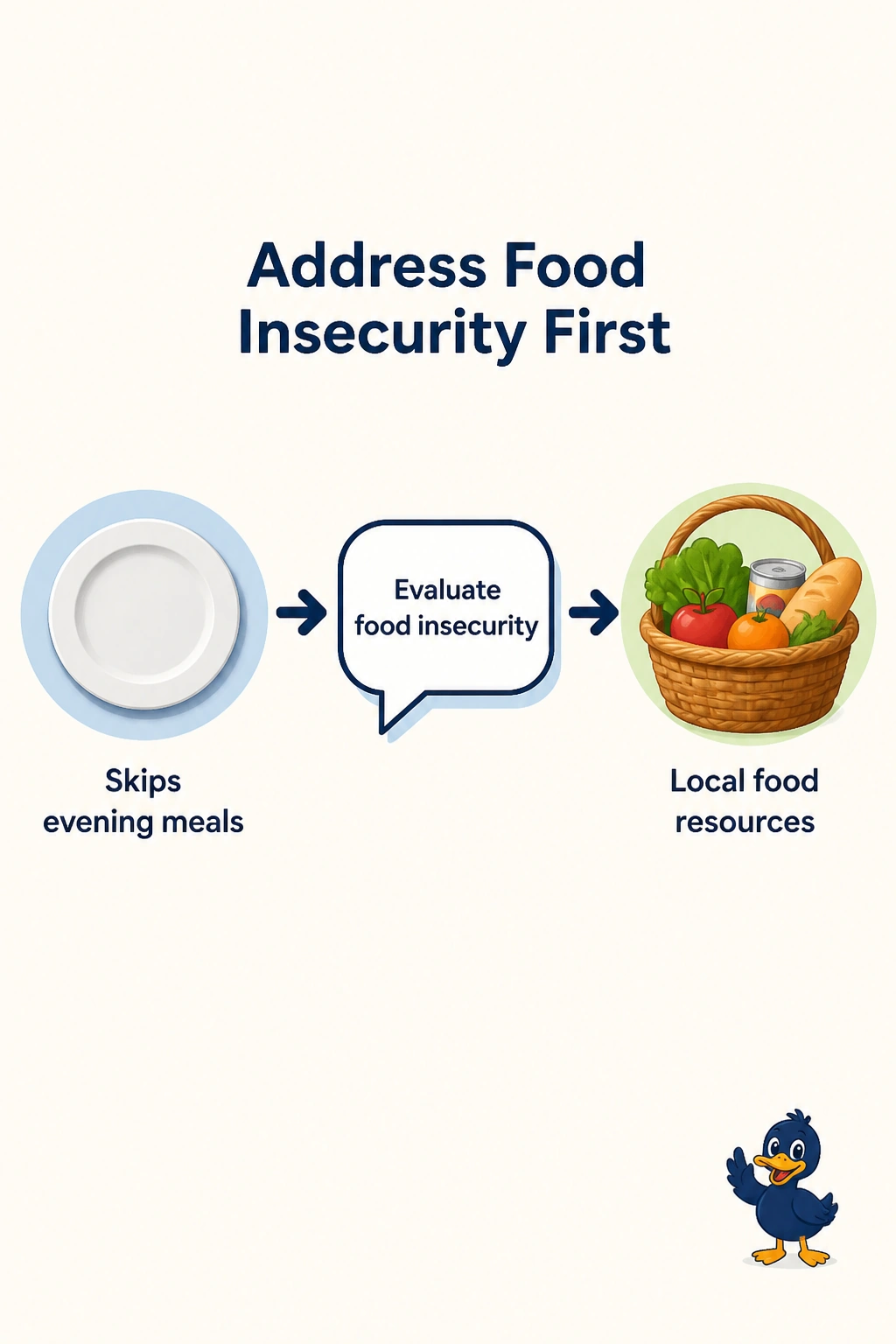
Short Explanation
You cannot build a steady meal plan when the pantry runs empty every fourth week. Skipping dinner before benefits arrive is a clear social determinant of health cue, not a knowledge gap. The common trap is jumping straight to clinical lab orders or meal math before addressing basic food access.
Full Explanation
Evaluating household food insecurity and connecting him with local food resources is the top priority because unreliable access to food directly drives glycemic swings and hypoglycemia risk on glucose-lowering therapy. Screening for social determinants of health during intake ensures the care plan fits real-world constraints and links the person to nutrition assistance programs or community food pantries. Ordering a fasting lipid panel and urine albumin-to-creatinine ratio for complication staging is important for routine diabetes care, yet lab staging does not solve an immediate end-of-month food shortage. Calculating his daily carbohydrate-to-insulin ratio using a seven-day food record assumes consistent food availability and is premature when meals are being skipped due to cost. Administering a validated cognitive screening tool to assess memory for meal schedules misinterprets an economic barrier as a memory deficit. Caveat: food insecurity often coexists with medication rationing, so ask gently about prescription affordability too. Operational check: document the two-item hunger screen response in the assessment record and confirm a warm handoff to a social worker or community resource navigator.
Prefer to study offline? Printable PDF study book + test engine ($7.50, unofficial). These questions stay free here.