
During an outpatient assessment, a 48-year-old with type 2 diabetes says they feel burned out by constant food tracking and glucose checks, even though they deny pervasive sadness or loss of interest in hobbies. Which assessment focus should the diabetes care and education specialist prioritize first?
Select an answer to reveal the explanation.
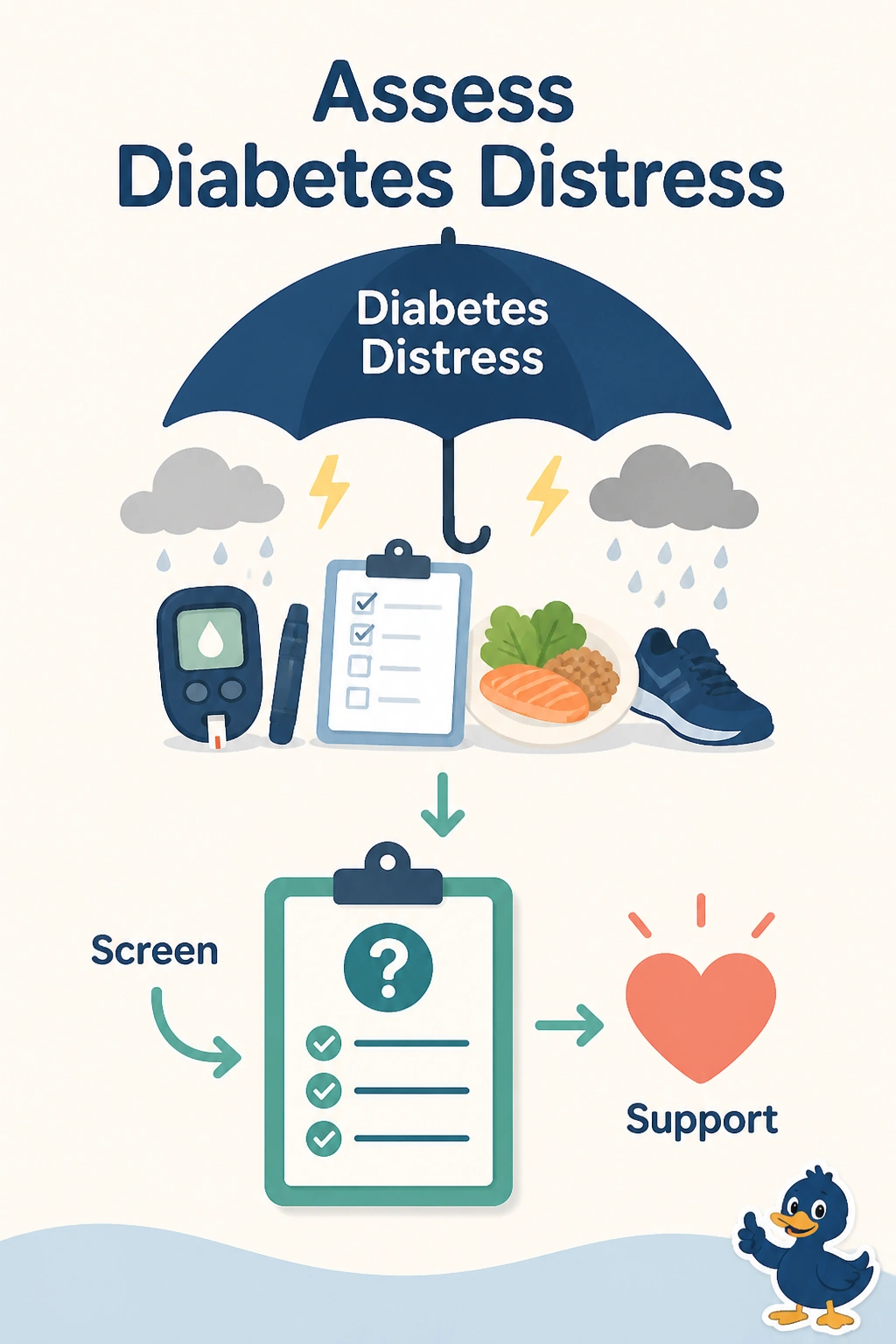
Short Explanation
Managing diabetes every single day can feel like carrying a heavy backpack that never comes off, and your assessment needs to spot that specific weight. The trap is assuming any emotional burnout equals clinical depression or jumping straight to technical skills instead of screening for diabetes distress first.
Full Explanation
When a person expresses feeling overwhelmed or burned out specifically by the daily demands of diabetes while maintaining interest in other areas of life, the priority is to "Screen for diabetes distress related to the emotional burden of self-care". Diabetes distress reflects the realistic emotional toll of living with a chronic condition, and validated tools such as the Diabetes Distress Scale or Problem Areas in Diabetes scale help pinpoint whether the burden stems from regimen demands, interpersonal strain, or clinician interactions. Choosing to "Initiate a formal psychiatric evaluation for major depressive disorder" prematurely conflates regimen-specific burnout with a pervasive mood disorder, especially when anhedonia and persistent sadness are absent, though coexisting depression should be screened if red flags appear. Choosing to "Test carbohydrate counting accuracy using sample nutrition labels" adds cognitive demand and can worsen overwhelm when emotional barriers have not yet been addressed. Choosing to "Review injection site rotation technique for basal insulin pens" focuses on a narrow procedural task that ignores the client's stated emotional concern and may not even apply to their current regimen. Caveat: untreated diabetes distress is strongly linked to reduced self-care and higher A1C, so normalizing these feelings is essential. Operational check: administer a brief validated diabetes distress screener and collaboratively identify one small regimen simplification.
Prefer to study offline? Printable PDF study book + test engine ($7.50, unofficial). These questions stay free here.