
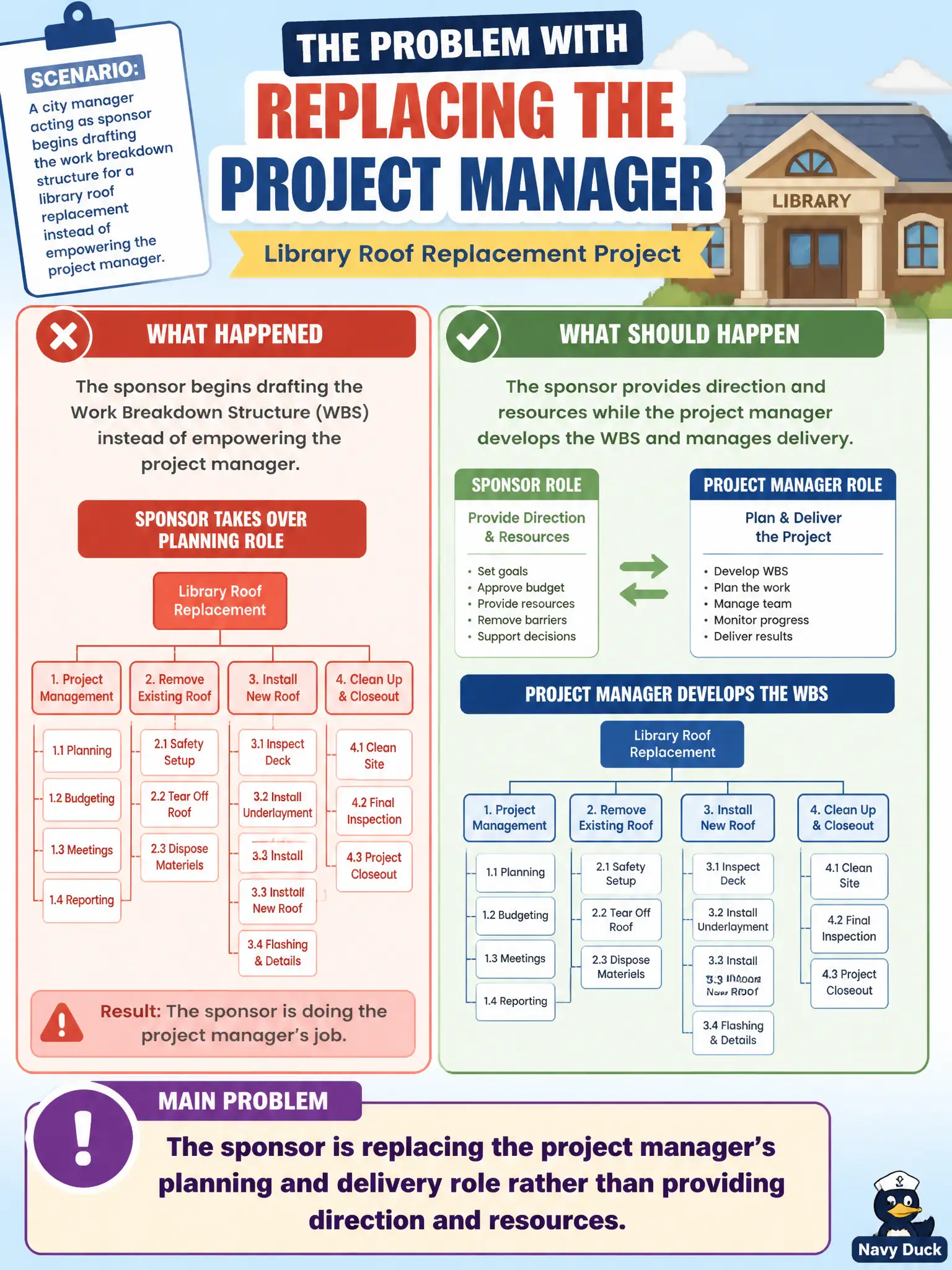
A city manager acting as sponsor begins drafting the work breakdown structure for a library roof replacement instead of empowering the project manager. What is the main problem with that approach?
Select an answer to reveal the explanation.
Short Explanation
Sponsors set direction and unlock resources—they don't usually sit down and carve the WBS themselves. When the city manager builds the breakdown personally, the PM's planning job gets hijacked. Hand the decomposition back to the project manager and keep the sponsor in the champion lane.
Full Explanation
Sponsors should provide direction and resources; they should not replace the project manager’s planning and delivery role. When a city manager acting as sponsor begins drafting the WBS for a library roof replacement instead of empowering the project manager, the main problem is role substitution. Saying the sponsor must personally create every schedule baseline before any work starts fails by concept: baseline development is a project management planning activity led by the project manager with the team. Saying only the facilities director may decompose municipal roof work packages fails because WBS development is not reserved exclusively to facilities titles, and that claim does not fix sponsor overreach. Saying a WBS is forbidden on predictive civic construction fails because predictive projects routinely use WBS decomposition. Exam caveat: CAPM sponsor-versus-PM items reward empowerment and clear role boundaries—sponsors approve and enable; project managers plan and deliver. Operational check: return WBS drafting to the project manager and team, have the sponsor review for strategic alignment and resource support, and document decision rights so roof packages are not rewritten from the sponsor’s desk.