
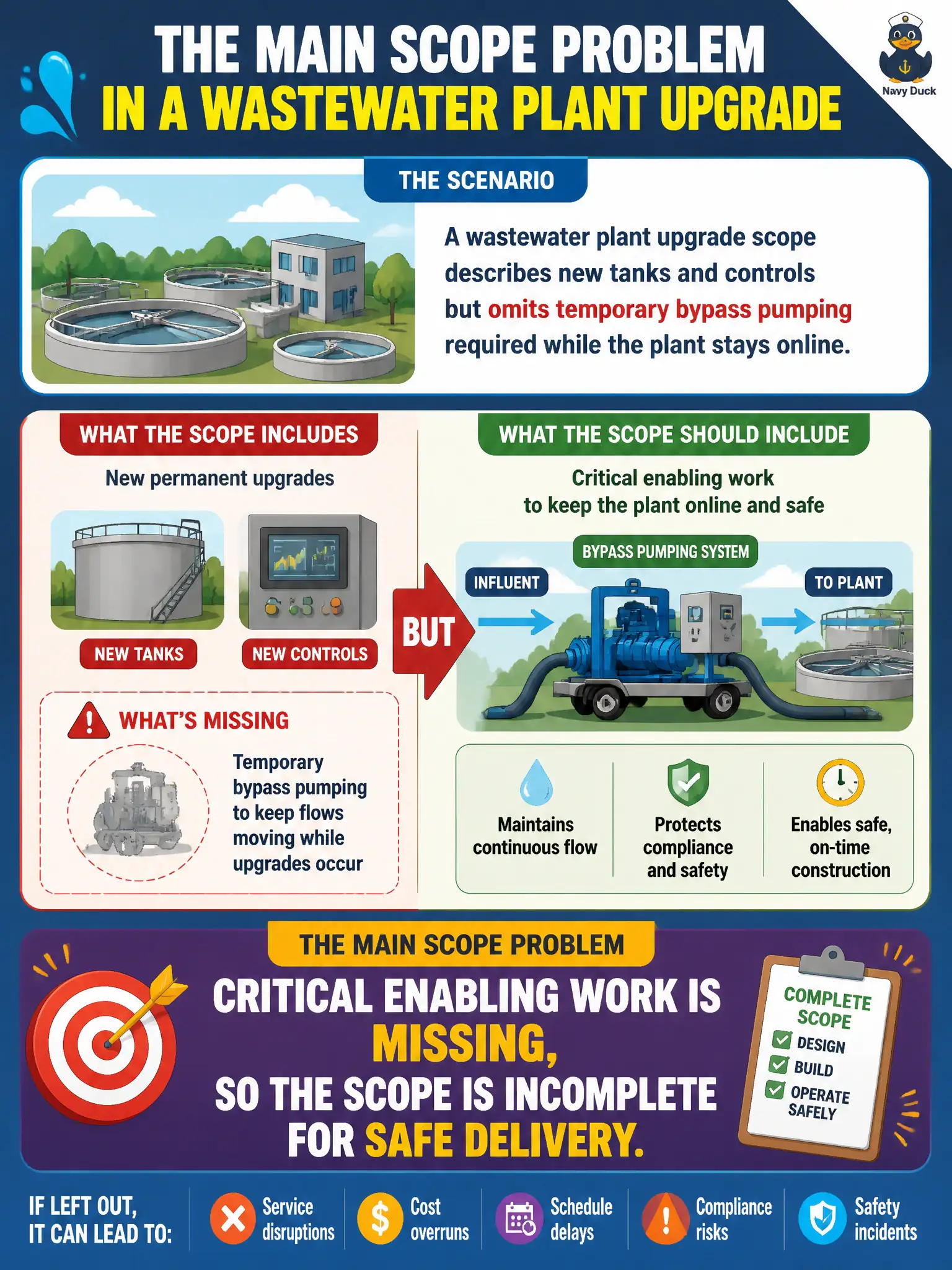
A wastewater plant upgrade scope describes new tanks and controls but omits temporary bypass pumping required while the plant stays online. What is the main scope problem?
Select an answer to reveal the explanation.
Short Explanation
If the plant must stay online, temporary bypass pumping is not a nice-to-have—it is enabling work. Leaving it out of scope is a completeness gap that will bite during construction.
Full Explanation
Scope completeness includes enabling and temporary work required to deliver the permanent result safely. A wastewater plant upgrade that describes new tanks and controls but omits temporary bypass pumping while the plant stays online has incomplete scope for safe delivery. Saying the scope is too detailed because enabling work should never appear in scope fails by concept: enabling work that is necessary to achieve the outcome belongs in scope planning. Saying bypass pumping belongs only in the city portfolio fails because portfolio prioritization does not replace including required temporary works in the project scope baseline. Saying omitting bypass work automatically converts the upgrade into pure operations fails because missing enabling scope does not reclassify a capital upgrade as BAU—it creates delivery and safety gaps. Exam caveat: municipal plants that must remain online often hide temporary bypass, redundancy, or cutover work; CAPM-level scope questions treat those omissions as incompleteness, not optional polish. Operational check: walk the cutover plan with operations, add temporary bypass pumping and related permits to the scope and cost baseline, and verify acceptance criteria cover safe continuous plant operation during construction.