
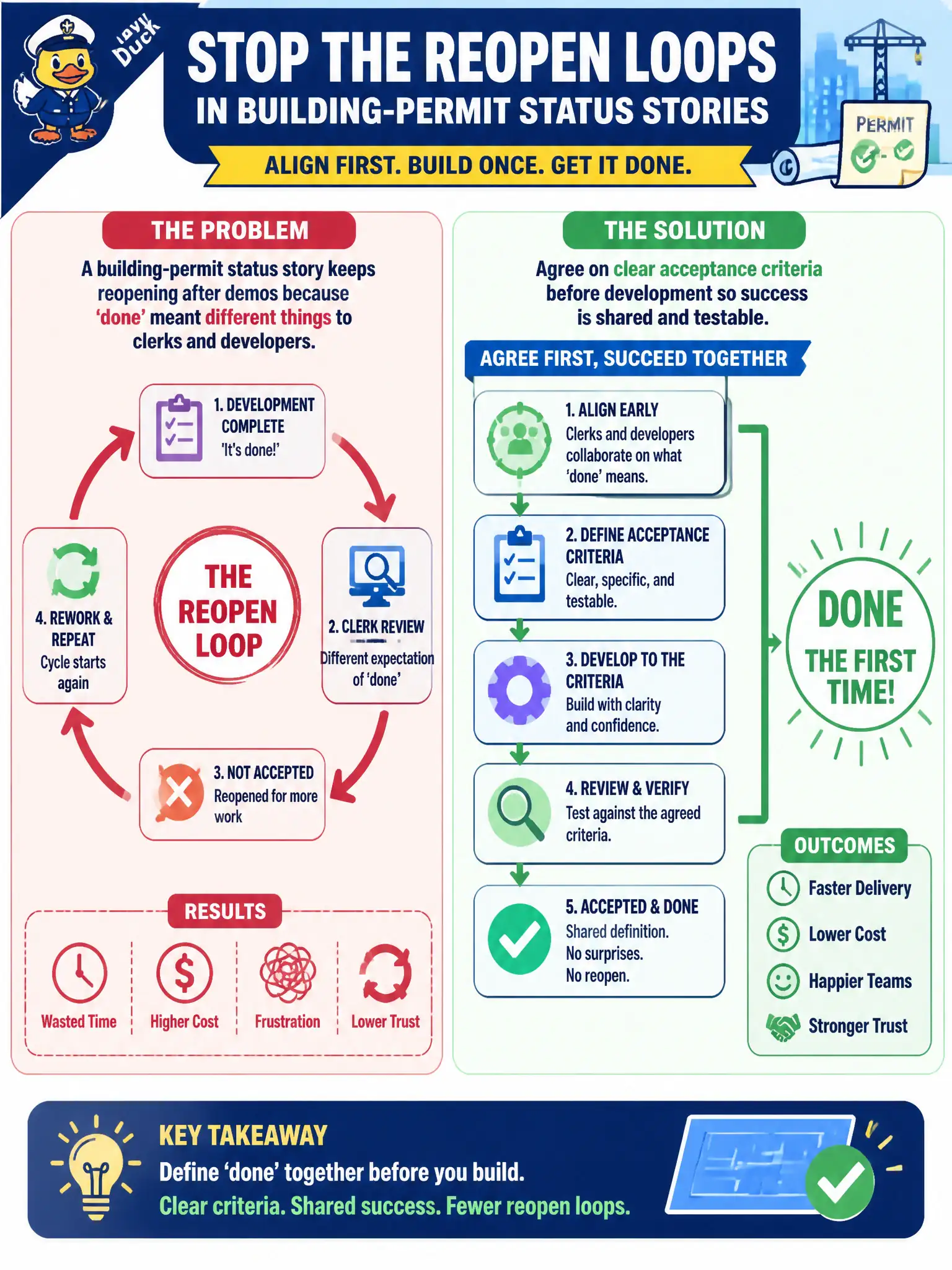
A building-permit status story keeps reopening after demos because ‘done’ meant different things to clerks and developers. What practice reduces those reopen loops?
Select an answer to reveal the explanation.
Short Explanation
Vague ‘done’ is a boomerang—stories fly back. Write clear acceptance criteria up front so clerks and builders share the same finish line. Fewer surprise reopenings, more ‘yep, that’s what we meant.’
Full Explanation
When a building-permit status story keeps reopening after demos because "done" meant different things to clerks and developers, agreeing on clear acceptance criteria before development reduces those reopen loops. Shared, testable success definitions align clerks and developers so demos evaluate the same bar. Clear criteria are a primary adaptive quality and requirements practice for civic permitting software that must satisfy frontline users.
Writing acceptance criteria only after production release fails fails conceptually because late criteria cannot guide development or prevent reopen cycles during demos. Banning demos so disagreements never surface fails because hiding conflict does not create shared success definitions and delays learning. Letting each developer invent private pass/fail rules per commit fails because private rules recreate the ambiguity that caused reopen loops with clerks.
Exam caveat: Acceptance criteria belong before development as shared, testable success definitions—not after failure, via demo bans, or as private per-developer rules. Operational check: facilitate clerks and developers to write acceptance criteria for permit status before coding, store them with the story, and use them consistently in review and testing.