
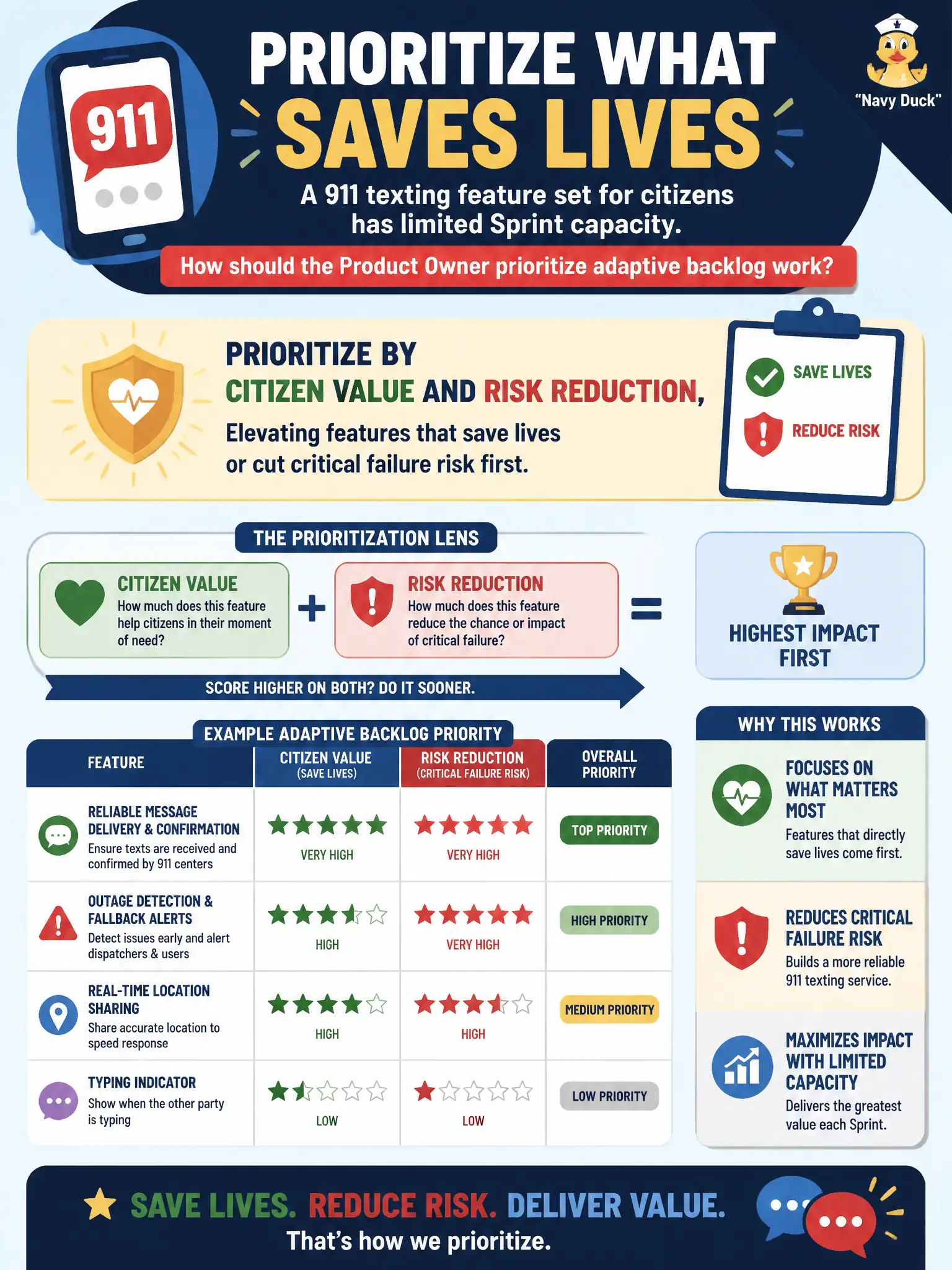
A 911 texting feature set for citizens has limited Sprint capacity. How should the Product Owner prioritize adaptive backlog work?
Select an answer to reveal the explanation.
Short Explanation
When seconds matter, put the life-saving stuff first—like clearing the ambulance lane before restriping the bike path. Citizen value and risk reduction beat vanity ranking. Capacity is scarce; spend it where outcomes hurt most if delayed.
Full Explanation
With limited Sprint capacity on a 911 texting feature set for citizens, the Product Owner should prioritize adaptive backlog work by citizen value and risk reduction, elevating features that save lives or cut critical failure risk first. Adaptive success thinking orders work by value and risk, not by cosmetic fairness to department preferences when life-safety outcomes are at stake in emergency communications.
Alphabetically ranking by story title so ranking feels fair to every department fails conceptually because alphabetical order ignores value and risk. Prioritizing by whichever vendor sales representative emails most frequently fails because vendor pressure is not a citizen-value or risk basis for 911 capabilities. Ranking by coding difficulty alone and saving easy stories for later fails because difficulty is not the primary value and risk prioritization criterion for life-safety features.
Exam caveat: CAPM adaptive prioritization emphasizes value and risk—especially life-safety in civic contexts—not alphabet, vendor noise, or difficulty-only sorting. Operational check: score 911 texting backlog items for citizen impact and failure risk, place life-safety capabilities first within Sprint capacity, and explain deferred lower-value items transparently to departments.