
A senior engineer reviews the current plan and notices that one key control is missing. For IBM Certified watsonx Governance Lifecycle Advisor, the topic is AI risk management. What should the team do?
Select an answer to reveal the explanation.
Short Explanation and Infographic
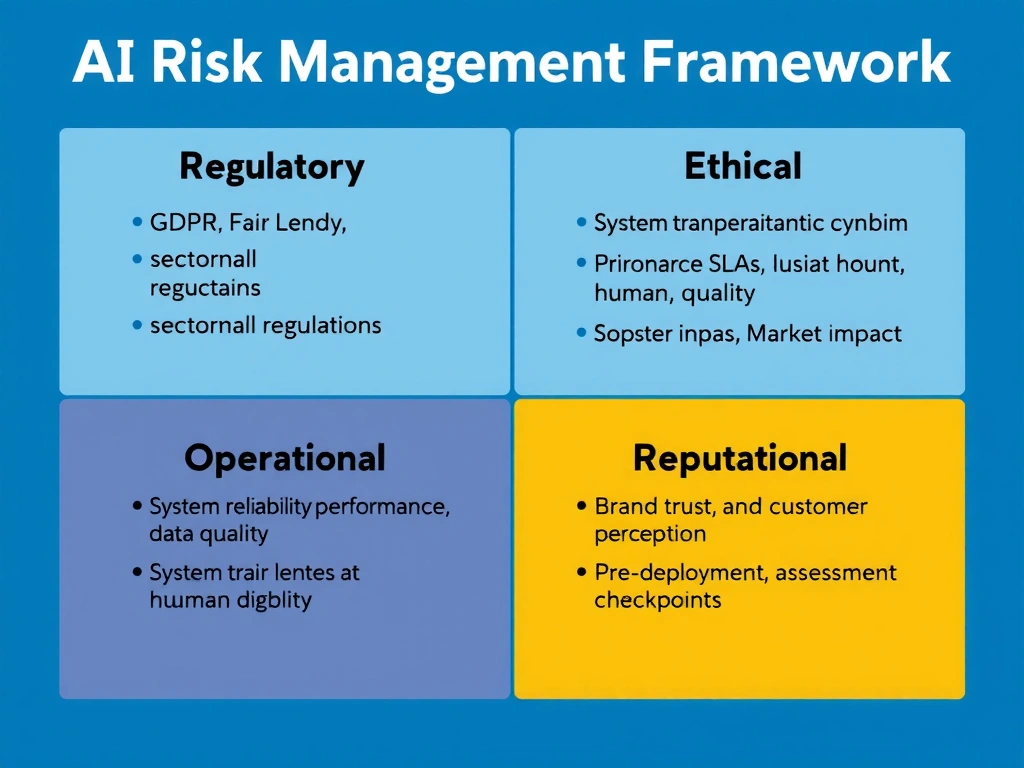
Risk management is like flying a plane—you don't wait until the engine fails to check the fuel! Proactive assessment looks at regulatory rules (will this violate GDPR?), ethics (is this fair?), operations (will it crash our systems?), and reputation (could this embarrass us?). Catching risks early prevents disasters; waiting for regulators means you already failed!
Full explanation below image
Full Explanation
The correct answer is b. Effective AI risk management requires proactive identification and assessment of four risk categories before deployment: regulatory risks (compliance violations, unfair discrimination), ethical risks (bias, transparency concerns), operational risks (system failures, performance degradation), and reputational risks (customer trust, brand damage). Option a (waiting for regulators) is reactive and dangerous—regulators impose penalties; proactive assessment prevents violations. Option c (everything is low risk) is negligence and exposes the organization. Option d (ignoring generative AI text risks) is false; LLMs pose hallucination, bias, security, and misuse risks despite text-only output. IBM watsonx.governance embeds continuous risk identification across regulatory, ethical, operational, and reputational dimensions as a foundational control throughout the AI lifecycle.