
During a design review, an architect asks which choice best matches the IBM guidance. What is the best way to handle integration setup while staying aligned with the certification objectives?
Select an answer to reveal the explanation.
Short Explanation and Infographic
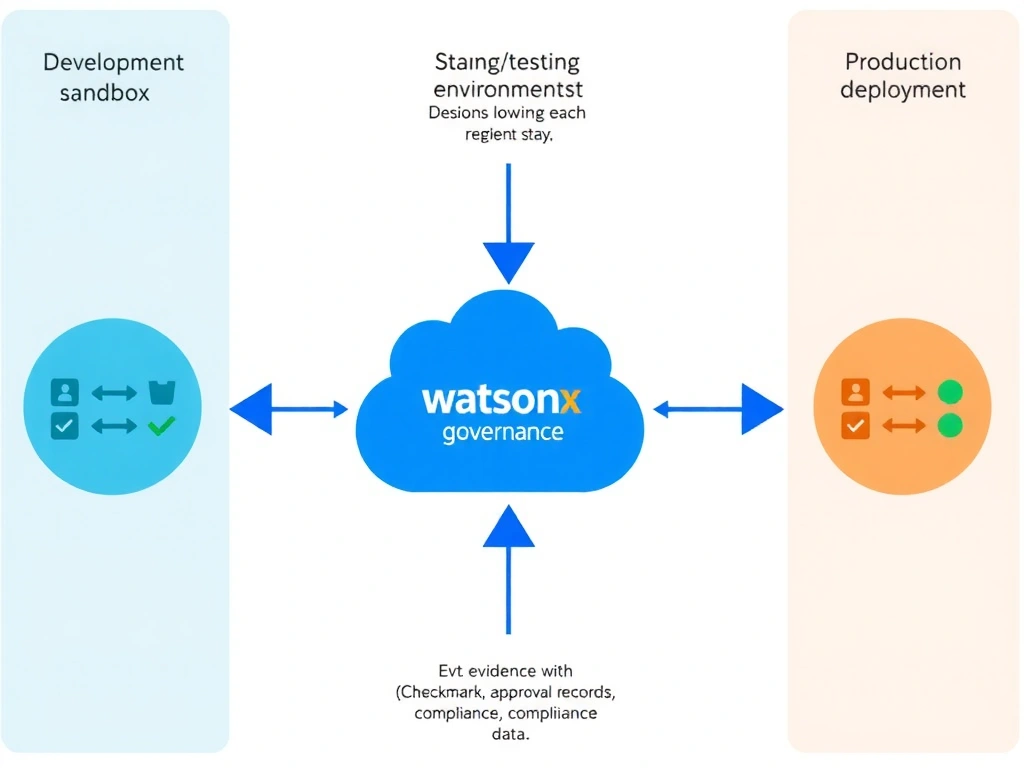
Governance can't live in isolation—it's got to be woven into your development pipeline like quality checks at every station on an assembly line. Connect watsonx.governance to your development sandbox, your staging area, and production so evidence is collected automatically and continuously. Manual copying is error-prone, ignoring development is risky (that's where bad habits form), and separating governance from engineering is a recipe for theater, not real governance.
Full explanation below image
Full Explanation
The correct answer is d. Effective governance requires integrating watsonx.governance tooling with both model development and deployment environments so evidence collection, monitoring, and compliance checks happen automatically across the entire lifecycle. This integration ensures that governance is not an afterthought but embedded in the workflow. Option a is wrong because manual metric copying introduces transcription errors, lacks traceability, and doesn't scale; automated integration is both safer and more efficient. Option b is fundamentally flawed because governance that is separate from development is invisible and ineffective; it must be integrated into the environments where work actually happens. Option c is incomplete because omitting development environments means missing the chance to catch and correct issues early; governance that starts in production is reactive, not preventive.