
An administrator is troubleshooting a pilot deployment and wants the most appropriate next step. What is the best way to handle generative AI evaluation while staying aligned with the certification objectives?
Select an answer to reveal the explanation.
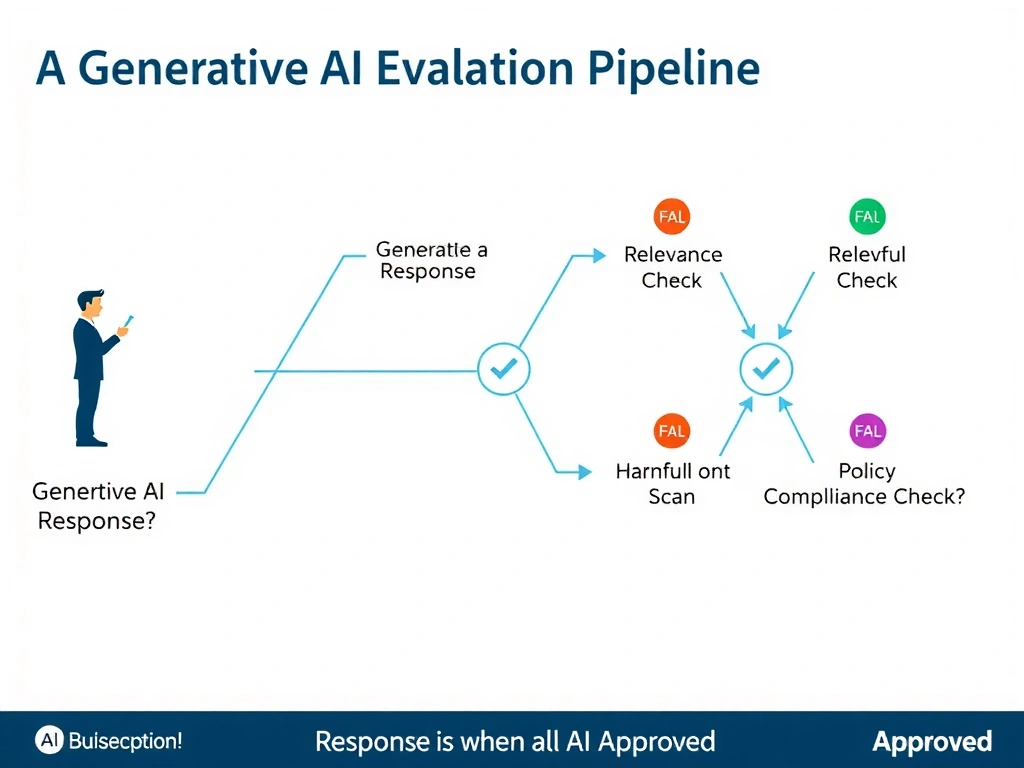
Short Explanation and Infographic
Generative AI evaluation is like a chef's tasting menu review: you judge flavor, presentation, sourcing, and dietary safety — not just whether the portion size was adequate. Option C is the full tasting review: groundedness, relevance, harmful content, and policy compliance. Length-only judgments are portion-size-only scores. Skipping source grounding is not checking where the ingredients came from. User-only safety evaluation is sending every dish out without a kitchen taste. Comprehensive, criteria-driven GenAI evaluation — option C!
Full explanation below image
Full Explanation
The correct answer is C. Evaluate generative AI for groundedness, relevance, harmful content, and policy compliance where applicable. aligns directly with the 4.0 Configure Evaluation and Monitoring exam objective and reflects how IBM watsonx.governance operationalizes this practice in enterprise environments. IBM watsonx.governance is designed to provide the tooling, workflows, and evidence collection mechanisms that make AI trustworthy and auditable from intake through retirement. Choosing this option ensures the implementation is both defensible to regulators and maintainable by governance teams across the full AI lifecycle. Option A is incorrect because it narrows the scope to a single artifact or metric and misses the full governance requirement. Option B is incorrect because it eliminates a required control and leaves the governance program without a critical safeguard. Option D is incorrect because it offloads or obscures a governance responsibility in a way that breaks accountability and auditability. On scenario-based exam questions, the correct answer is consistently the one that operationalizes the IBM governance practice with structured controls rather than approximating it with shortcuts, manual workarounds, or oversimplified rules.