
A consultant is advising a customer that wants a scalable implementation. The team is focused on governance operating model. Which recommendation is most appropriate?
Select an answer to reveal the explanation.
Short Explanation and Infographic
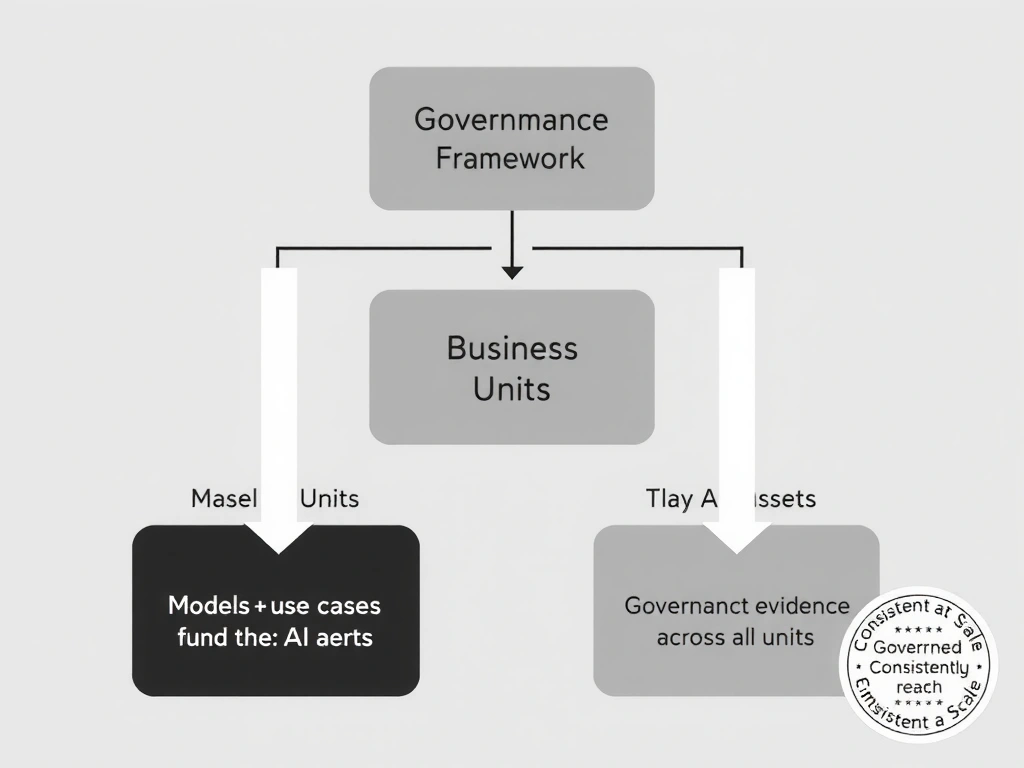
Think of a governance operating model like a franchise playbook: every location follows the same standards, so a customer in any city gets the same experience. Option C is the playbook: defined ownership, policies, workflows, and evidence so governance scales consistently across teams. Homegrown approval paths per team produce franchise locations that look completely different. Chat-stored approvals vanish. Good-intentions governance is a franchise with no playbook at all. Scalable, standardized governance operations — option C!
Full explanation below image
Full Explanation
The correct answer is C. Define ownership, policies, workflows, and evidence so AI governance can scale across teams. aligns directly with the 1.0 AI Governance Overview exam objective and reflects how IBM watsonx.governance operationalizes this practice in enterprise environments. IBM watsonx.governance is designed to provide the tooling, workflows, and evidence collection mechanisms that make AI trustworthy and auditable from intake through retirement. Choosing this option ensures the implementation is both defensible to regulators and maintainable by governance teams across the full AI lifecycle. Option A is incorrect because it applies an overbroad rule that eliminates meaningful differentiation and accountability. Option B is incorrect because it relies on an informal, non-auditable mechanism that cannot support enterprise governance at scale. Option D is incorrect because it treats a recurring operational requirement as a one-off or optional activity and leaves governance inactive. On scenario-based exam questions, the correct answer is consistently the one that operationalizes the IBM governance practice with structured controls rather than approximating it with shortcuts, manual workarounds, or oversimplified rules.