
A project lead is turning a proof of concept into a governed production workflow. The team is focused on drift monitoring. Which recommendation is most appropriate?
Select an answer to reveal the explanation.
Short Explanation and Infographic
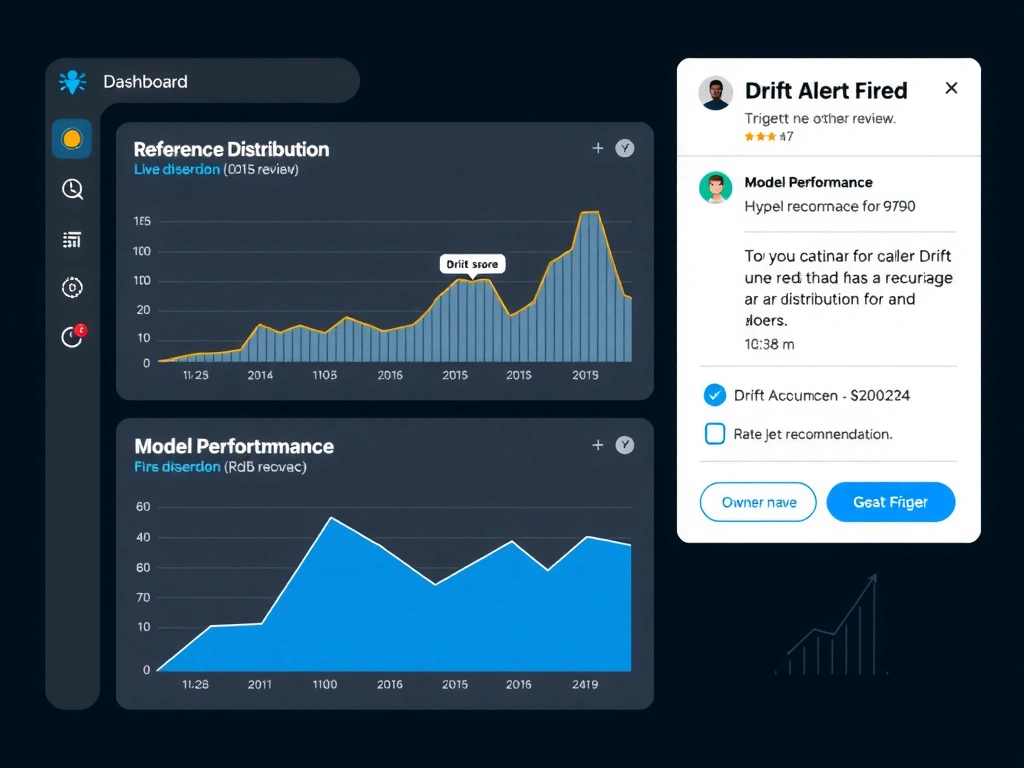
Drift monitoring is like calibrating a scale daily in a production bakery — yesterday's calibration does not guarantee today's accuracy when the environment changes. Option B is the daily calibration: monitor data and model drift so teams know when behavior changes post-deployment. Assuming training performance is valid forever skips the calibration check. Disabling alerts reduces noise but removes the quality signal. CPU monitoring checks the scale hardware, not the measurement accuracy. Continuous calibration through drift monitoring — option B!
Full explanation below image
Full Explanation
The correct answer is B. Monitor data and model drift so teams know when behavior changes after deployment. aligns directly with the 4.0 Configure Evaluation and Monitoring exam objective and reflects how IBM watsonx.governance operationalizes this practice in enterprise environments. IBM watsonx.governance is designed to provide the tooling, workflows, and evidence collection mechanisms that make AI trustworthy and auditable from intake through retirement. Choosing this option ensures the implementation is both defensible to regulators and maintainable by governance teams across the full AI lifecycle. Option A is incorrect because it assumes static conditions and eliminates the reassessment that IBM watsonx.governance explicitly requires. Option C is incorrect because it eliminates a required control and leaves the governance program without a critical safeguard. Option D is incorrect because it substitutes an irrelevant proxy metric for the governance dimension the question actually requires. On scenario-based exam questions, the correct answer is consistently the one that operationalizes the IBM governance practice with structured controls rather than approximating it with shortcuts, manual workarounds, or oversimplified rules.