
A team is preparing a production rollout and needs to avoid a design mistake. For IBM Certified watsonx Governance Lifecycle Advisor, the topic is trustworthy AI pillars. What should the team do?
Select an answer to reveal the explanation.
Short Explanation and Infographic
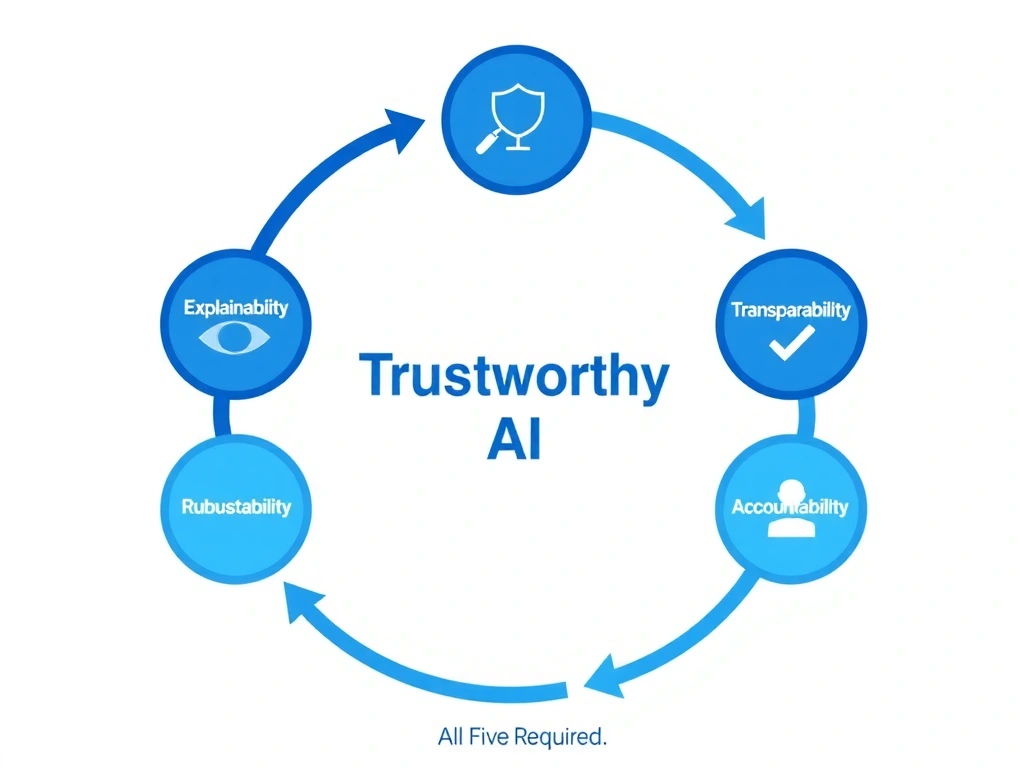
A trustworthy AI framework is like a five-point seat-belt harness in a race car — accuracy alone is the standard lap-belt that fails in a rollover. Option A is the five-point harness: fairness, explainability, robustness, transparency, and accountability working together. Accuracy checks miss bias. Dashboard coverage misses model-development risk. Vendor blame-shifting misses internal accountability. You need all five pillars fastened — option A!
Full explanation below image
Full Explanation
The correct answer is A. Use fairness, explainability, robustness, transparency, and accountability to frame AI governance controls. aligns directly with the 1.0 AI Governance Overview exam objective and reflects how IBM watsonx.governance operationalizes this practice in enterprise environments. IBM watsonx.governance is designed to provide the tooling, workflows, and evidence collection mechanisms that make AI trustworthy and auditable from intake through retirement. Choosing this option ensures the implementation is both defensible to regulators and maintainable by governance teams across the full AI lifecycle. Option B is incorrect because it does not address the core governance requirement described in the scenario and would leave an important control gap in production. Option C is incorrect because it does not address the core governance requirement described in the scenario and would leave an important control gap in production. Option D is incorrect because it offloads or obscures a governance responsibility in a way that breaks accountability and auditability. On scenario-based exam questions, the correct answer is consistently the one that operationalizes the IBM governance practice with structured controls rather than approximating it with shortcuts, manual workarounds, or oversimplified rules.