
A senior engineer reviews the current plan and notices that one key control is missing. What is the best way to handle threshold and alert design while staying aligned with the certification objectives?
Select an answer to reveal the explanation.
Short Explanation and Infographic
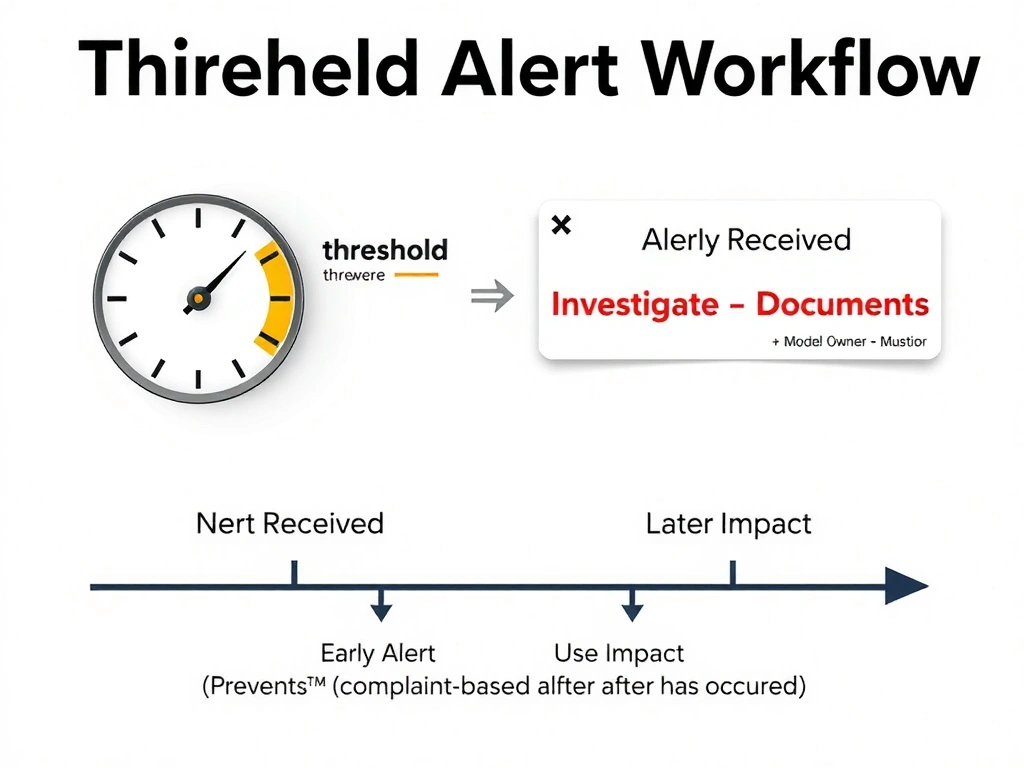
A smart thermostat does not wait until the pipes freeze to switch on the heat — it acts at 40 degrees so you never reach 32. That is option D: thresholds set to catch drift early, alerts routed to owners who can act. Reacting to user complaints means damage already happened. Unreachable thresholds generate false confidence. An ownerless alert goes nowhere. Proactive thresholds with accountable owners — lock in option D!
Full explanation below image
Full Explanation
The correct answer is D. Configure thresholds and alerts that trigger review before risk becomes operational damage. aligns directly with the 4.0 Configure Evaluation and Monitoring exam objective and reflects how IBM watsonx.governance operationalizes this practice in enterprise environments. IBM watsonx.governance is designed to provide the tooling, workflows, and evidence collection mechanisms that make AI trustworthy and auditable from intake through retirement. Choosing this option ensures the implementation is both defensible to regulators and maintainable by governance teams across the full AI lifecycle. Option A is incorrect because it applies an overbroad rule that eliminates meaningful differentiation and accountability. Option B is incorrect because it renders the alerting system non-functional by creating unreachable thresholds or routing alerts to no one. Option C is incorrect because it renders the alerting system non-functional by creating unreachable thresholds or routing alerts to no one. On scenario-based exam questions, the correct answer is consistently the one that operationalizes the IBM governance practice with structured controls rather than approximating it with shortcuts, manual workarounds, or oversimplified rules.