
A project lead is turning a proof of concept into a governed production workflow. For IBM Certified watsonx Governance Lifecycle Advisor, the topic is AI risk management. What should the team do?
Select an answer to reveal the explanation.
Short Explanation and Infographic
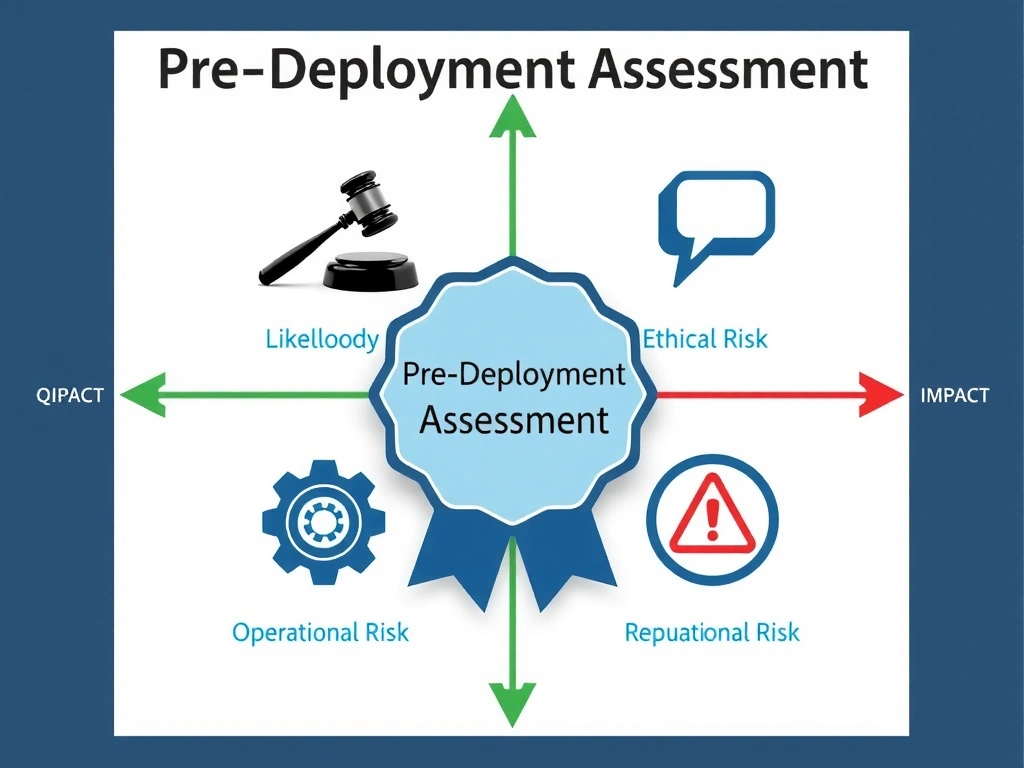
Waiting for a regulator to ask about AI risk is like waiting for a parking ticket to buy insurance — by then the damage is done. Option B is IBM's approach: identify regulatory, ethical, operational, and reputational risks before and during AI deployment. Post-hoc risk assessment misses preventable harm. Blanket low-risk classifications ignore reality. Dismissing generative AI risk because it is just text ignores prompt injection, hallucination, and policy violations. Proactive, four-dimensional risk assessment — that is option B!
Full explanation below image
Full Explanation
The correct answer is B. Identify regulatory, ethical, operational, and reputational risks before and during AI deployment. aligns directly with the 1.0 AI Governance Overview exam objective and reflects how IBM watsonx.governance operationalizes this practice in enterprise environments. IBM watsonx.governance is designed to provide the tooling, workflows, and evidence collection mechanisms that make AI trustworthy and auditable from intake through retirement. Choosing this option ensures the implementation is both defensible to regulators and maintainable by governance teams across the full AI lifecycle. Option A is incorrect because it narrows the scope to a single artifact or metric and misses the full governance requirement. Option C is incorrect because it applies an overbroad rule that eliminates meaningful differentiation and accountability. Option D is incorrect because it eliminates a required control and leaves the governance program without a critical safeguard. On scenario-based exam questions, the correct answer is consistently the one that operationalizes the IBM governance practice with structured controls rather than approximating it with shortcuts, manual workarounds, or oversimplified rules.