
An administrator is troubleshooting a pilot deployment and wants the most appropriate next step. For IBM Certified watsonx Governance Lifecycle Advisor, the topic is fairness evaluation. What should the team do?
Select an answer to reveal the explanation.
Short Explanation and Infographic
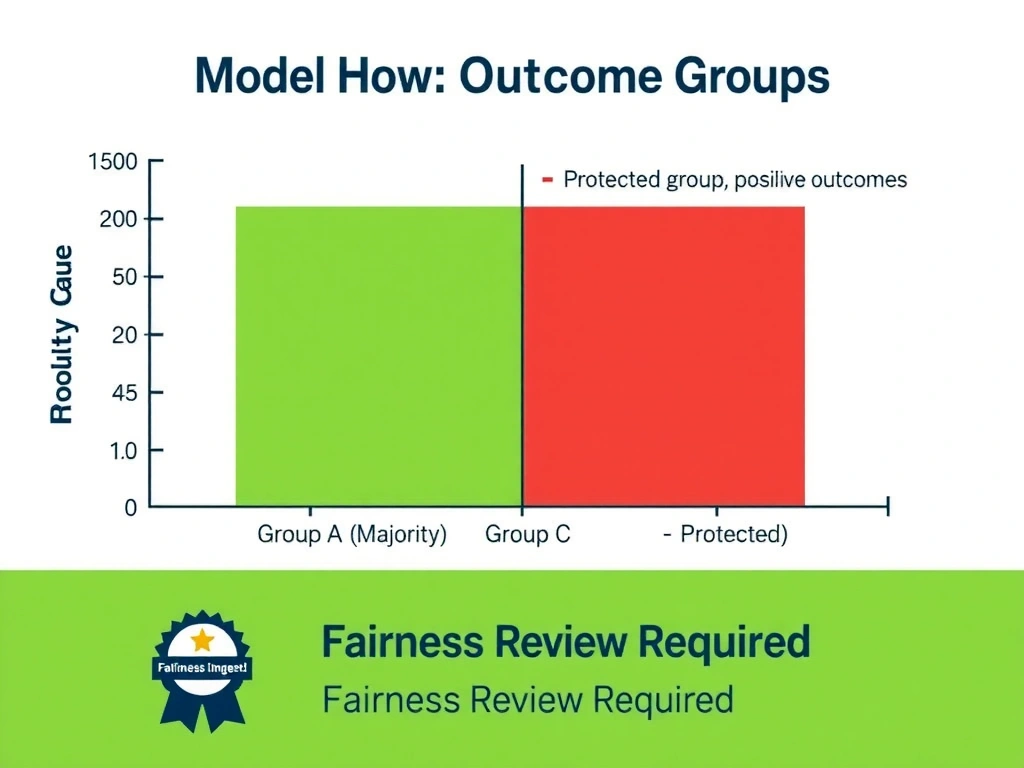
Fairness evaluation is like testing a new drug across all patient demographics — you cannot call it safe if you only studied healthy 30-year-old males. Option A wins: IBM watsonx.governance requires evaluating outcomes for protected or relevant groups where fairness risk exists. Aggregate accuracy hides group disparities. Skipping checks on sensitive data ignores where bias is most likely to emerge. Majority-only testing systematically misses everyone else. Representative evaluation is non-negotiable — option A!
Full explanation below image
Full Explanation
The correct answer is A. Evaluate outcomes for protected or relevant groups where fairness risk exists. aligns directly with the 4.0 Configure Evaluation and Monitoring exam objective and reflects how IBM watsonx.governance operationalizes this practice in enterprise environments. IBM watsonx.governance is designed to provide the tooling, workflows, and evidence collection mechanisms that make AI trustworthy and auditable from intake through retirement. Choosing this option ensures the implementation is both defensible to regulators and maintainable by governance teams across the full AI lifecycle. Option B is incorrect because it does not address the core governance requirement described in the scenario and would leave an important control gap in production. Option C is incorrect because it eliminates a required control and leaves the governance program without a critical safeguard. Option D is incorrect because it narrows the scope to a single artifact or metric and misses the full governance requirement. On scenario-based exam questions, the correct answer is consistently the one that operationalizes the IBM governance practice with structured controls rather than approximating it with shortcuts, manual workarounds, or oversimplified rules.