
In OpenPages, a governance team wants to define a structured hierarchy of AI risk categories such as bias risk, explainability risk, and operational risk for use across all AI use cases. Where is this classification structure configured?
Select an answer to reveal the explanation.
Short Explanation and Infographic
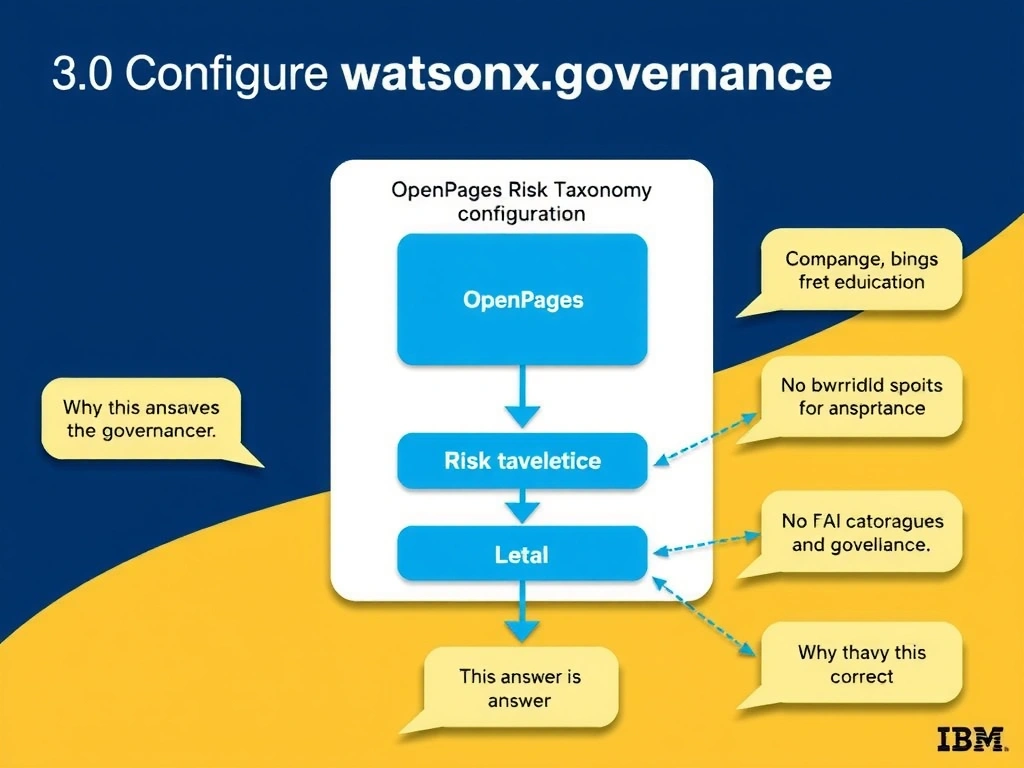
Think of it this way: in real-world AI governance, openpages risk taxonomy configuration is exactly what teams reach for when they need to handle this scenario. The OpenPages risk taxonomy defines a hierarchical structure of risk categories that can be applied consistently to AI use cases and other governance objects across the organization. On the exam, remember that this falls squarely under the 3.0 Configure watsonx.governance domain.
Full explanation below image
Full Explanation
The OpenPages risk taxonomy defines a hierarchical structure of risk categories that can be applied consistently to AI use cases and other governance objects across the organization. This taxonomy drives risk classification, aggregation, and reporting within OpenPages dashboards and risk scoring models. The correct answer, "OpenPages Risk Taxonomy configuration", directly addresses the scenario described because it aligns with the specific governance requirement in question. The incorrect options ("Watson OpenScale → Alert Thresholds configuration panel", "AI Factsheets → Lifecycle Events configuration", "watsonx.governance General Settings → Risk Profiles tab") may seem plausible but do not satisfy the core requirement. Understanding the distinction between these concepts is critical for IBM watsonx.governance implementations and is frequently tested in the 3.0 Configure watsonx.governance section of the certification exam.