
After deploying an AI fraud detection system two distinct concerns emerge: production model performance is degrading and needs continuous monitoring and senior leadership needs an enterprise-wide report on AI risk exposure. Which pairing of roles correctly addresses each concern?
Select an answer to reveal the explanation.
Short Explanation and Infographic
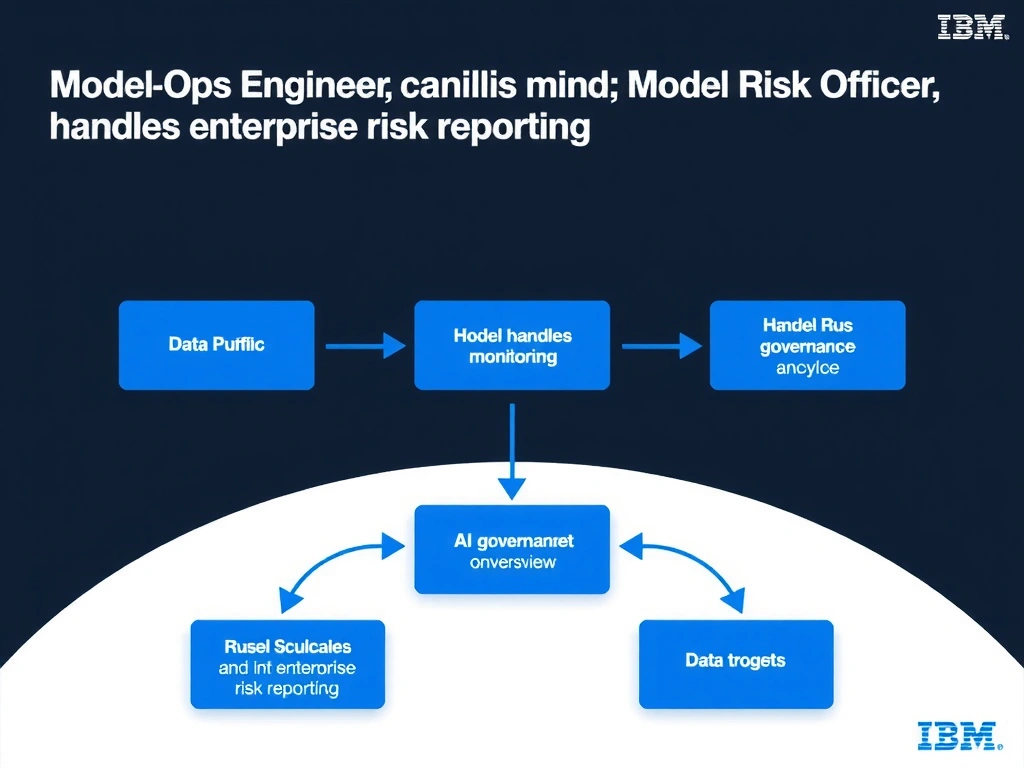
Think of it this way: in real-world AI governance, model ops engineer handles monitoring; model risk officer handles enterprise risk reporting is exactly what teams reach for when they need to handle this scenario. The Model Ops Engineer is responsible for monitoring AI models in production including detecting and addressing performance degradation. On the exam, remember that this falls squarely under the 1.0 AI Governance Overview domain.
Full explanation below image
Full Explanation
The Model Ops Engineer is responsible for monitoring AI models in production including detecting and addressing performance degradation. The Model Risk Officer operates at the enterprise level providing risk oversight across the organization's AI portfolio and reporting to senior leadership. The correct answer, "Model Ops Engineer handles monitoring; Model Risk Officer handles enterprise risk reporting", directly addresses the scenario described because it aligns with the specific governance requirement in question. The incorrect options ("Model Reviewer handles monitoring; Model Owner handles enterprise risk reporting", "Model Validator handles monitoring; Model Risk Officer handles enterprise risk reporting", "Model Ops Engineer handles monitoring; Model Reviewer handles enterprise risk reporting") may seem plausible but do not satisfy the core requirement. Understanding the distinction between these concepts is critical for IBM watsonx.governance implementations and is frequently tested in the 1.0 AI Governance Overview section of the certification exam.