
A risk analyst working on a credit-scoring AI system is cataloging all stakeholder groups who could be affected, documenting the operational context and intended use cases, identifying potential harms, and mapping societal impacts. Which NIST AI RMF function do these activities fall under?
Select an answer to reveal the explanation.
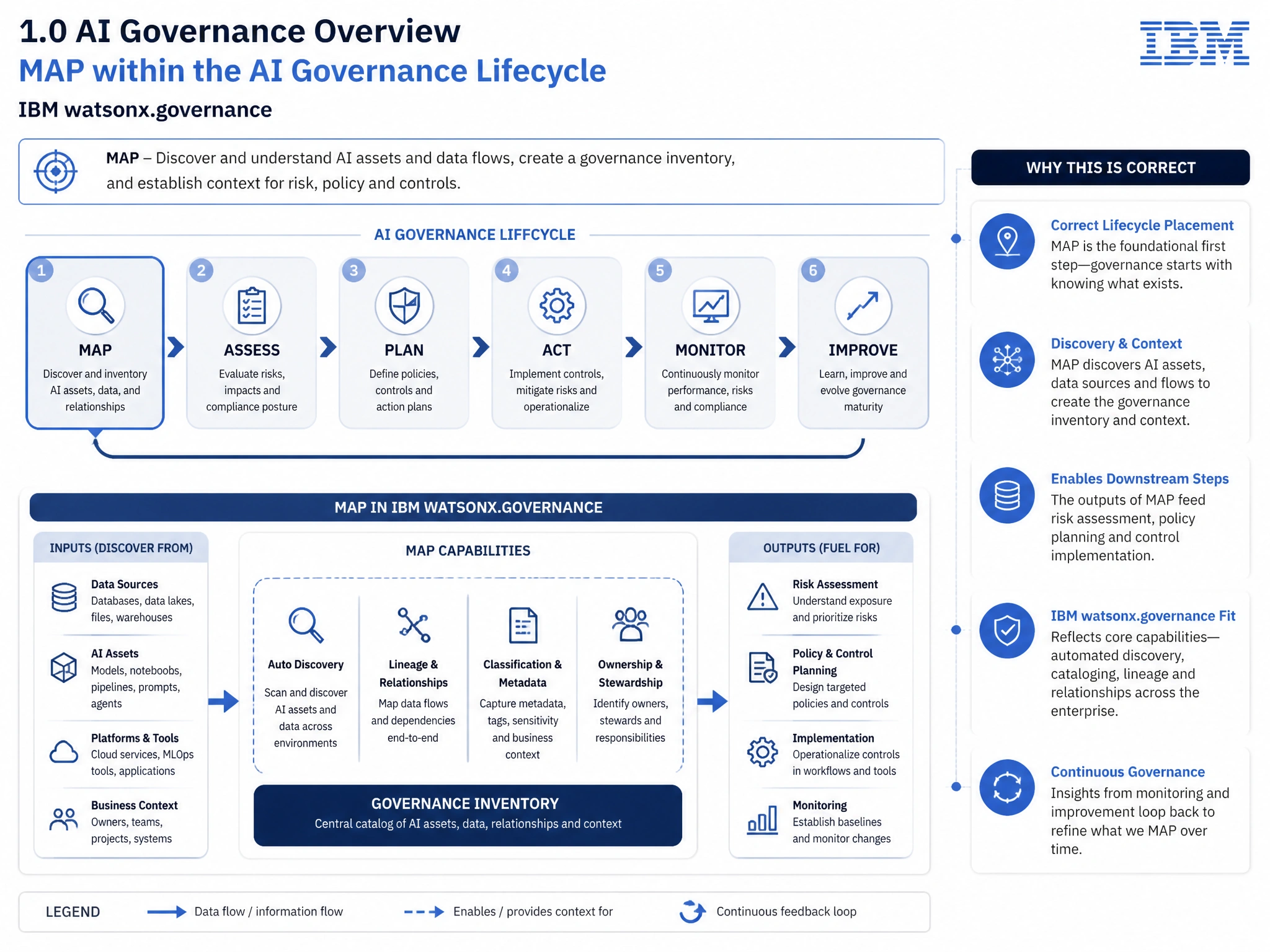
Short Explanation and Infographic
Think of it this way: in real-world AI governance, map is exactly what teams reach for when they need to handle this scenario. The MAP function in the NIST AI RMF is specifically designed for contextual understanding: identifying the system's intended purposes, affected stakeholders, potential harms, and the broader societal and organizational context in which the AI system operates. On the exam, remember that this falls squarely under the 1.0 AI Governance Overview domain.
Full explanation below image
Full Explanation
The MAP function in the NIST AI RMF is specifically designed for contextual understanding: identifying the system's intended purposes, affected stakeholders, potential harms, and the broader societal and organizational context in which the AI system operates. This foundational work enables the subsequent MEASURE and MANAGE functions by ensuring the right risks are surfaced before they are quantified or treated. IBM's watsonx.governance tooling aligns with the MAP function by supporting structured use case documentation and stakeholder impact assessments. The correct answer, "MAP", directly addresses the scenario described because it aligns with the specific governance requirement in question. The incorrect options ("GOVERN", "MEASURE", "MANAGE") may seem plausible but do not satisfy the core requirement. Understanding the distinction between these concepts is critical for IBM watsonx.governance implementations and is frequently tested in the 1.0 AI Governance Overview section of the certification exam.