
A healthcare organization is building predictive models using patient records and wants to ensure that data used in AI model training cannot be re-identified or traced back to individual patients. Which IBM Responsible AI pillar governs this requirement?
Select an answer to reveal the explanation.
Short Explanation and Infographic
Think of it this way: in real-world AI governance, privacy is exactly what teams reach for when they need to handle this scenario. Privacy is recognized as the sixth pillar in IBM's extended Responsible AI framework, addressing the need to protect individuals' personal information from unauthorized access or re-identification throughout data collection, model training, and deployment. On the exam, remember that this falls squarely under the 1.0 AI Governance Overview domain.
Full explanation below image
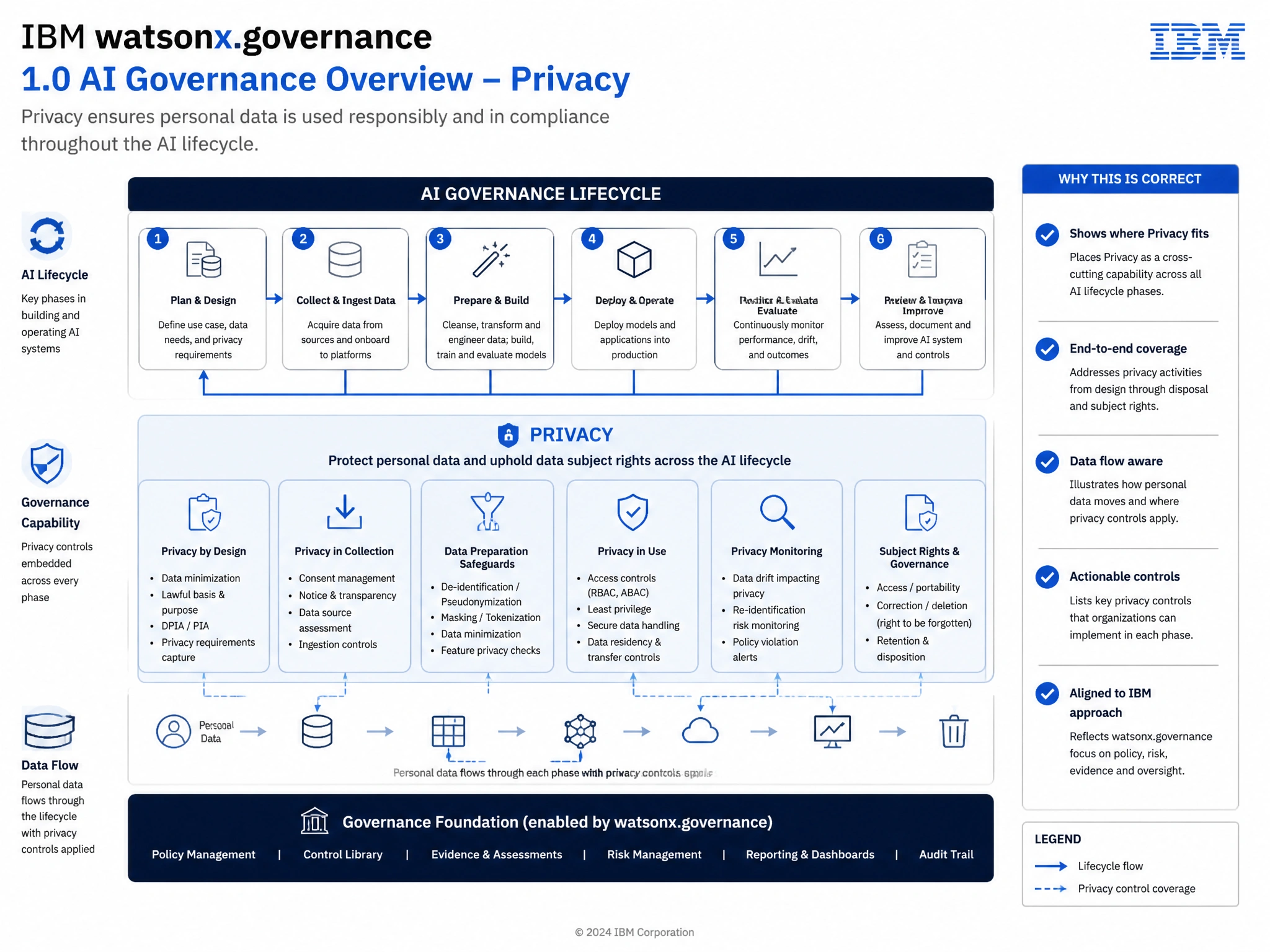
Full Explanation
Privacy is recognized as the sixth pillar in IBM's extended Responsible AI framework, addressing the need to protect individuals' personal information from unauthorized access or re-identification throughout data collection, model training, and deployment. While Transparency and Accountability are related governance pillars, they do not specifically address the technical and policy controls required to prevent privacy breaches. IBM's AI governance tooling integrates privacy controls at the data asset level within watsonx.governance. The correct answer, "Privacy", directly addresses the scenario described because it aligns with the specific governance requirement in question. The incorrect options ("Transparency", "Accountability", "Robustness") may seem plausible but do not satisfy the core requirement. Understanding the distinction between these concepts is critical for IBM watsonx.governance implementations and is frequently tested in the 1.0 AI Governance Overview section of the certification exam.