
A data scientist at a financial institution is building a loan approval model. The compliance team requires the model to articulate the specific reasons why each loan application was denied. Which IBM Responsible AI pillar directly addresses this requirement?
Select an answer to reveal the explanation.
Short Explanation and Infographic
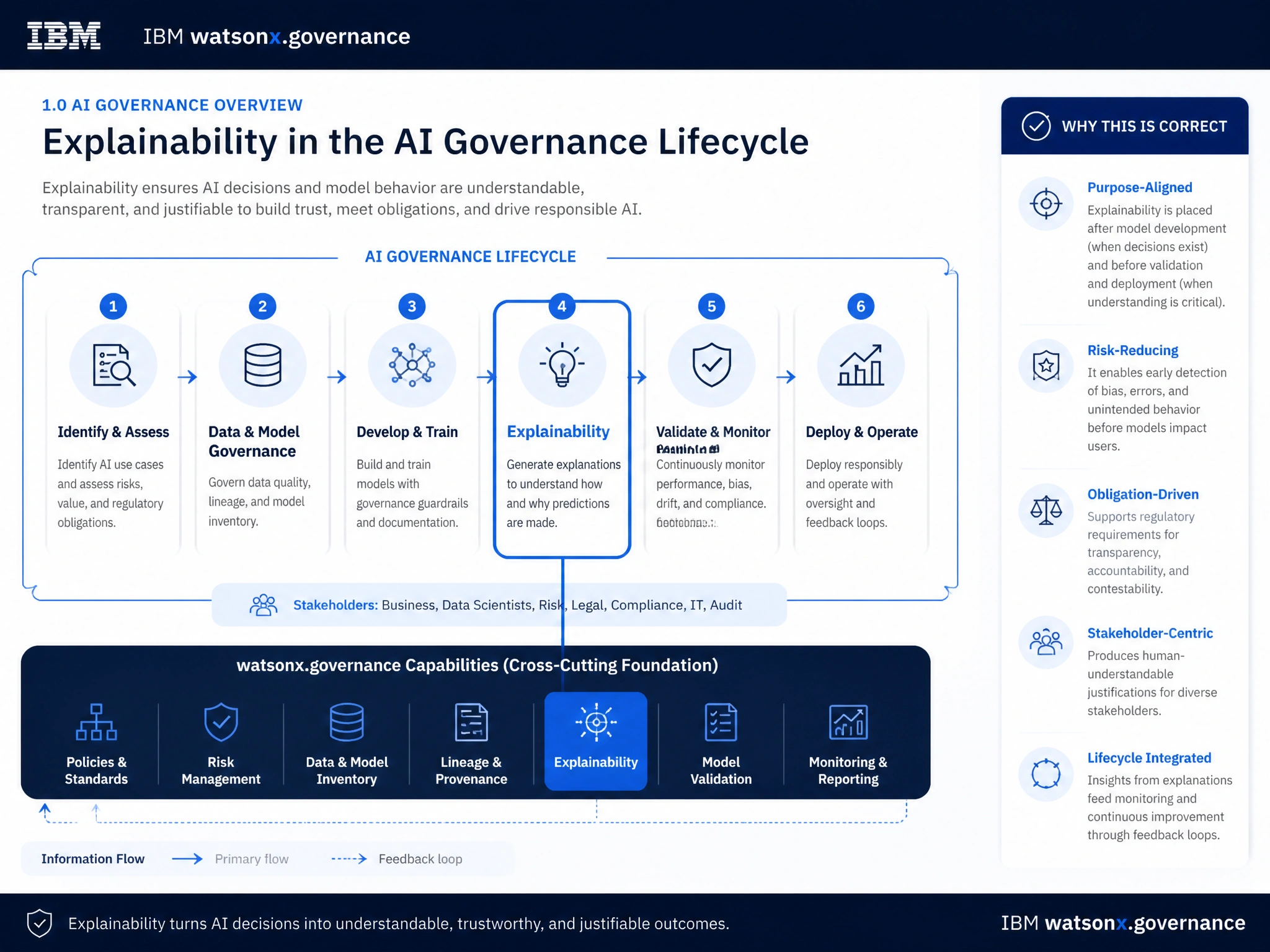
Think of it this way: in real-world AI governance, explainability is exactly what teams reach for when they need to handle this scenario. Explainability as an IBM Responsible AI pillar requires that AI systems surface human-interpretable reasons for their outputs, which is critical in regulated industries like financial services where adverse action notices are legally required. On the exam, remember that this falls squarely under the 1.0 AI Governance Overview domain.
Full explanation below image
Full Explanation
Explainability as an IBM Responsible AI pillar requires that AI systems surface human-interpretable reasons for their outputs, which is critical in regulated industries like financial services where adverse action notices are legally required. This differentiates it from Fairness, which focuses on equitable outcomes across groups, and Transparency, which focuses on disclosing system-level characteristics. Techniques such as SHAP values and LIME are commonly used to operationalize explainability within IBM's governance tools. The correct answer, "Explainability", directly addresses the scenario described because it aligns with the specific governance requirement in question. The incorrect options ("Fairness", "Robustness", "Accountability") may seem plausible but do not satisfy the core requirement. Understanding the distinction between these concepts is critical for IBM watsonx.governance implementations and is frequently tested in the 1.0 AI Governance Overview section of the certification exam.