
An administrator notices that a MySQL database server appears twice in the Instana infrastructure map: once as an auto-discovered entity and once as a manually configured entity from configuration.yaml. This results in duplicate metrics and inflated entity counts against the Instana license. What is the correct resolution?
Select an answer to reveal the explanation.
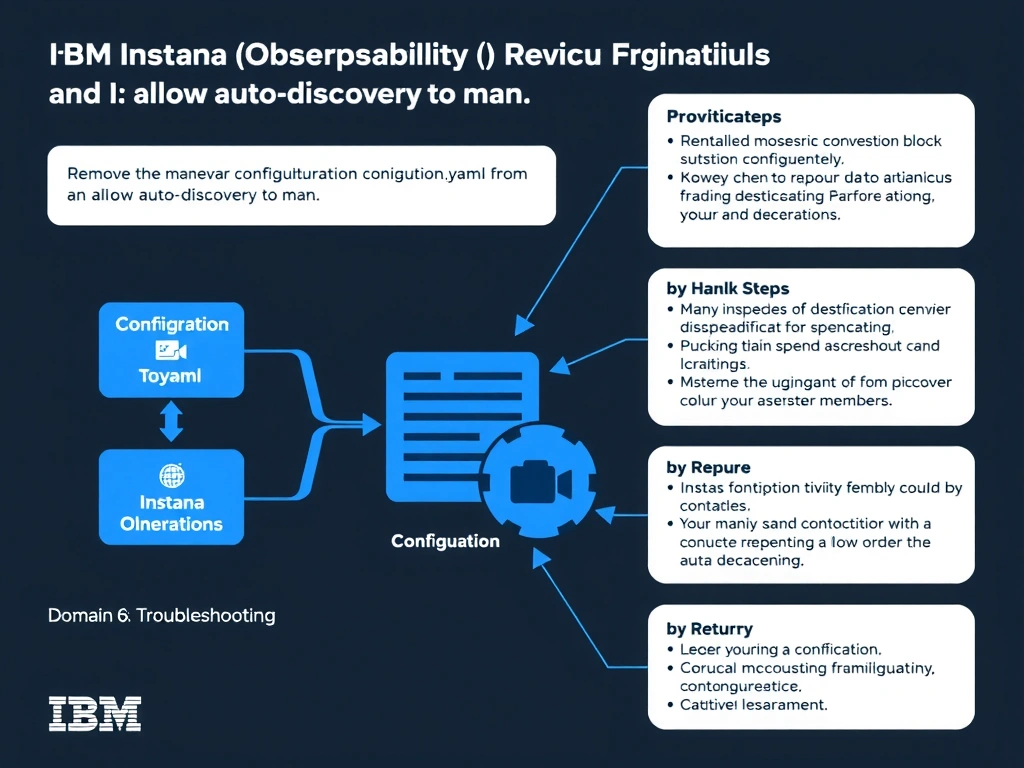
Short Explanation and Infographic
Duplicate sensor entities occur when both agent auto-discovery and a manual configuration entry in configuration.yaml independently target the same process or service, causing two separate monitoring paths. The correct fix is to use only one approach: remove the manual block and let auto-discovery handle it, or disable auto-discovery for that sensor type and rely exclusively on the manual block. There is no automatic backend deduplication mechanism that resolves this configuration conflict.
Full explanation below image
Full Explanation
Duplicate sensor entities occur when both agent auto-discovery and a manual configuration entry in configuration.yaml independently target the same process or service, causing two separate monitoring paths. The correct fix is to use only one approach: remove the manual block and let auto-discovery handle it, or disable auto-discovery for that sensor type and rely exclusively on the manual block. There is no automatic backend deduplication mechanism that resolves this configuration conflict. The correct answer is 'Remove the manual sensor configuration block from configuration.yaml and allow auto-discovery to manage the MySQL sensor, or disable MySQL auto-discovery and rely solely on the manual configuration block'. The incorrect options — 'Decrease the Instana agent auto-discovery scan interval to reduce how often duplicate entity records are created', 'Delete and re-enter the manual sensor block in configuration.yaml to trigger a backend deduplication reconciliation', 'Submit a support request to IBM Instana to merge the duplicate backend entity records through a backend database operation' — are wrong because they do not align with IBM Instana's architecture or recommended practices for this scenario. Understanding this concept is essential for the Domain 6: Troubleshooting domain of the IBM Instana Observability certification.