
A company runs Instana agents across three geographic regions: US-East, EU-West, and APAC. The operations team needs to scope infrastructure dashboards and alert policies by region and ensure logical grouping of monitored infrastructure. How should the agent deployment plan address this requirement?
Select an answer to reveal the explanation.
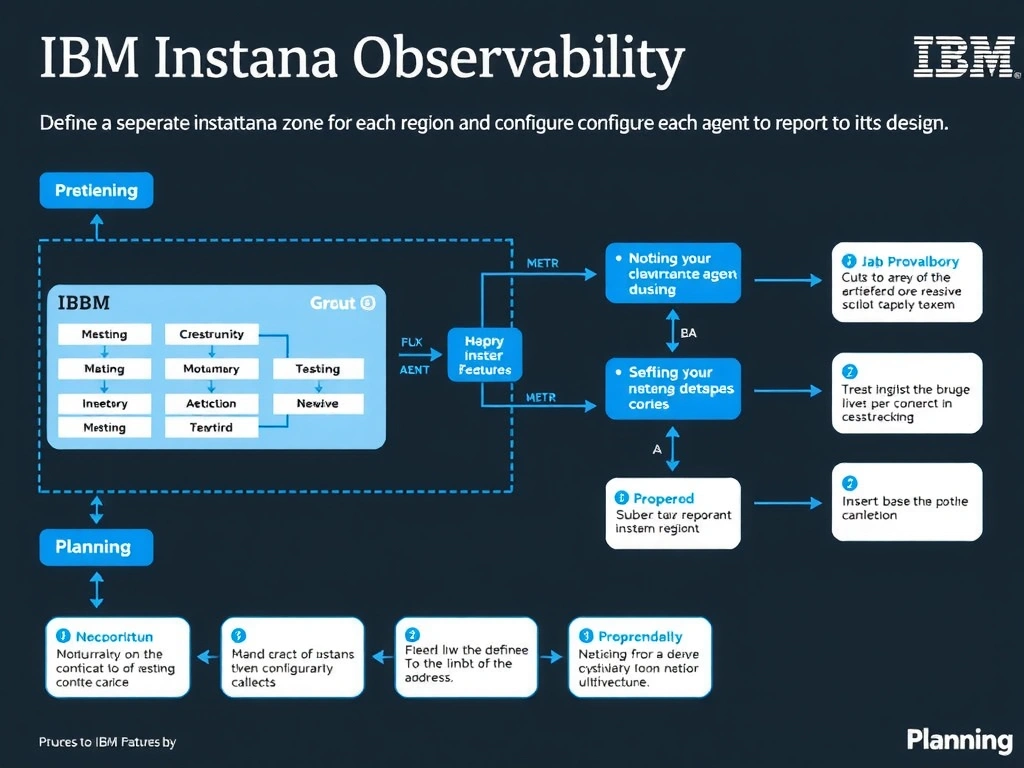
Short Explanation and Infographic
Instana zones provide the native structural grouping mechanism for infrastructure components, enabling operations teams to scope dashboards, infrastructure views, and alert policies to specific geographic or functional boundaries. Assigning agents to region-specific zones (US-East, EU-West, APAC) enables clean separation without requiring separate backend deployments and their associated cost overhead. Tags can supplement zone-based filtering but are not a replacement for the structural grouping that zones provide.
Full explanation below image
Full Explanation
Instana zones provide the native structural grouping mechanism for infrastructure components, enabling operations teams to scope dashboards, infrastructure views, and alert policies to specific geographic or functional boundaries. Assigning agents to region-specific zones (US-East, EU-West, APAC) enables clean separation without requiring separate backend deployments and their associated cost overhead. Tags can supplement zone-based filtering but are not a replacement for the structural grouping that zones provide. The correct answer is 'Define a separate Instana agent zone for each region and configure each agent to report to its designated regional zone'. The incorrect options — 'Create a single global zone and rely solely on host tags to filter dashboards and alert evaluations by region', 'Deploy completely separate Instana backend installations per region and use REST API federation for a unified global view', 'Use Kubernetes namespace labels as the primary zone boundary since all workloads run in containerized environments' — are wrong because they do not align with IBM Instana's architecture or recommended practices for this scenario. Understanding this concept is essential for the Domain 5: Planning domain of the IBM Instana Observability certification.