
A DevOps team is planning capacity for their Instana self-hosted deployment and needs to understand trace data storage. In modern Instana deployments (version 1.0.277+), what is the default trace data retention period and which backend component serves as the primary trace data store?
Select an answer to reveal the explanation.
Short Explanation and Infographic
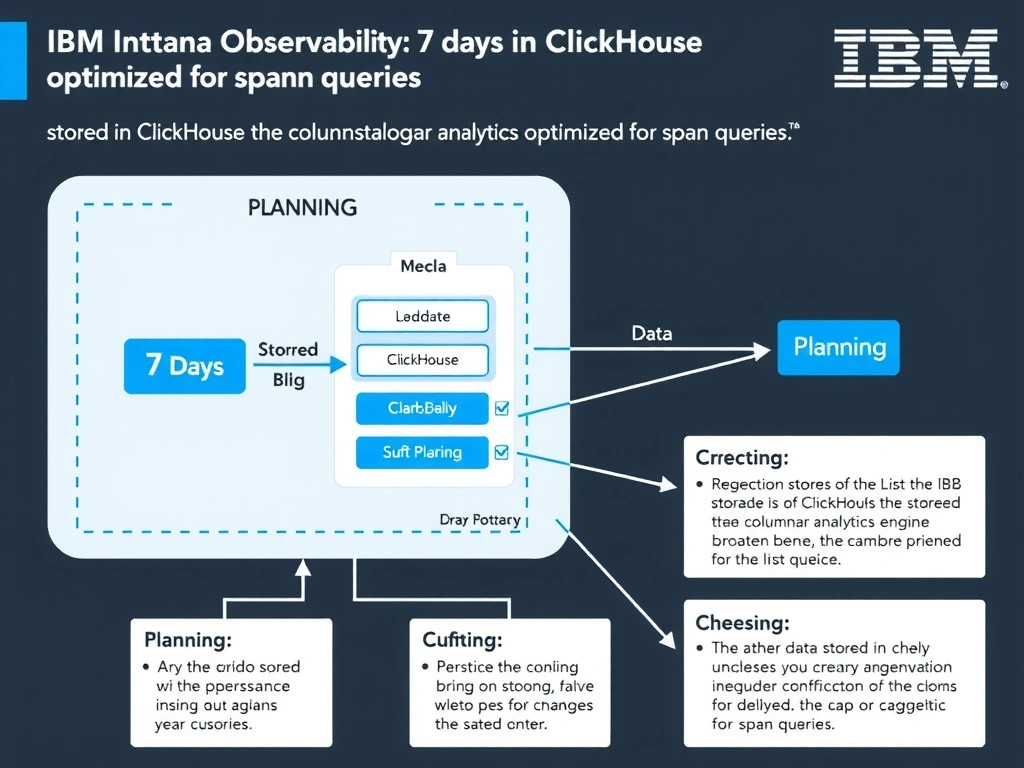
In current Instana versions, ClickHouse serves as the primary trace and span data store because its columnar storage format enables high-performance analytical queries across large volumes of distributed trace data. The default trace retention period is 7 days but is configurable based on storage capacity and compliance requirements. Kafka is a transient streaming layer and not a persistent datastore for traces, while Cassandra handles time-series metrics rather than trace spans.
Full explanation below image
Full Explanation
In current Instana versions, ClickHouse serves as the primary trace and span data store because its columnar storage format enables high-performance analytical queries across large volumes of distributed trace data. The default trace retention period is 7 days but is configurable based on storage capacity and compliance requirements. Kafka is a transient streaming layer and not a persistent datastore for traces, while Cassandra handles time-series metrics rather than trace spans. The correct answer is '7 days; stored in ClickHouse as the columnar analytics engine optimized for span queries'. The incorrect options — '30 days; stored in Apache Cassandra with time-series partitioning', '14 days; stored in Elasticsearch with full-text index support for span filtering', '7 days; stored in Apache Kafka with configurable log retention policies' — are wrong because they do not align with IBM Instana's architecture or recommended practices for this scenario. Understanding this concept is essential for the Domain 5: Planning domain of the IBM Instana Observability certification.