
A managed service provider wants to offer Instana-based monitoring to 10 enterprise customers. Each customer requires complete data isolation, a separate user directory, and independent RBAC configurations. Which deployment architecture should the Instana architect recommend?
Select an answer to reveal the explanation.
Short Explanation and Infographic
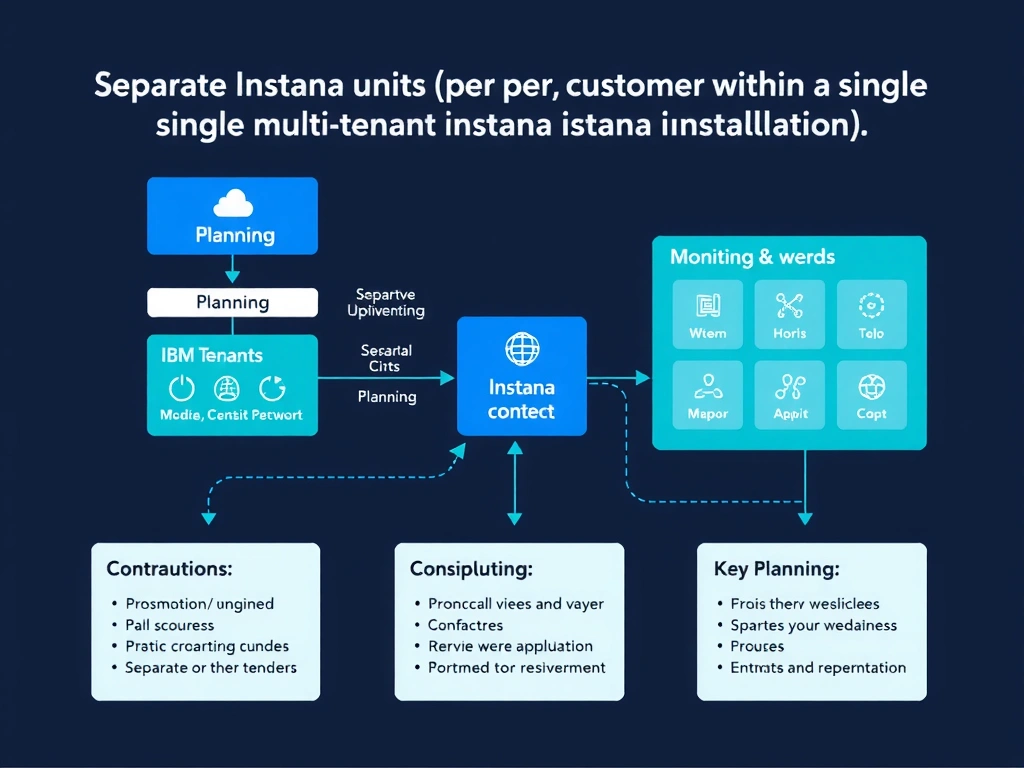
Instana multi-tenant architecture allows a single backend installation to host multiple units, each with fully isolated data stores, user management, and RBAC configurations. This approach efficiently shares the underlying infrastructure (Cassandra, Kafka, Elasticsearch, ClickHouse) while enforcing strict data isolation between tenants, making it the cost-effective and architecturally correct choice for MSP deployments. A single unit with namespaces does not provide the data-level isolation required for true multi-tenancy.
Full explanation below image
Full Explanation
Instana multi-tenant architecture allows a single backend installation to host multiple units, each with fully isolated data stores, user management, and RBAC configurations. This approach efficiently shares the underlying infrastructure (Cassandra, Kafka, Elasticsearch, ClickHouse) while enforcing strict data isolation between tenants, making it the cost-effective and architecturally correct choice for MSP deployments. A single unit with namespaces does not provide the data-level isolation required for true multi-tenancy. The correct answer is 'Separate Instana units (tenants) per customer within a single multi-tenant Instana installation sharing backend infrastructure'. The incorrect options — 'A single Instana unit with project-based namespaces and role-based access controls to logically separate customer data', 'Deploy one Instana agent cluster per customer, each reporting to a single shared Instana backend server', 'Provision a fully independent Instana self-hosted installation for each customer on dedicated hardware' — are wrong because they do not align with IBM Instana's architecture or recommended practices for this scenario. Understanding this concept is essential for the Domain 5: Planning domain of the IBM Instana Observability certification.