
After deploying Instana host agents as a DaemonSet on a Kubernetes cluster, pod-level metrics and entity relationships are not appearing in the Instana infrastructure map even though agent pods are running. What is the most likely root cause?
Select an answer to reveal the explanation.
Short Explanation and Infographic
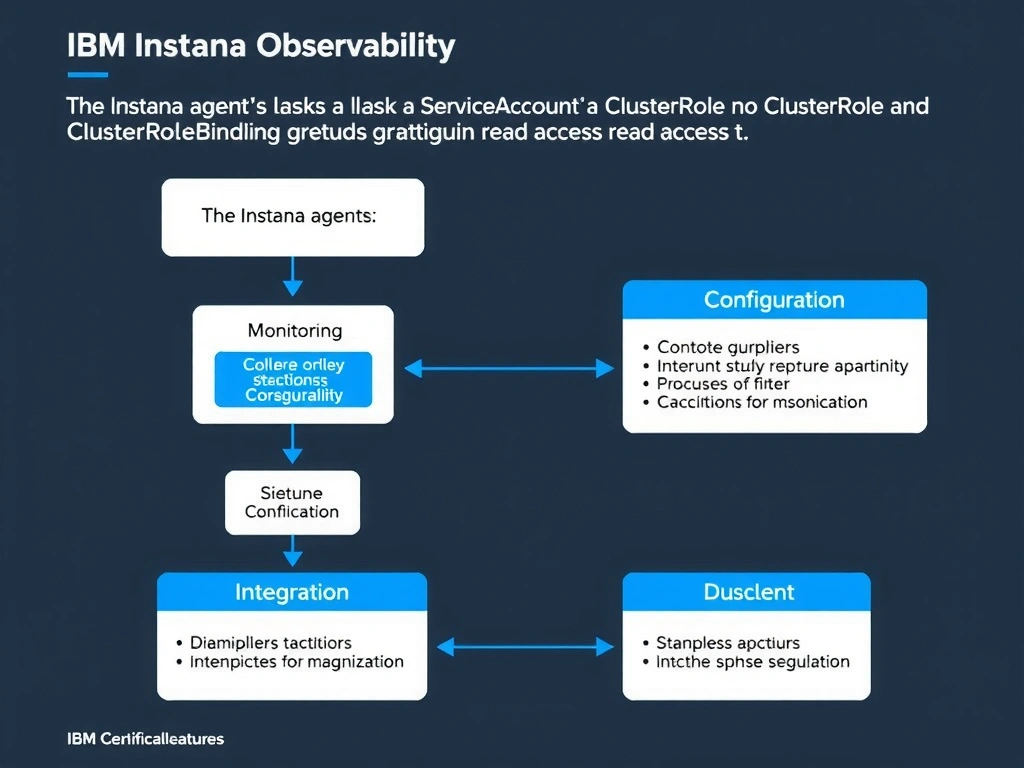
Instana's Kubernetes monitoring depends on the agent querying the Kubernetes API server to discover pods, namespaces, deployments, and services. Without a ClusterRole granting permissions such as get, list, and watch on core and apps resources, and a ClusterRoleBinding linking that role to the agent's ServiceAccount, API discovery silently fails and Kubernetes entities are not built in the infrastructure map.
Full explanation below image
Full Explanation
Instana's Kubernetes monitoring depends on the agent querying the Kubernetes API server to discover pods, namespaces, deployments, and services. Without a ClusterRole granting permissions such as get, list, and watch on core and apps resources, and a ClusterRoleBinding linking that role to the agent's ServiceAccount, API discovery silently fails and Kubernetes entities are not built in the infrastructure map. The correct answer is 'The Instana agent's ServiceAccount lacks a ClusterRole and ClusterRoleBinding granting read access to the Kubernetes API server'. The incorrect options — 'The Instana agent DaemonSet was deployed to the wrong namespace and must be relocated to kube-system', 'The Kubernetes cluster version is below the minimum supported version for the deployed Instana agent image', 'The Instana agent ConfigMap is missing the cluster name field, preventing entity correlation in the backend' — are wrong because they do not align with IBM Instana's architecture or recommended practices for this scenario. Understanding this concept is essential for the Domain 4: Integration domain of the IBM Instana Observability certification.