
During a design review, an architect asks which choice best matches the IBM guidance. What is the best way to handle ingestion design while staying aligned with the certification objectives?
Select an answer to reveal the explanation.
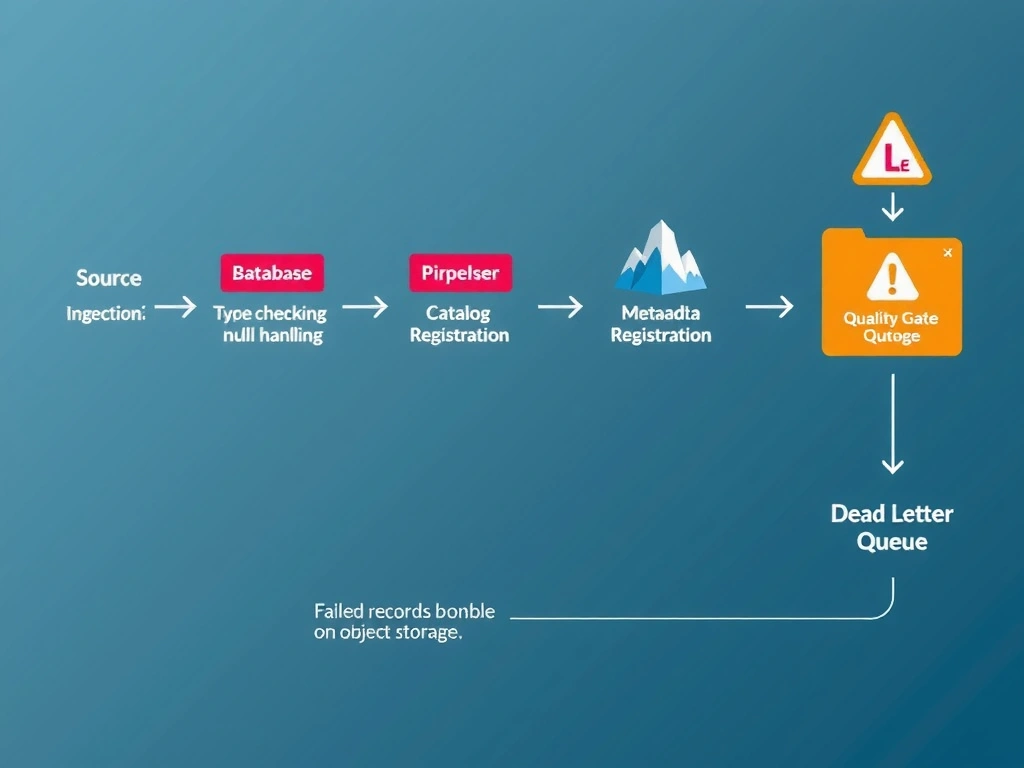
Short Explanation and Infographic
Here's the deal: getting data into your lakehouse is like receiving a shipment at a warehouse — you need to verify what arrived, label it correctly, and put it in the right spot. Ingestion design in IBM watsonx.data is about preserving schema integrity, data quality, and governance expectations from the moment data enters the system. Skip those controls and you'll spend more time cleaning up bad data than building analytics.
Full explanation below image
Full Explanation
IBM watsonx.data ingestion design encompasses pattern selection (batch vs. streaming), schema validation, metadata capture at ingestion time, and governance tagging before data is registered in the catalog. The correct answer — choosing ingestion patterns that preserve schema, quality, and governance expectations — reflects IBM's design principle that data quality problems are cheapest to fix at the source, not downstream in reports. Loading data without validating structure (Option A) allows schema drift, type mismatches, and null constraint violations to propagate silently into the lakehouse, corrupting downstream analytics. Skipping metadata capture until after production (Option C) means lineage is incomplete, data discovery is impaired, and compliance audits will find ungoverned data assets. Ingesting only final dashboard aggregates (Option D) destroys the raw data granularity that makes the lakehouse valuable for reprocessing, ad hoc analysis, and ML feature engineering. The certification expects candidates to design ingestion that builds quality and governance in from the start rather than retrofitting them after the fact.