
A senior engineer reviews the current plan and notices that one key control is missing. For IBM Certified watsonx Data Lakehouse Engineer, the topic is governance practices. What should the team do?
Select an answer to reveal the explanation.
Short Explanation and Infographic
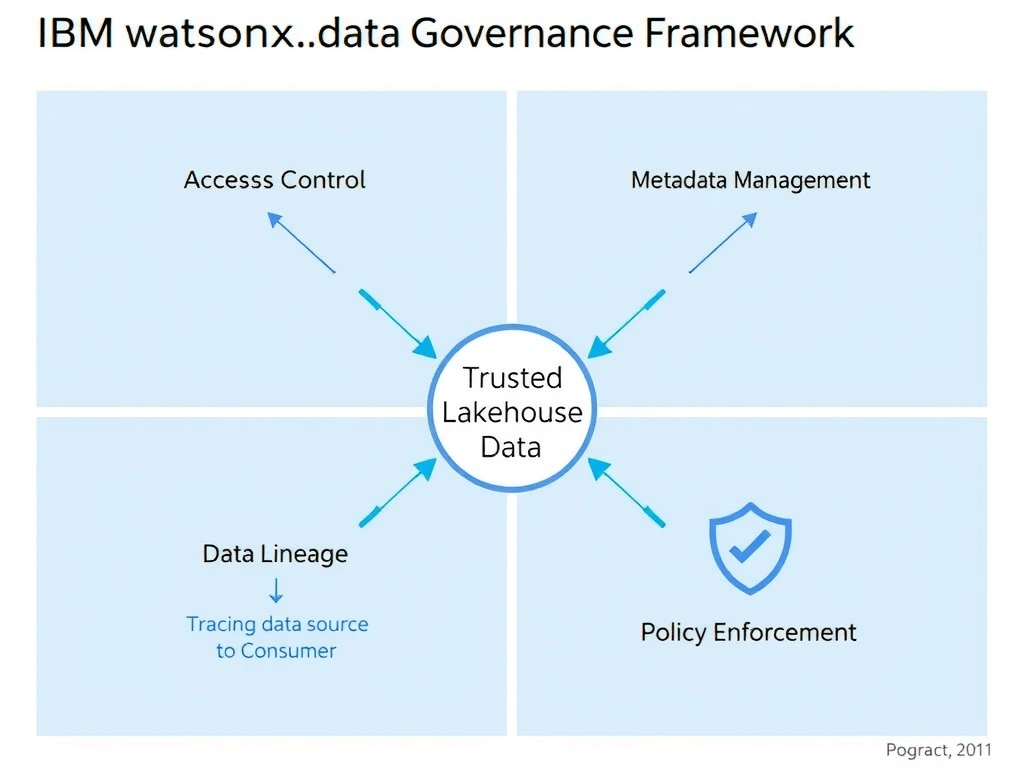
Here's the deal: governance in IBM watsonx.data is not bureaucracy — it's the difference between data people trust and data people argue about. Think of access control, metadata, lineage, and policy controls as the four legs of a table: remove one and the whole thing wobbles. Governing only dashboard outputs while leaving source data wild is like checking the speedometer but ignoring the engine.
Full explanation below image
Full Explanation
IBM watsonx.data implements governance through four interconnected pillars: access control (who can see what), metadata management (what the data means), data lineage (where data came from and how it changed), and policy enforcement (rules applied automatically at query time). The correct answer — applying all four controls so lakehouse data remains trustworthy — reflects the comprehensive governance model IBM built around integration with IBM Knowledge Catalog and Apache Ranger. Letting analysts manage permissions with copied CSVs (Option A) creates untracked, unauditable permission sprawl that no compliance team will accept. Removing schema definitions to stay flexible (Option B) destroys the semantic layer that makes data understandable and queryable correctly. Governing only dashboard outputs (Option C) allows dirty, incorrectly joined, or unauthorized data to flow freely at the source layer, undermining any downstream controls. The certification expects a holistic governance posture applied at the storage, catalog, engine, and query layers — not just at the presentation layer.