
A consultant is advising a customer that wants a scalable implementation. What is the best way to handle Infrastructure Manager while staying aligned with the certification objectives?
Select an answer to reveal the explanation.
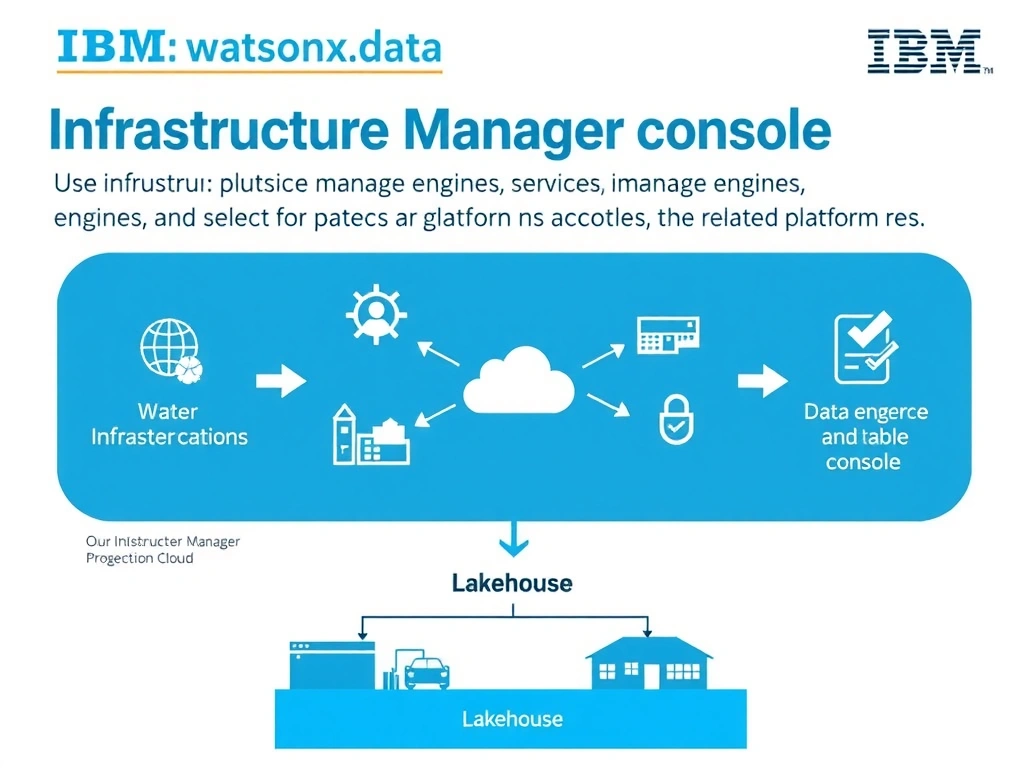
Short Explanation and Infographic
Think of watsonx.data's operational tools like aircraft cockpit instruments: each gauge (tool) has a purpose, pilots (administrators) use the instruments they were designed for, and pulling arbitrary levers without understanding the system is how things go wrong. Infrastructure Manager is the engine management instrument; Data Manager is the catalog management instrument. IBM designs its certification around proper tool use because proper tool use is what produces predictable operational outcomes.
Full explanation below image
Full Explanation
The correct answer is option A: Use Infrastructure Manager to manage engines, services, and related platform resources.. This aligns with IBM's Platform operations and administration guidance, which emphasizes use infrastructure manager to manage engines, services, and related platform resources as the recommended approach for production deployments. Option B (Use query history to provision engines) is incorrect because it either bypasses IBM's recommended architecture or introduces operational risk that the correct approach is specifically designed to avoid. Option C (Edit raw object files to start services) is incorrect because it either bypasses IBM's recommended architecture or introduces operational risk that the correct approach is specifically designed to avoid. Option D (Create BI dashboards to manage infrastructure) is incorrect because it either bypasses IBM's recommended architecture or introduces operational risk that the correct approach is specifically designed to avoid. Understanding this distinction is critical for the C9007300 exam: IBM watsonx.data is designed to enforce governance, performance, and operational best practices through its built-in architecture, and the correct answers consistently reflect those architectural constraints rather than shortcut alternatives.