
During a design review, an architect asks which choice best matches the IBM guidance. The team is focused on watsonx.data components. Which recommendation is most appropriate?
Select an answer to reveal the explanation.
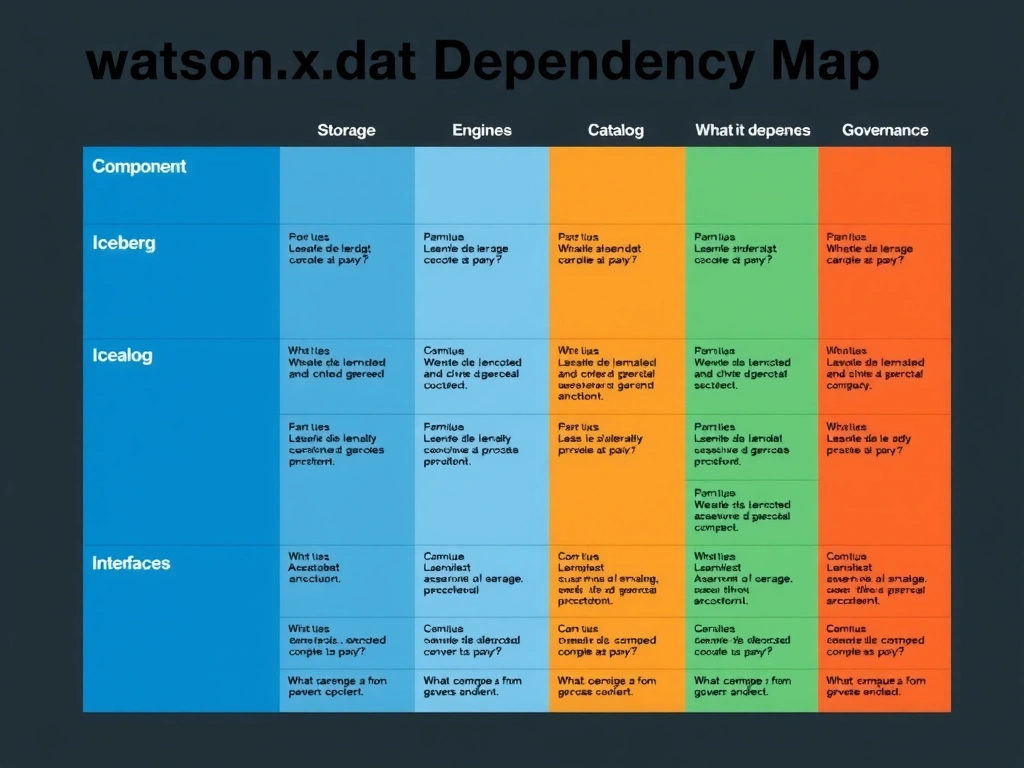
Short Explanation and Infographic
In watsonx.data, the architectural value proposition is coordination: object storage provides the scalable foundation, Iceberg provides transactional consistency, Presto and Spark provide compute flexibility, the catalog provides governed metadata, and workload management ties it all together. Optimizing storage without governance creates an ungoverned data swamp; deploying governance without the right query engines creates a slow governed archive. The IBM architecture test is whether you understand how these layers interlock.
Full explanation below image
Full Explanation
The correct answer is option B: Coordinate storage, metadata, query engines, governance, and management interfaces as parts of one platform.. This aligns with IBM's IBM watsonx.data platform architecture guidance, which emphasizes coordinate storage, metadata, query engines, governance, and management interfaces as parts of one platform as the recommended approach for production deployments. Option A (Treat the query workspace as the only component) is incorrect because it either bypasses IBM's recommended architecture or introduces operational risk that the correct approach is specifically designed to avoid. Option C (Manage access only in external BI tools) is incorrect because it either bypasses IBM's recommended architecture or introduces operational risk that the correct approach is specifically designed to avoid. Option D (Put all metadata in user spreadsheets) is incorrect because it either bypasses IBM's recommended architecture or introduces operational risk that the correct approach is specifically designed to avoid. Understanding this distinction is critical for the C9007300 exam: IBM watsonx.data is designed to enforce governance, performance, and operational best practices through its built-in architecture, and the correct answers consistently reflect those architectural constraints rather than shortcut alternatives.