
A senior engineer reviews the current plan and notices that one key control is missing. Which approach best demonstrates access control in a IBM Certified watsonx Data Lakehouse Engineer environment?
Select an answer to reveal the explanation.
Short Explanation and Infographic
Think of watsonx.data's permissions model like a hospital records system: nurses see patient vitals, billing sees insurance records, and nobody without explicit clearance sees the full chart. IBM implements this through catalog-level policies that govern which engines and users can access which schemas and tables. Setting permissions correctly at design time is the governance move that prevents data leakage as the platform scales and more users come online.
Full explanation below image
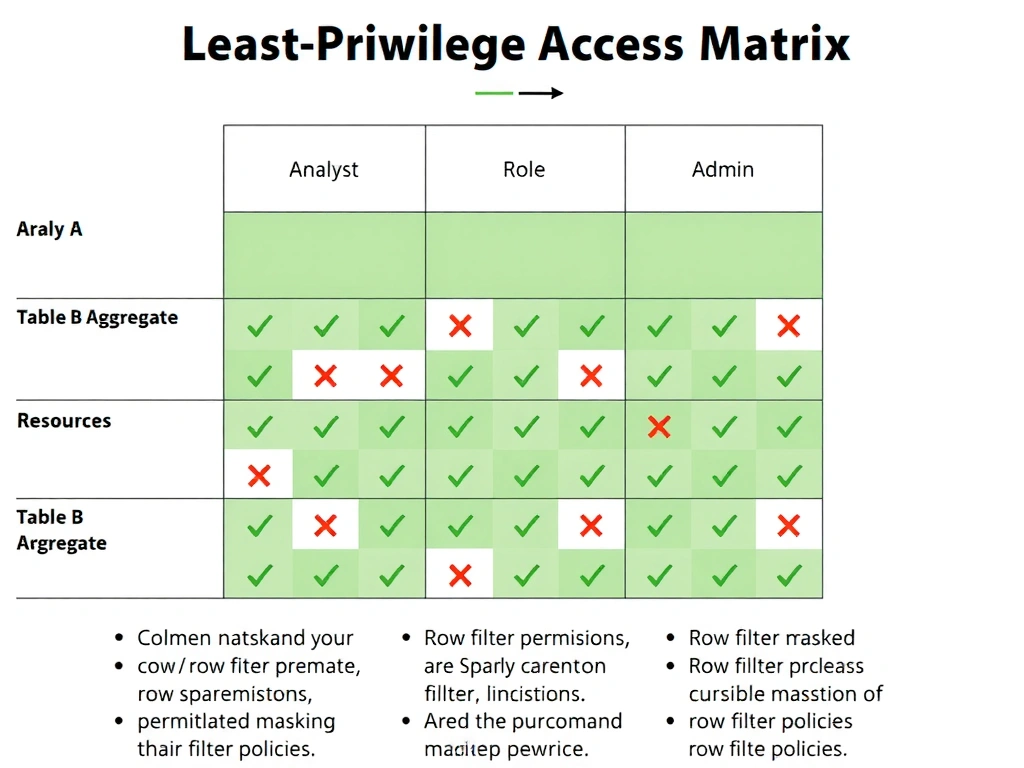
Full Explanation
The correct answer is option D: Set permissions so users and engines can access only the data and operations they are allowed to use.. This aligns with IBM's Platform operations and administration guidance, which emphasizes set permissions so users and engines can access only the data and operations they are allowed to use as the recommended approach for production deployments. Option A (Grant broad admin rights for convenience) is incorrect because it either bypasses IBM's recommended architecture or introduces operational risk that the correct approach is specifically designed to avoid. Option B (Put sensitive filters in optional dashboard notes) is incorrect because it either bypasses IBM's recommended architecture or introduces operational risk that the correct approach is specifically designed to avoid. Option C (Use object names as the only security boundary) is incorrect because it either bypasses IBM's recommended architecture or introduces operational risk that the correct approach is specifically designed to avoid. Understanding this distinction is critical for the C9007300 exam: IBM watsonx.data is designed to enforce governance, performance, and operational best practices through its built-in architecture, and the correct answers consistently reflect those architectural constraints rather than shortcut alternatives.