
A consultant is advising a customer that wants a scalable implementation. Which approach best demonstrates data tiering in a IBM Certified watsonx Data Lakehouse Engineer environment?
Select an answer to reveal the explanation.
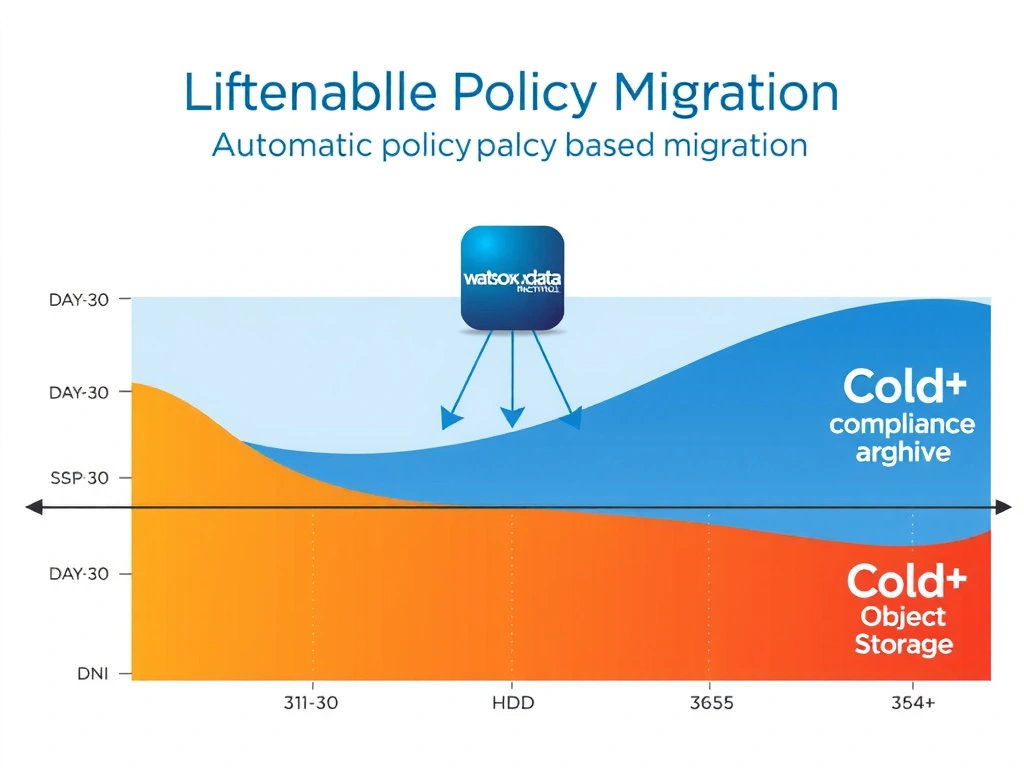
Short Explanation and Infographic
Think of storage tiering like a restaurant's kitchen: the prep area (hot storage) holds ingredients you'll use in the next hour, the walk-in fridge (warm storage) holds what you'll use this week, and the dry storage room (cold storage) holds what you stock quarterly. Watsonx.data lets you define these tiers explicitly and move data between them based on access patterns and retention policies. The exam tests whether you understand that tiering decisions are driven by workload requirements, not defaults.
Full explanation below image
Full Explanation
The correct answer is option C: Place data on cost-appropriate storage tiers based on performance, retention, and access patterns.. This aligns with IBM's Data lakehouse fundamentals guidance, which emphasizes place data on cost-appropriate storage tiers based on performance, retention, and access patterns as the recommended approach for production deployments. Option A (Keep all historical data on the fastest tier) is incorrect because it either bypasses IBM's recommended architecture or introduces operational risk that the correct approach is specifically designed to avoid. Option B (Archive active query data to cold storage) is incorrect because it either bypasses IBM's recommended architecture or introduces operational risk that the correct approach is specifically designed to avoid. Option D (Choose tiers only by file extension) is incorrect because it either bypasses IBM's recommended architecture or introduces operational risk that the correct approach is specifically designed to avoid. Understanding this distinction is critical for the C9007300 exam: IBM watsonx.data is designed to enforce governance, performance, and operational best practices through its built-in architecture, and the correct answers consistently reflect those architectural constraints rather than shortcut alternatives.