
An administrator is troubleshooting a pilot deployment and wants the most appropriate next step. What is the best way to handle API access while staying aligned with the certification objectives?
Select an answer to reveal the explanation.
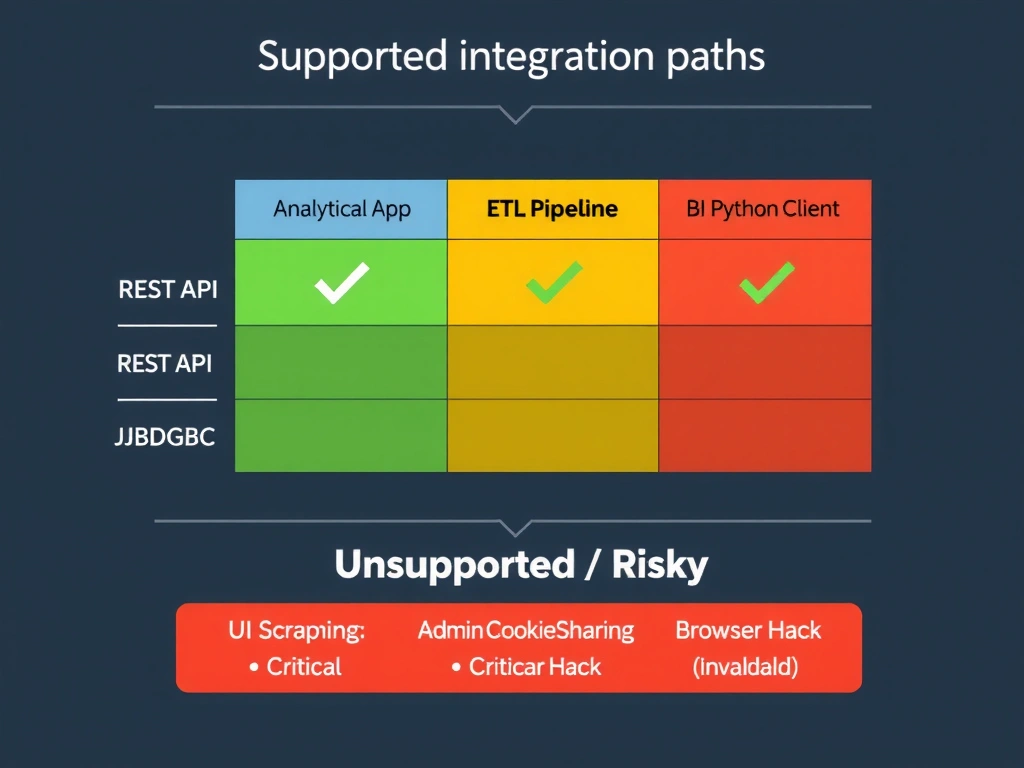
Short Explanation and Infographic
In watsonx.data, programmatic consumption through supported APIs means your applications connect through endpoints that the platform's governance layer monitors. Presto's JDBC/ODBC drivers, IBM's REST APIs, and certified SDK clients all respect the access control model, capture query history, and enforce the same data policies that protect interactive users. Connecting applications directly to underlying infrastructure or using unsupported clients bypasses these controls and creates unmonitored access paths.
Full explanation below image
Full Explanation
The correct answer is option C: Use supported APIs and clients when applications need programmatic access to watsonx.data.. This aligns with IBM's Data consumption and analytics guidance, which emphasizes use supported apis and clients when applications need programmatic access to watsonx.data as the recommended approach for production deployments. Option A (Scrape the web UI as an integration strategy) is incorrect because it either bypasses IBM's recommended architecture or introduces operational risk that the correct approach is specifically designed to avoid. Option B (Share administrator cookies with applications) is incorrect because it either bypasses IBM's recommended architecture or introduces operational risk that the correct approach is specifically designed to avoid. Option D (Generate SQL by editing browser local storage) is incorrect because it either bypasses IBM's recommended architecture or introduces operational risk that the correct approach is specifically designed to avoid. Understanding this distinction is critical for the C9007300 exam: IBM watsonx.data is designed to enforce governance, performance, and operational best practices through its built-in architecture, and the correct answers consistently reflect those architectural constraints rather than shortcut alternatives.