
A senior engineer reviews the current plan and notices that one key control is missing. The team is focused on data transformation. Which recommendation is most appropriate?
Select an answer to reveal the explanation.
Short Explanation and Infographic
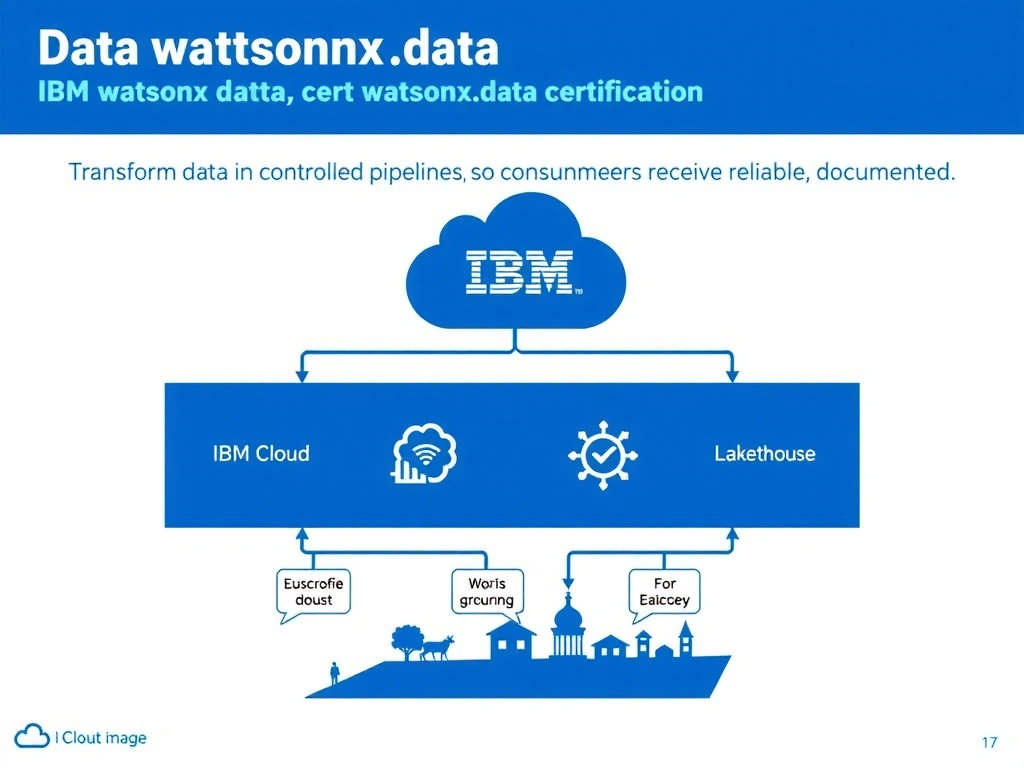
In watsonx.data, transformation pipelines are the quality gate between raw data ingestion and consumer-ready datasets. Spark transformation jobs apply business rules, handle schema evolution, enrich records with reference data, and write validated output to Iceberg tables with proper partition layouts and metadata. Consumers who query those output tables see clean, structured, documented data that was validated before it arrived. Exposing raw ingested files directly to consumers transfers the transformation burden downstream and creates inconsistent query results.
Full explanation below image
Full Explanation
The correct answer is option D: Transform data in controlled pipelines so consumers receive reliable, documented tables.. This aligns with IBM's Data integration patterns guidance, which emphasizes transform data in controlled pipelines so consumers receive reliable, documented tables as the recommended approach for production deployments. Option A (Hide transformations in personal notebooks only) is incorrect because it either bypasses IBM's recommended architecture or introduces operational risk that the correct approach is specifically designed to avoid. Option B (Transform production data manually in spreadsheets) is incorrect because it either bypasses IBM's recommended architecture or introduces operational risk that the correct approach is specifically designed to avoid. Option C (Avoid testing transformations because SQL succeeded) is incorrect because it either bypasses IBM's recommended architecture or introduces operational risk that the correct approach is specifically designed to avoid. Understanding this distinction is critical for the C9007300 exam: IBM watsonx.data is designed to enforce governance, performance, and operational best practices through its built-in architecture, and the correct answers consistently reflect those architectural constraints rather than shortcut alternatives.