
At which point in an action should a custom extension call to POST order data to a CRM occur?
Select an answer to reveal the explanation.
Short Explanation and Infographic
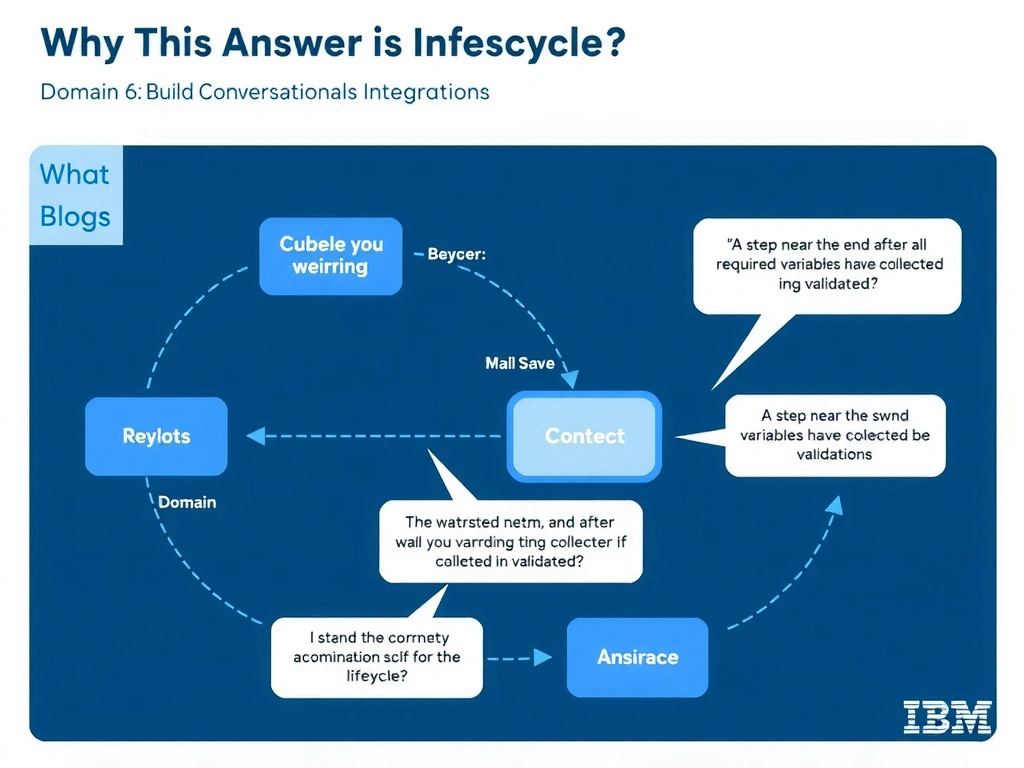
Todd Lammle: 'Imagine you're building a chatbot and this exact situation comes up — a step near the end after all required variables have been collected and validated is your go-to move. The extension should be called after all required data is collected and validated so the complete and correct payload is sent to the CRM. This is a classic Domain 6: Build Back-End Integrations concept you'll want locked in before exam day.'
Full explanation below image
Full Explanation
The extension should be called after all required data is collected and validated so the complete and correct payload is sent to the CRM. Calling it first means required fields may not yet be available. Timer-triggered actions and simultaneous steps are not standard action flow patterns. The correct answer, "A step near the end after all required variables have been collected and validated", directly satisfies the scenario because it aligns with watsonx Assistant's design principles and the specific capability being tested. The incorrect options ("The first step before any user input", "A separate action triggered by a timer", "Simultaneously with the confirmation message step") may appear relevant but each misses a key requirement or introduces a step that is either unnecessary or belongs to a different workflow. Mastering the distinction between these approaches is essential for effective watsonx Assistant implementations and is a core focus of the Domain 6: Build Back-End Integrations section of the certification exam.