
An enterprise security team requires that all outbound API calls from watsonx Assistant pass through IBM API Connect for rate limiting, OAuth policy enforcement, and audit logging. What is the correct integration approach?
Select an answer to reveal the explanation.
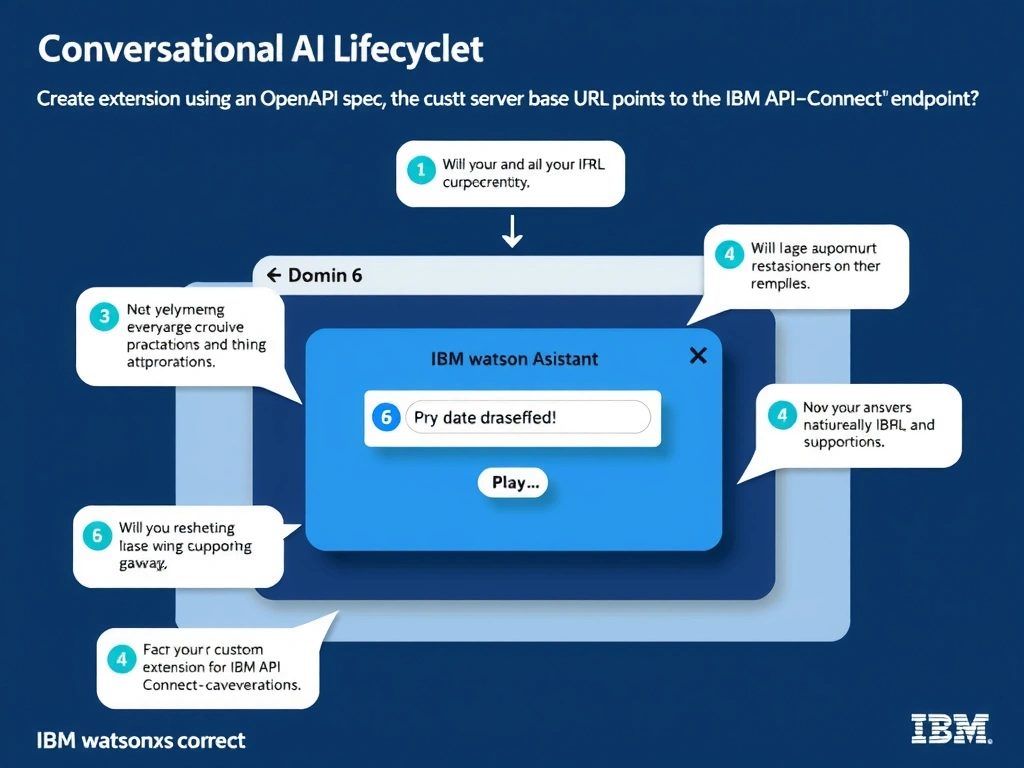
Short Explanation and Infographic
Todd Lammle: 'Imagine you're building a chatbot and this exact situation comes up — create a custom extension using an openapi spec whose servers base url points to the ibm api connect gateway endpoint is your go-to move. IBM API Connect acts as an API gateway that proxies calls to backend services while enforcing policies. This is a classic Domain 6: Build Back-End Integrations concept you'll want locked in before exam day.'
Full explanation below image
Full Explanation
IBM API Connect acts as an API gateway that proxies calls to backend services while enforcing policies. The correct approach is to create a custom extension in watsonx Assistant with an OpenAPI spec whose servers[0].url is the API Connect gateway URL for the relevant API product. All extension calls are then routed through API Connect automatically, gaining rate limiting, security policies, and audit capabilities without any dialog node changes. The correct answer, "Create a custom extension using an OpenAPI spec whose servers base URL points to the IBM API Connect gateway endpoint", directly satisfies the scenario because it aligns with watsonx Assistant's design principles and the specific capability being tested. The incorrect options ("Deploy a separate middleware server that intercepts watsonx Assistant HTTP traffic at the network layer", "Configure watsonx Assistant's built-in firewall settings to redirect traffic through API Connect", "Use IBM Cloud Functions as a relay layer between watsonx Assistant and API Connect") may appear relevant but each misses a key requirement or introduces a step that is either unnecessary or belongs to a different workflow. Mastering the distinction between these approaches is essential for effective watsonx Assistant implementations and is a core focus of the Domain 6: Build Back-End Integrations section of the certification exam.